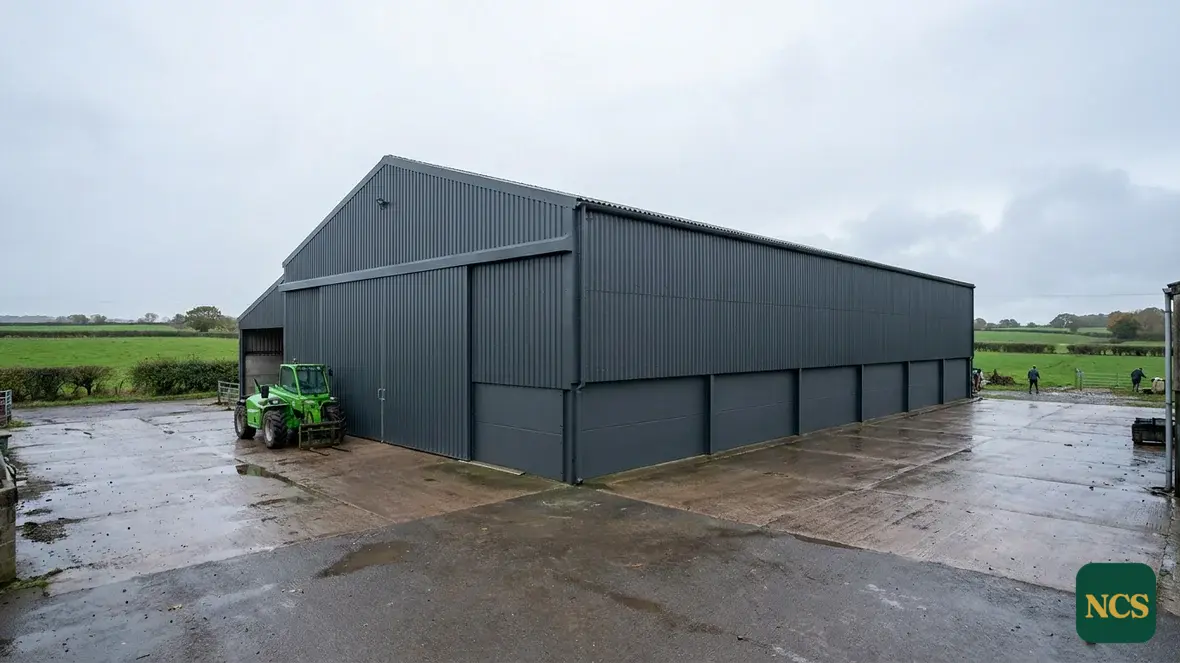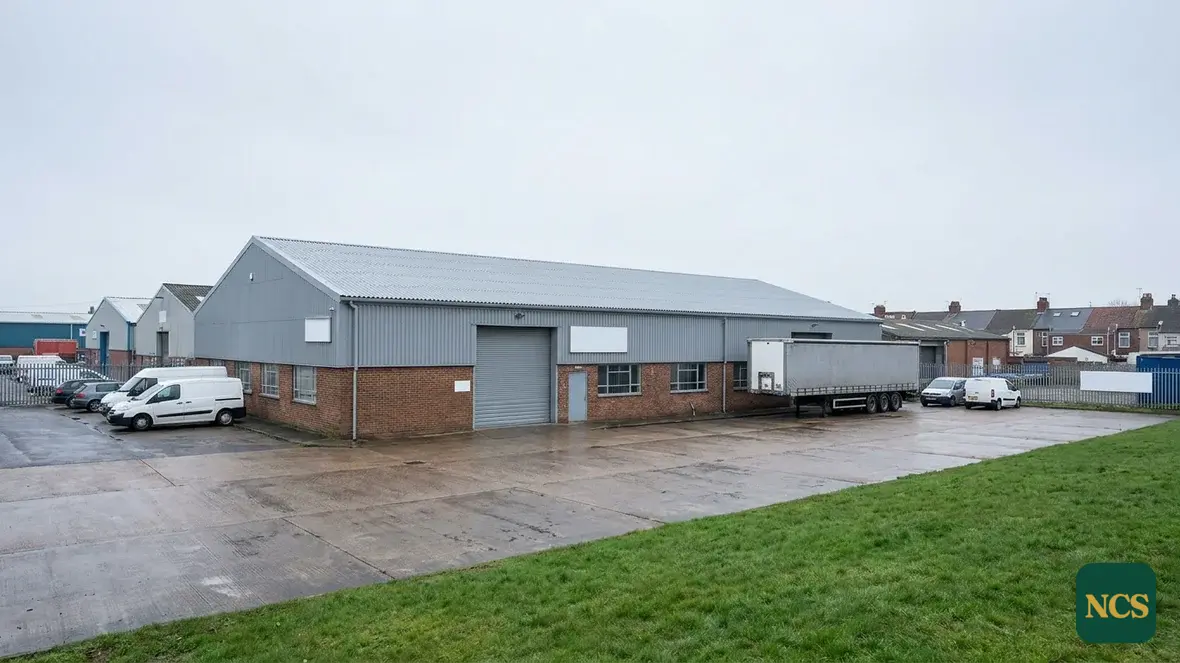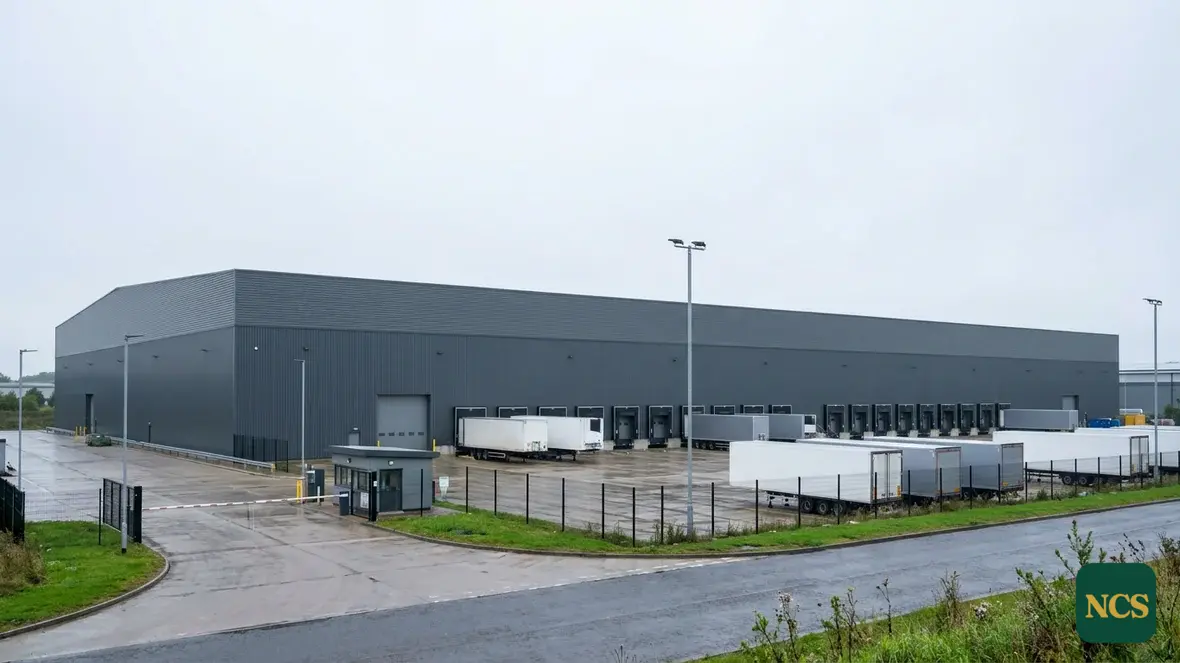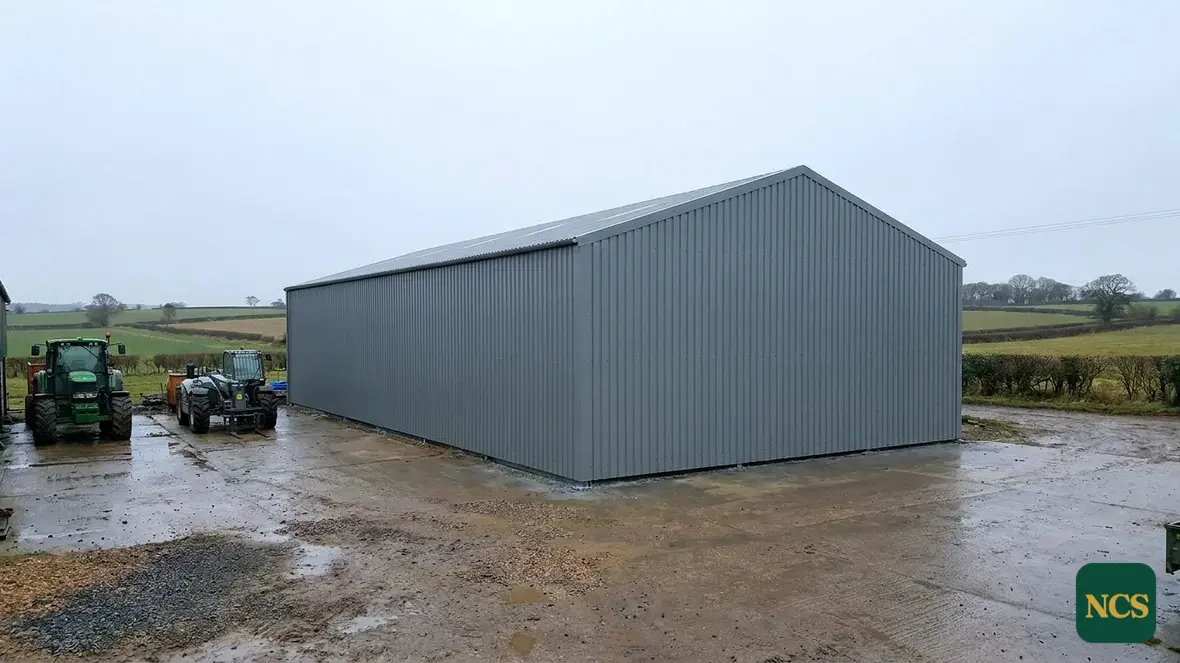
The farmland around Nottingham is shaped by the Trent. Down on the valley floor lie the big arable fields and grain stores; up on the wolds and the edge of the county sit mixed and livestock holdings with their own run of barns and sheds. National Coating Specialists is a survey-led exterior coating contractor working across England, and from our South-East base we cover this stretch of the East Midlands regularly. The mix of grain stores and stock buildings around Nottingham means no two farm roofs we survey ask quite the same question.
Two kinds of building, two kinds of problem
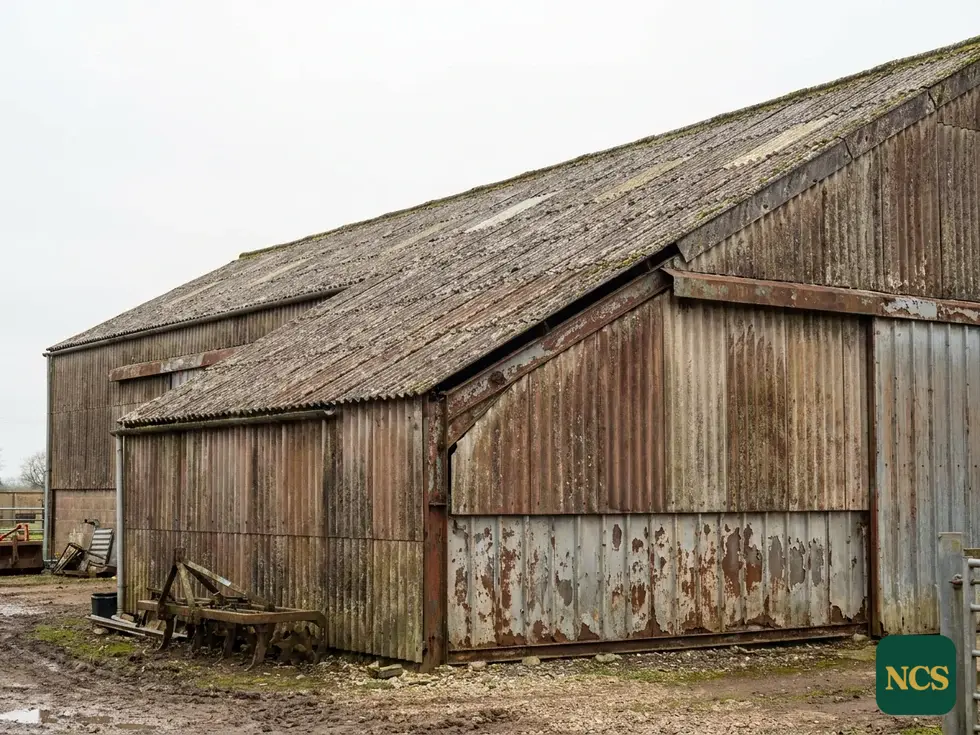
On the arable side, the priority is keeping grain stores and machinery sheds dry and weathertight, because a leak here threatens the crop itself. On the livestock side, the warm humid air of housed animals condenses on cold metal and corrodes sheets from the inside while the weather works on the outside. Both kinds of building tend to share the same ageing roofs: profiled steel and fibre-cement, with factory finishes breaking down, cut edges rusting first, and fixings staining the slope. The two problems call for different judgements, which is why we treat a grain store and a cubicle shed as separate questions even when they stand on the same yard. A tired roof is often still a sound roof. Where the frame holds and the sheet is intact, a well-prepared coating can add many more working seasons and put off the cost of a full re-roof.
The survey behind every recommendation
We will not put a number on a farm roof from the gate, because the detail that decides its future cannot be seen from the yard. A survey around Nottingham records:
- Sheet condition, including corrosion at cut edges, laps and fixings
- Underside condition on livestock buildings where condensation works
- Gutters, valleys and rooflights, frequent early failures
- Water staining on purlins, frames and stored grain or kit
- Access and ground conditions for the equipment needed
You get the findings with photographs before any figure is named, and each slope is judged on what it actually shows.
Working to the farming year
The calendar differs between the arable and stock yards, and we plan to suit each. Grain and machinery stores are best tackled in the empty months and never as they fill; livestock buildings come good in the gap before animals return inside; drilling and harvest are left well alone. Mixed holdings around Nottingham often juggle both rhythms at once, so we sit down with you and pick the slots that genuinely free up a building rather than assuming one calendar fits the whole farm. On the day we agree vehicle movements with you and protect feed, water and grain-handling areas before work starts, so the job slots into the farm’s routine rather than disrupting it.
Straight talk on repair versus replacement
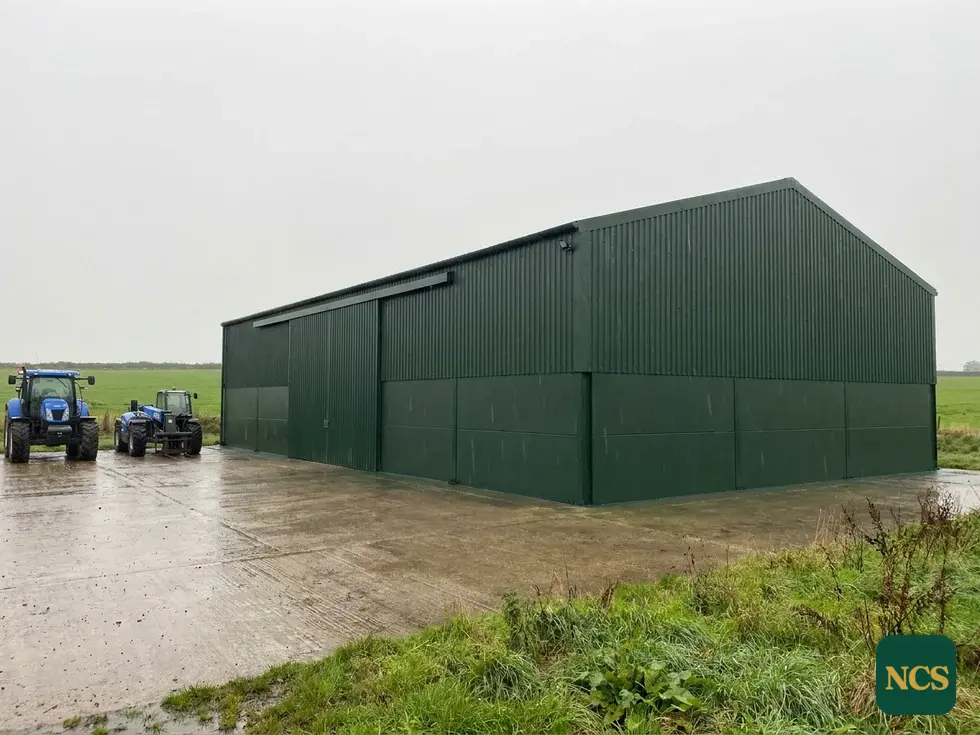
Here is the honest line we hold to: coating is not always right, and we would sooner lose a job than coat a roof that should be replaced. Localised damage on a sound surface is a repair. General surface breakdown on structurally sound sheets is where coating genuinely pays. Holed, soft or fixing-failed sheets mean the roof is finished, and we say so. Fragile or delaminated asbestos-cement goes to a licensed removal contractor, never under a coating; sound, weathered asbestos-cement can usually be cleaned and encapsulated. Either way you get an accurate verdict to plan the spend around. We would rather give a farm a smaller, honest job now and a clear note of what to watch than talk it into work the buildings do not yet need.