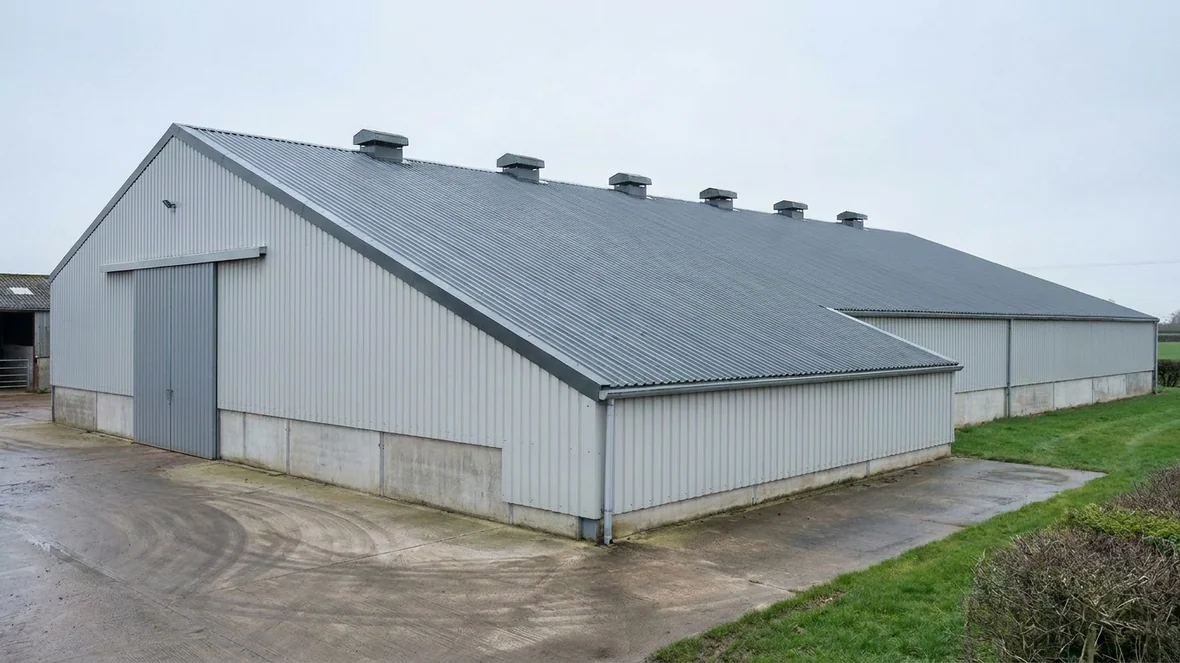
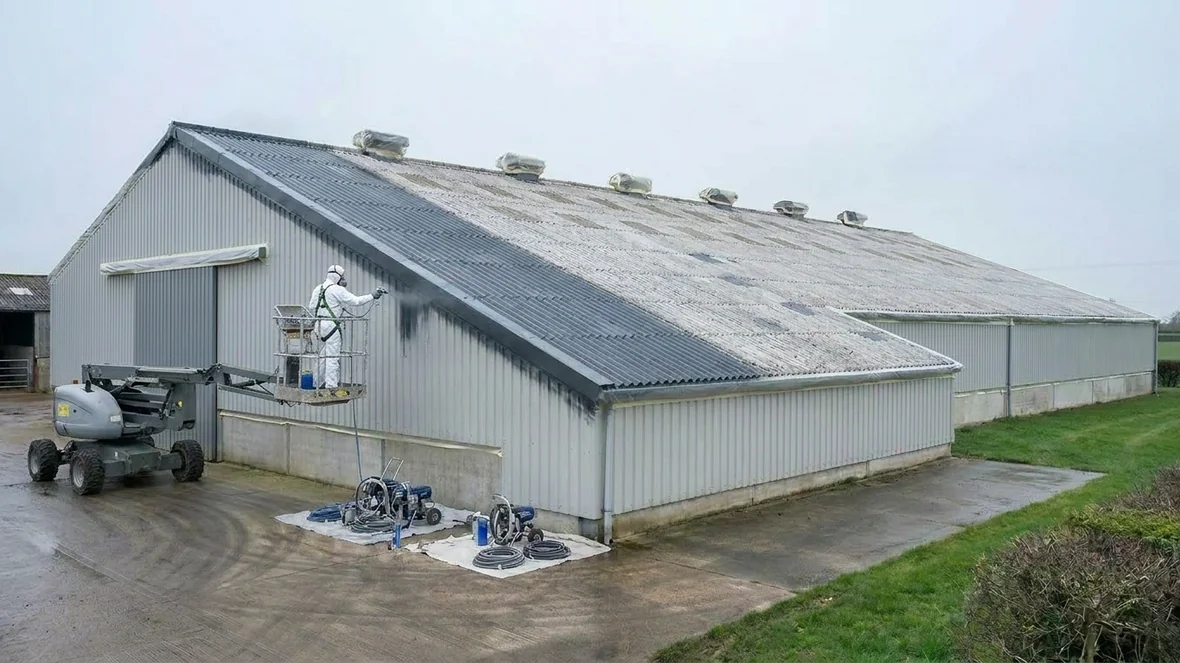
We were asked to look at the roof of a steel portal frame grain store on an arable farm a few miles outside Taunton, Somerset. The building itself was in good order, a tall, dry, well ventilated store that earns its keep every harvest. The roof was the problem. The original asbestos cement sheets had been up since the store was built, and a long run of Somerset weather had left them chalked, faded and streaked with moss along every lap. The farmer did not want the cost or the disruption of stripping a roof off a building that still did its job. He wanted the sheets cleaned, sealed and protected, with the store back in service before the new crop came in. That is exactly what encapsulation is for: specialist roof painting with a protective job to do, not just a cosmetic one.
A weathered asbestos cement roof on a Somerset grain store
Grain stores of this age and type are a familiar sight across Somerset. A galvanised steel portal frame, profiled steel wall cladding over a concrete panel base, a full height sliding door on the gable, and a big-six profile asbestos cement roof with ventilation cowls along the ridge. The frame and walls on this store were sound. The asbestos cement roof was also structurally sound, which matters, because sound asbestos cement is a manageable material. The sheets keep the weather out and the fibres stay locked in the cement matrix as long as the surface is not broken up or abraded. The official guidance from the Health and Safety Executive is clear that asbestos cement in good condition is usually better managed in place than disturbed.
What the sheets had lost was their surface. The cement was chalking, the laps were stained, moss had taken hold along the north slope, and every wet Somerset winter was slowly working on the fixings. Left alone, that decline only runs one way, and eventually the argument for full replacement becomes hard to resist. Replacement on a store like this means controlled removal of every sheet, disposal as asbestos waste, a new roof system, and a building stood open through weeks of work. Encapsulation does the opposite. The sheets stay where they are, the surface is sealed under an elastomeric coating, the fixings and laps are made good, and the store never stops being a store.
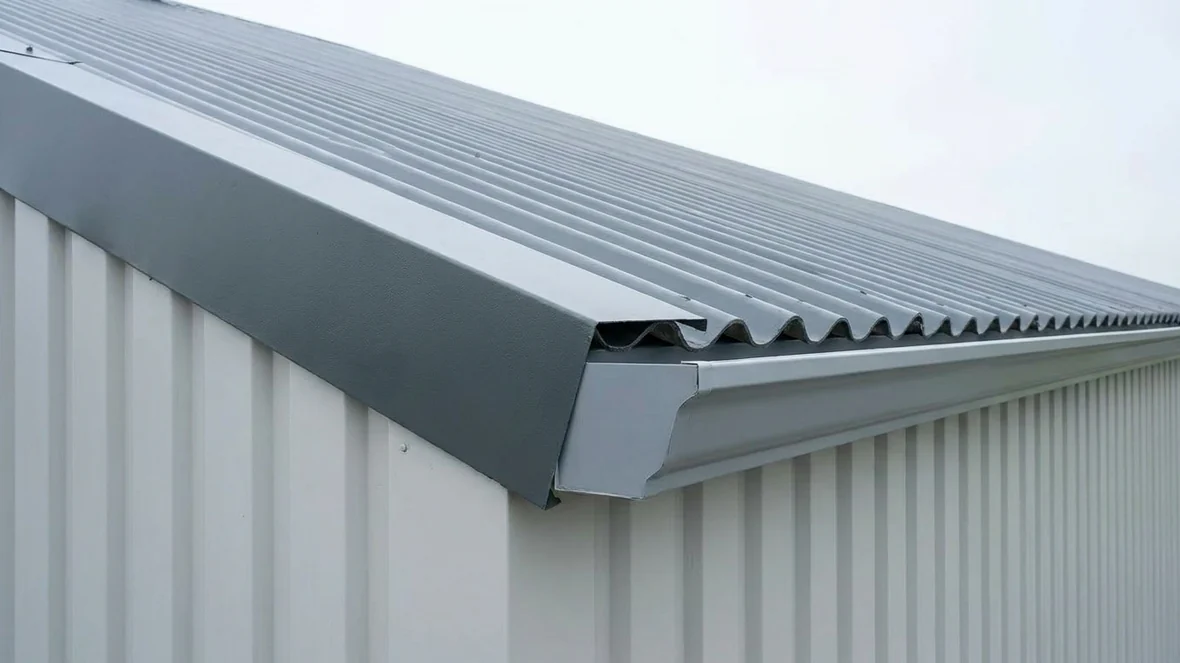
The brief we agreed with the farmer was straightforward. Clean the roof carefully, repair and seal where needed, then encapsulate the whole roof in Anthracite Grey, RAL 7016, a deep slate toned grey that sits well against pale cladding and reads as a new roof from the road. The store had to be empty for the work and back in use before the first trailers of the new season arrived in the yard.
What the survey found on the Somerset farm
Our surveyor walked the site with the farmer before anything was priced or programmed. From the MEWP we checked every slope, photographed the laps, tested fixings and mapped the sheets. The verdict was what we hoped for: weathered but sound. A small number of fixings needed replacing, a few laps needed sealing, and the box gutters were carrying a full season of moss and grit, but there were no cracked or delaminating sheets and no reason the roof could not be encapsulated.
Timing mattered more on this job than most. A grain store near Taunton does not sit idle for long, so we programmed the work into the quiet window after the store was cleared and cleaned, and well before the combines started rolling. Working around farm operations is normal for us in Somerset, and the plan was built around the farm calendar rather than ours. The farmyard stayed live throughout: feed deliveries and daily traffic carried on around the job, the work area below the roof was fenced off each morning, and the MEWP was parked clear of the yard gates each evening.
The survey also settled the method. Asbestos cement is never dry swept, never ground back and never blasted with an aggressive high pressure lance, because all of those break up the very surface an encapsulation is there to preserve. The preparation plan was a careful low pressure wash with controlled runoff, followed by fixing repairs, lap sealing and spot priming before any finish coats went near the roof.
The work, stage by stage
The sequence below follows the same elevation of the grain store from arrival to handover, from weathered asbestos cement to a fully encapsulated Anthracite Grey roof.
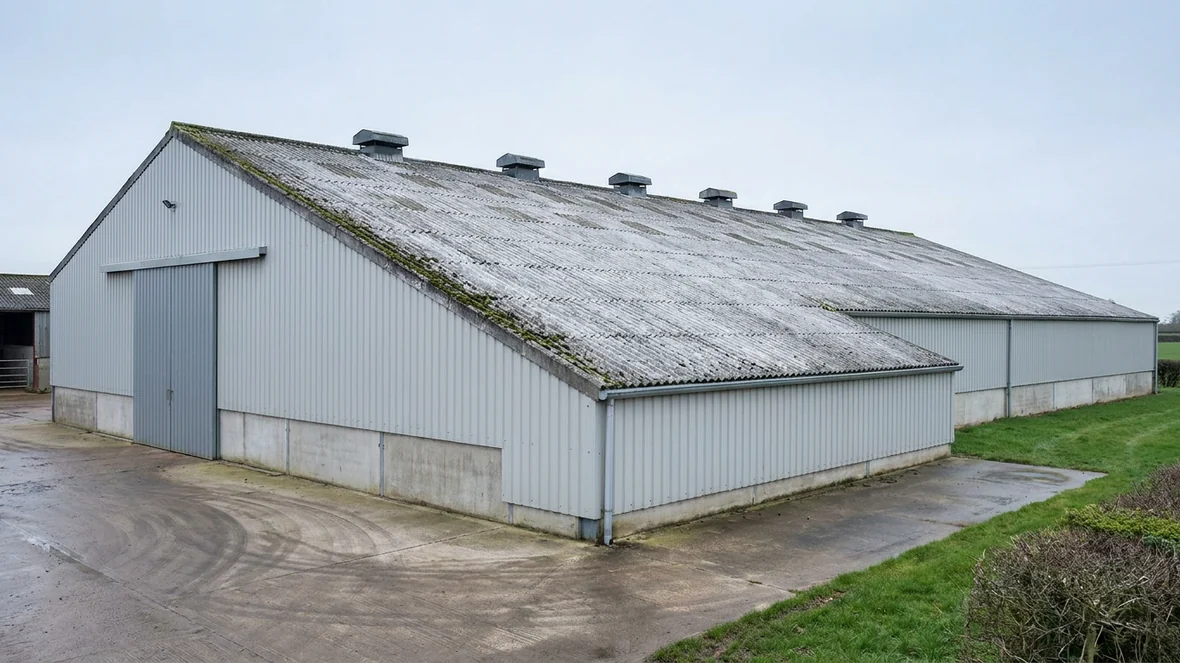
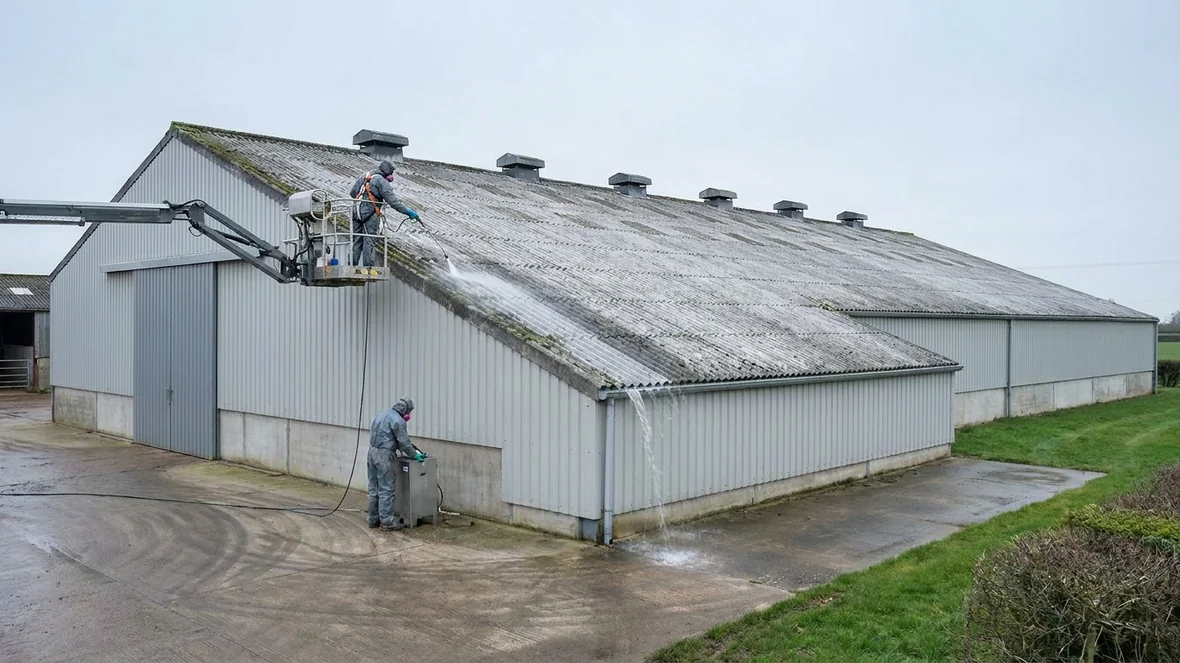
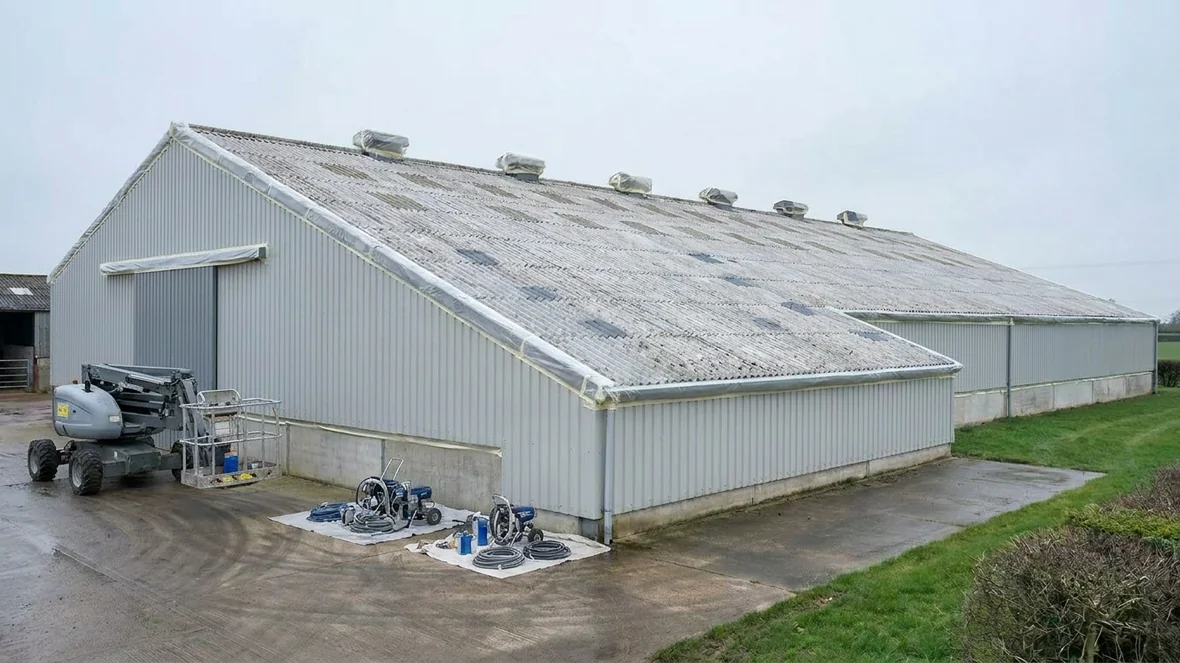

The finished grain store near Taunton
Each stage in that sequence did a specific job. The low pressure wash removed the moss and loose chalk while leaving the cement surface intact, with runoff controlled and collected at the gutters rather than washed into the yard drains. The masking let the ridge cowls keep breathing and kept overspray off the pale walls while the replacement fixings went in, each one capped and sealed, and the resealed laps were spot primed so the finish would sit evenly over them. Then the encapsulation coating went on by airless spray, worked across the slope in overlapping passes from the gable. An elastomeric system does two things at once: it bonds into the porous cement to lock the fibres down, and it builds a flexible waterproof film across the whole roof, bridging the hairline crazing that old asbestos cement always carries.
The change is hard to overstate. A roof that read as tired grey cement with moss lines and streaks now reads as a single, uniform plane of satin Anthracite Grey from ridge to gutter. It is the colour our painters would have suggested for this roof even if the client had left it to us: on a big agricultural roof in the Somerset landscape, the dark, slightly blue toned grey settles the whole building into its surroundings and pairs naturally with pale grey cladding. Under the colour, the laps are sealed, the fixings are watertight and the fibres are locked beneath a continuous membrane that can be inspected and recoated in future rather than replaced.
An encapsulated roof also changes the maintenance conversation for good. Where the old cement surface could only ever be watched while it weathered, the coated roof can be checked at the laps and fixings at every survey, washed if the farm ever wants it washed, and recoated when the finish eventually dulls, all without the asbestos question being reopened. For a Somerset arable business that plans its buildings the way it plans its rotations, that predictability is worth as much as the colour. The store was handed back cleaned, unmasked and ready to fill, inside the window we agreed. Project completed in the quiet weeks before harvest, and the first trailers of Somerset grain tipped under a sealed roof.
Asbestos roof encapsulation and roof painting across Somerset and the UK
This grain store sits in the arable belt around Taunton, but the same roofs are on farm buildings across the county. We carry out asbestos roof encapsulation in Taunton and the surrounding countryside, and our agricultural roof painting crews are regularly on farms around Bridgwater, Wellington, Yeovil and Glastonbury. The Somerset levels and the county’s livestock and arable holdings between them hold an enormous stock of asbestos cement roofing, most of it sound, most of it worth keeping, and almost all of it improved by encapsulation rather than removal. We take on the same work over the borders into Devon and Dorset, and nationwide across the UK.
If you have a grain store, livestock shed or any farm building in Somerset with a weathered asbestos cement roof, the sensible first step is a survey, not a strip. Our agricultural asbestos roof encapsulation service covers the inspection, the repairs, the coating system and the colour. You can see the same discipline applied to a steel roof in our case study of a machinery store roof near Hereford, and the full palette, including the Anthracite Grey used near Taunton, is on our coating colours page. To arrange a survey anywhere in Somerset or the wider UK, get in touch and we will call you back the same working day.