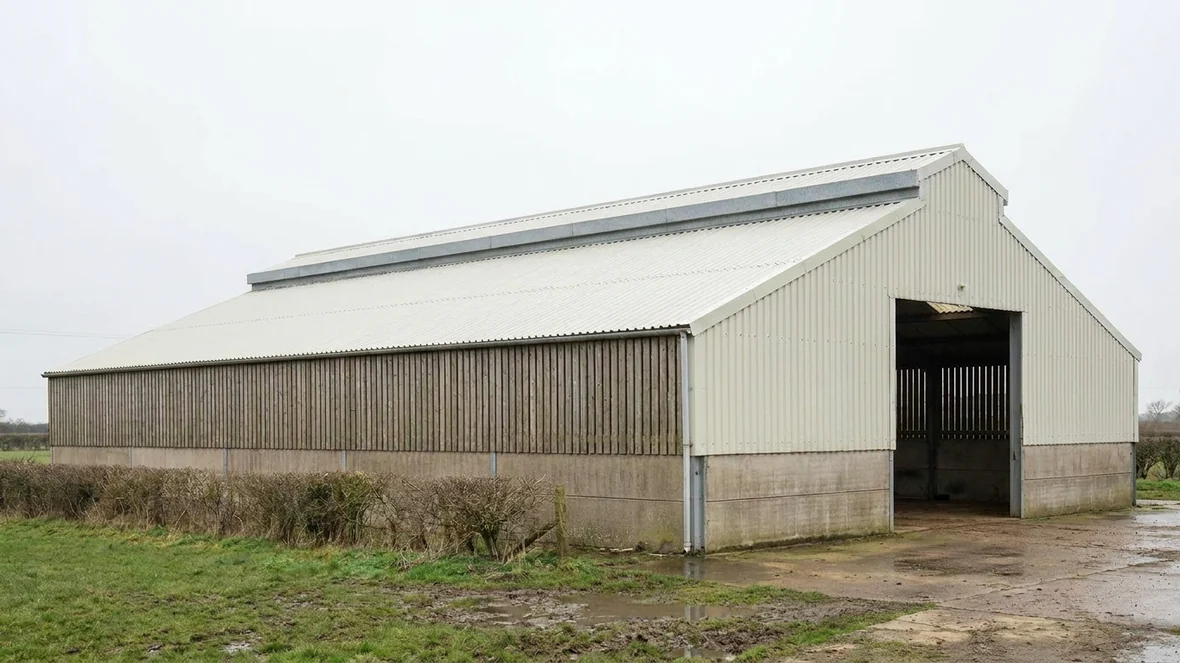
Agricultural case study
Roof Coating on a Sheep Shed near Wakefield, West Yorkshire
Spray-applied roof coating on a sheep shed near Wakefield, West Yorkshire, taking a chalking, streaked roof back to an even Honesty satin finish.
Accredited, insured and audited



 IPAFPOWERED ACCESS TRAINED£10mPUBLIC LIABILITYIPAFPOWERED ACCESS TRAINED£10mPUBLIC LIABILITY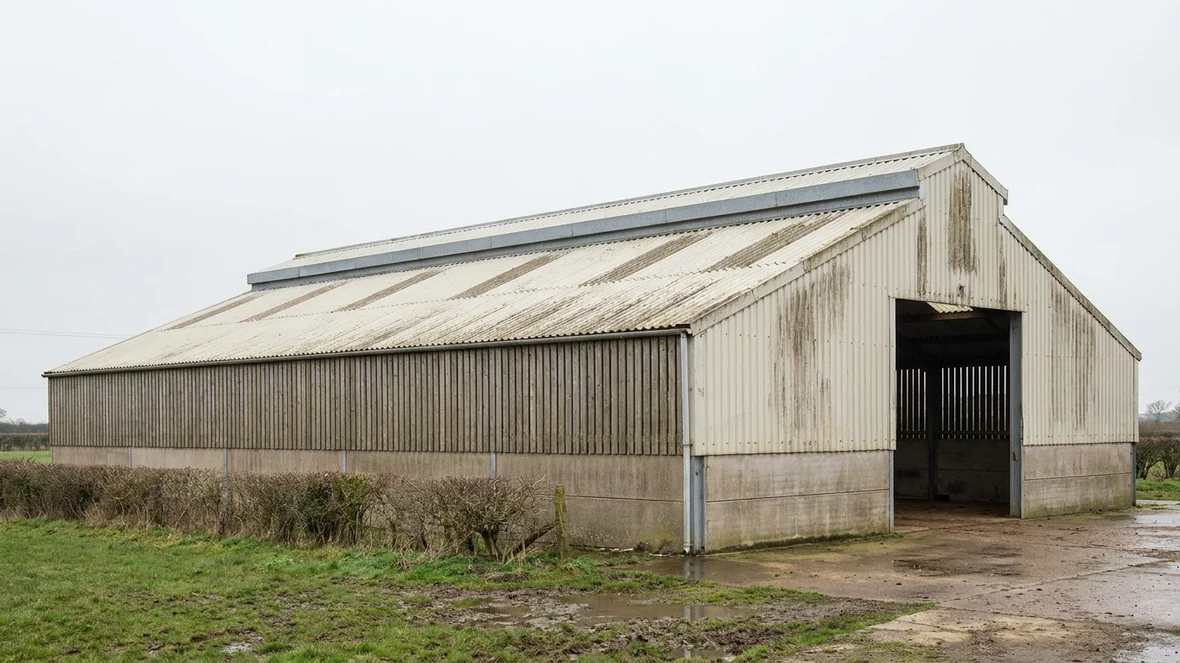
Stage 01 · Before
The building and the brief
We were asked to carry out sheep shed roof coating near Wakefield, in West Yorkshire, spraying the tired cladding sheets back to a clean, even finish. The building sits on working farmland on the edge of Wakefield, and the job was a straightforward one to describe: survey the roof, put the substrate right, and repaint the sheets with a proper coating system rather than let the corrosion run on. The client wanted the roof brought back to a clean, protected finish without the upheaval of stripping and re-covering the whole building. This is spray-applied painting work, and we treated it as such from the first visit.
The client had weighed coating against recladding and replacement. The steel structure was sound and the sheets themselves had plenty of life left, so stripping the roof off and starting again made little sense for a building in this condition. Roof painting let us protect what was already there, keep the shed in use through the work, and avoid the disruption and waste of a full re-roof.
For a farm building in West Yorkshire, coating was the sensible call, and the finished roof shows why. Coating a roof in place also means far less to send to landfill, which matters on a working farm where every day of disruption has a knock-on effect on how the shed is used.
The shed is a typical agricultural portal frame building, clad and roofed in profiled steel sheet. The roof was finished in a plastisol coated steel, an off-white shade laid down when the shed was built, and it covers a large single span used for housing sheep. It is the sort of roof you see across West Yorkshire farmland, hard-working, exposed on all sides, and rarely touched once it goes up.
Profiled steel roofs of this kind are common across the county's farms and, treated in time, they respond well to spray coating. The building had done its job well for a long spell, but exposure on open ground had taken its toll on the finish rather than the frame.
By the time we saw it, the original off-white had faded to a patchy, streaked grey. The plastisol had begun to chalk, that fine powdery bloom you get as the coating breaks down, and rain had dragged the chalk and grime down the sheets in long dark streaks. In places the grime had built up thickly enough to hold moisture against the sheets, which only speeds the breakdown of an ageing coating. The structure underneath was sound, with no sagging or failed purlins, but the surface finish had clearly reached the end of its useful life.
The brief came from the site's managing agent, acting for an agricultural landlord who wanted the roof protected for the long term without taking the shed out of service. There was no appetite for recladding. Their priority was a finish that would look right on the farm and, more importantly, keep the steel sound so the shed stays watertight well into the future. The ask was simple: assess the roof honestly, deal with any corrosion at the fixings and cut edges, and give the sheep shed a durable sprayed finish that would hold up to another long spell of West Yorkshire weather.
We set out our approach in plain terms before any work started, so the managing agent knew exactly what the survey, preparation and cladding painting would involve, and how we would keep the animals and the daily running of the farm undisturbed. We also talked through colour, and the client settled on a soft neutral that would sit quietly against the surrounding buildings and land.
What the survey found
The survey started on the roof itself and worked down. Across the main slopes the plastisol was chalking heavily, worst on the south facing elevation where the sun had done the most damage. We checked the coating right across the roof, not just the visible worst of it, so the plan covered the whole surface rather than patches. A wipe test lifted a clear film of pigment off the surface, which told us the coating was breaking down rather than simply dirty, and that any new paint would need a thorough wash and the right primer to key to.
At the sheet ends we found the usual weak points. Cut edge corrosion had started along the eaves and at the sheet laps, where the exposed steel had begun to rust and creep back under the coating. None of it was beyond repair, but left alone the cut edge corrosion would only spread and start to eat into the steel in earnest. Several roof fixings showed surface rust and a few had backed off slightly and needed attention. The gutters were serviceable but carrying a season of grime and moss, and we noted them for clearing so the washed off residue had somewhere to go.
Access was straightforward once planned. The roof pitch and the ground around the shed let us work safely from a mobile elevating work platform, reaching every slope without walking the sheets or loading the roof. We planned the MEWP positions in advance so every slope could be reached in turn without moving stock or blocking the working areas of the farm. Working from a MEWP also kept our spray teams off the fragile surface and gave clean, controlled access for the cladding painting across the West Yorkshire roof.
Throughout, the shed stayed in use. We phased the work around the farm so the sheep and the routine of the site carried on with minimal interruption, and we kept overspray tightly controlled so nothing drifted onto stock, vehicles or the neighbouring West Yorkshire farmland. By keeping the work moving and the mess contained, we made sure the survey and the coating never got in the way of the farm running as normal.
On site
The work, stage by stage
The sequence below follows the roof coating stage by stage, from the first wash through masking, spray application and the finished sheets. Each photograph shows a real part of the work on the sheep shed near Wakefield in West Yorkshire.
Stage 02 · Washing down
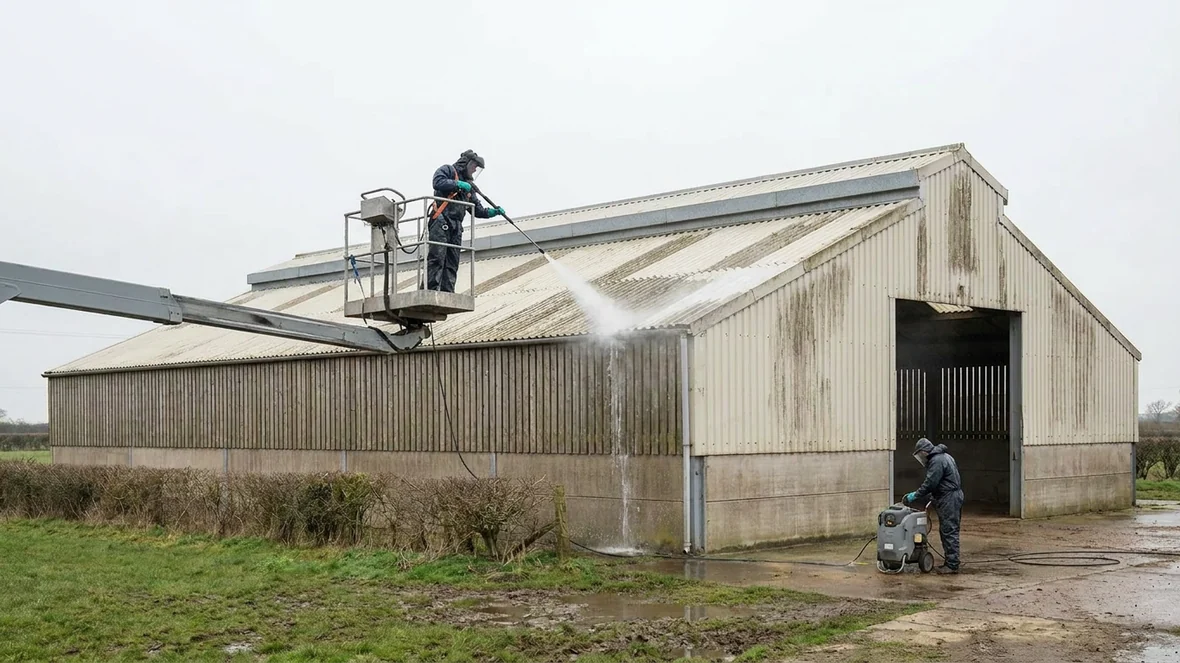
Washing down
Pressure washing lifts the chalk, moss and loose material back to a sound surface before any paint.
Stage 03 · Masking
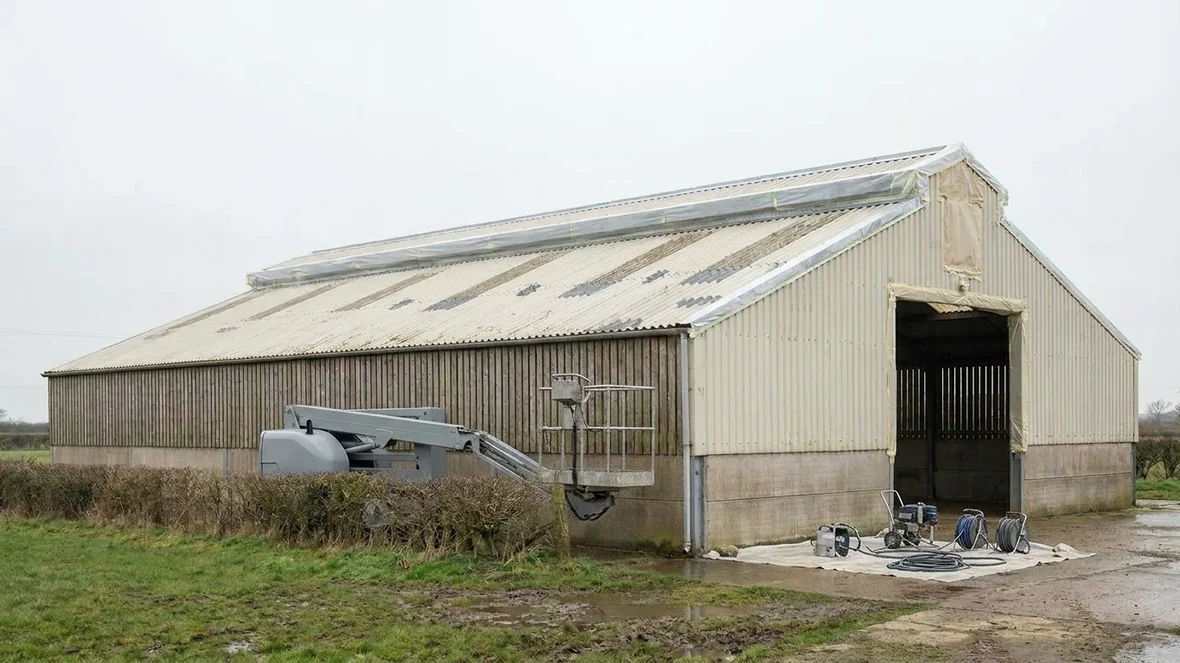
Masking
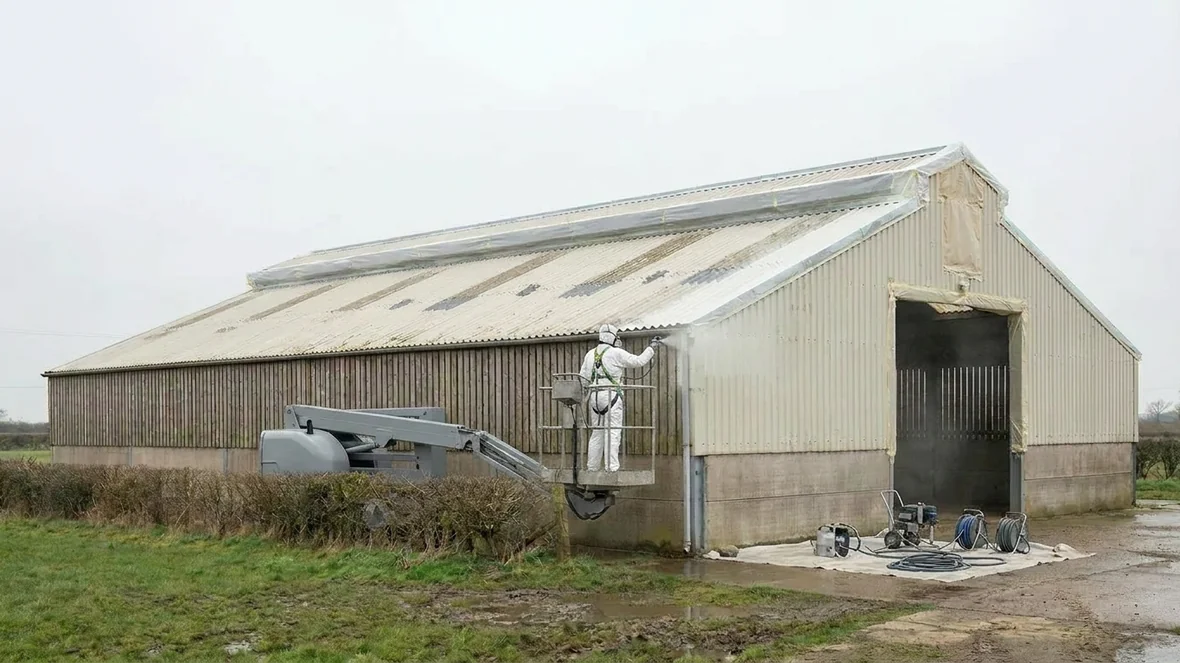
Rooflights, gutters and the sheet edges masked off ahead of the sprayed coating.
Stage 04 · Spraying
Spraying
Airless spray application of the coating from the MEWP, worked slope by slope for an even film.

Stage 05 · After
After
Even Honesty satin finish across the roof sheets once the coating had cured.
Stage 06 · Detail
Detail
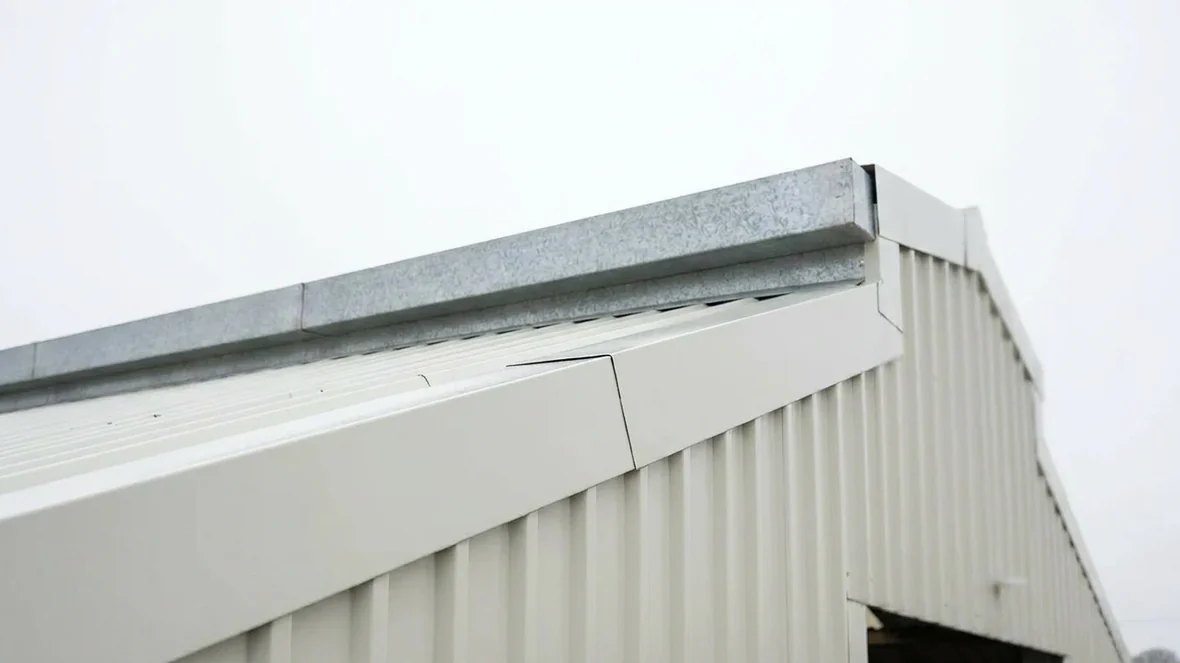
Cut edges and fixings primed and sealed at the sheet laps before the topcoat went on.
The finished sheep shed
The change is easy to read. Where the roof had been a streaked, chalking off-white, the sheets now carry an even, solid colour with a soft sheen, finished in Honesty, a warm neutral that suits an agricultural building and hides nothing about the quality of the preparation underneath. Up close the spray finish is even from ridge to eaves, with no heavy runs or thin patches, which is what a proper airless application on clean, primed steel should give.
What the client gets is a roof that looks cared for and, more to the point, is protected again. The cut edges are sealed, the fixings are sound, and the whole surface sits under a coating built to shed water and take the weather. A coating like this is also far easier to look after than bare, weathered plastisol, and it can be washed down and inspected as part of normal farm maintenance. Instead of a repaint that only tidies the appearance, the sprayed system puts a proper protective layer back over steel that had lost it.
It is the same result we look for on every roof, whether a West Yorkshire farm shed like this one near Wakefield or the commercial units we spray elsewhere. The principles do not change with the building, only the scale and the detail of the preparation. If you want to see how the approach carries across to bigger cladding, another recent project shows the same preparation and spray painting on a retail park in the south.
For the farm, the outcome is a working sheep shed in West Yorkshire that has been protected for the long term without the cost, waste and downtime of a full re-roof, and a roof that will be easy to maintain from here. The shed looks the part again too, which counts for something on a tidy, well run farm.
Sheep shed roof coating across West Yorkshire and the UK
We are a survey led coatings contractor working right across West Yorkshire, and Wakefield sits squarely in our patch. From here we cover the farms, industrial estates and commercial roofs of the wider county, from the villages around Wakefield out to the market towns and open West Yorkshire countryside where agricultural buildings like this shed are the norm. Farm roofs, industrial sheds and commercial units all sit within our day to day work, and a good share of it is within easy reach of Wakefield.
Roof coating on farm buildings is core work for us, and our agricultural painters handle everything from small livestock sheds to large grain stores. If your building carries an older cement sheet roof, our asbestos roof encapsulation in Wakefield covers the safe overcoating of those roofs, and our agricultural roof coating service takes profiled steel roofs like this one from survey through to finished spray. The same crews and the same method apply whether the roof is on a hillside farm or a commercial estate closer to town.
Beyond West Yorkshire, our spray teams work well past the county line. We take on projects up into North Yorkshire, down through the Midlands into Northamptonshire, and across the border into Gwent, and our painters and spray crews travel nationwide for the right roofs. Wherever the building stands, the method is the same one we brought to this sheep shed near Wakefield: survey first, prepare properly, then coat.
If you have a farm, industrial or commercial roof in West Yorkshire or further afield that is chalking, streaking or starting to corrode, we would be glad to take a look. You can book a free survey and we will give you an honest assessment and a clear plan for the work.
Project completed in summer 2026.
Standards behind our sheep shed roof coating work
Farm roof sheets go brittle with age, so how the roof is reached matters as much as what goes on it. Our teams plan every job around the HSE's guidance on fragile farm roofs, and we hold CHAS accreditation so the health and safety paperwork a managing agent or farm business asks for is ready before the first van arrives.
How we work
How we ran the work on this project
How we work on farm buildings
Thinking about the same on your sheep shed?
We coated this sheep shed near Wakefield, West Yorkshire after a survey, not a phone quote. Send us your building type, the surface and what you can see going wrong, and one of our surveyors will take a look and set out the route in writing.
Book your free site surveyRecent work
Recent projects, documented survey to handover
Accredited, insured and audited
IPAFPOWERED ACCESS TRAINED£10mPUBLIC LIABILITYIPAFPOWERED ACCESS TRAINED£10mPUBLIC LIABILITYBook a free, no-obligation site survey
We coat and refurbish commercial, industrial and agricultural roofs and walls in place, right across the UK. Tell us about your building and we’ll arrange a survey at a time that suits you.
Where we work
Sectors and buildings we coat
Survey-led coating, spraying and exterior refurbishment across commercial, industrial and agricultural property in the UK.
What does your building need?
Pick the surface, then the problem. We will point you to the right service.