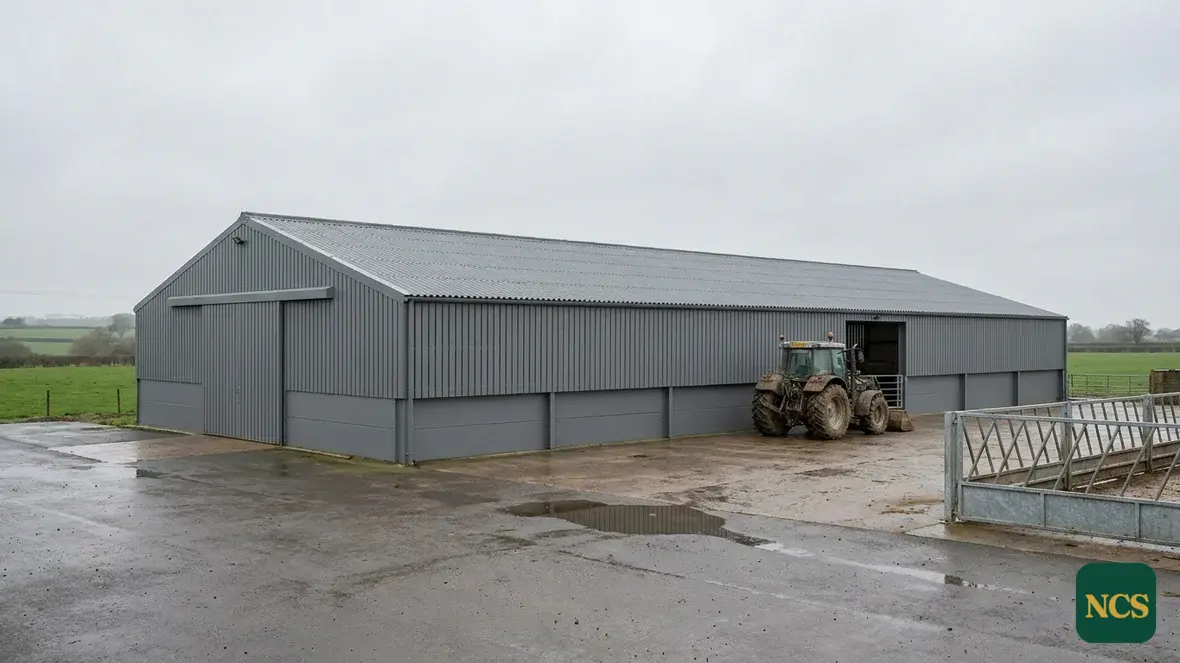
Farm buildings beyond the Sheffield edge
Sheffield meets the Peak District pretty sharp on its western edge. Head out towards Chesterfield, Rotherham, or the moorland, and you’re into upland grazing and mixed farming. The buildings tell the story: livestock sheds, cattle and sheep housing, fodder stores, general-purpose barns, all the machinery sheds and grain stores that go with the lower mixed holdings. Mostly, they’re steel-framed, with profiled metal or fibre-cement roofs that have taken a real beating from those exposed South Yorkshire winters.
We know coatings have their place here. They protect solid metal and can freshen up a tired roof, but only if the structure itself is worth the effort. We always survey agricultural buildings around Sheffield first. Then we’ll give you the honest truth about what’s worth doing and what’s not.
Upland weather and what it does to roofs
That high ground near Sheffield is brutal. Wind-driven rain will find every weak lap. Inside livestock buildings, condensation keeps the steel constantly wet. Then you’ve got those freeze-thaw cycles working hard on brittle fibre-cement. What you end up with is corrosion at the laps and fixings, perforations in older metal, and cracking on those ageing cement sheets. We can slow surface corrosion on metal that’s fundamentally sound and seal up light weathering. But if a roof has already failed, a coating won’t fix it. We won’t pretend otherwise.
- Corrosion and perforation on exposed profiled metal.
- Brittle, cracked fibre-cement from constant freeze-thaw.
- Laps and fixings failing on weather-beaten roofs.
- Condensation and gutter problems in busy livestock buildings.
Repair, coat or replace
You need an honest assessment, building by building. Coat the roofs that are sound. Repair the bays where the laps or fixings are starting to fail. And budget to replace anything that’s past saving. Many holdings around Sheffield need a mix of all three, not one single answer. Asbestos-cement needs the most care. It’s common on older agricultural roofs, and you’ve got legal duties if you disturb it. A sound sheet might be fine for encapsulation, but a damaged one needs licensed removal, not a coating. We keep that line very clear.
Painting a livestock shed around Sheffield means working around the animals, the washdown regime and the ventilation, and the plan respects all three.
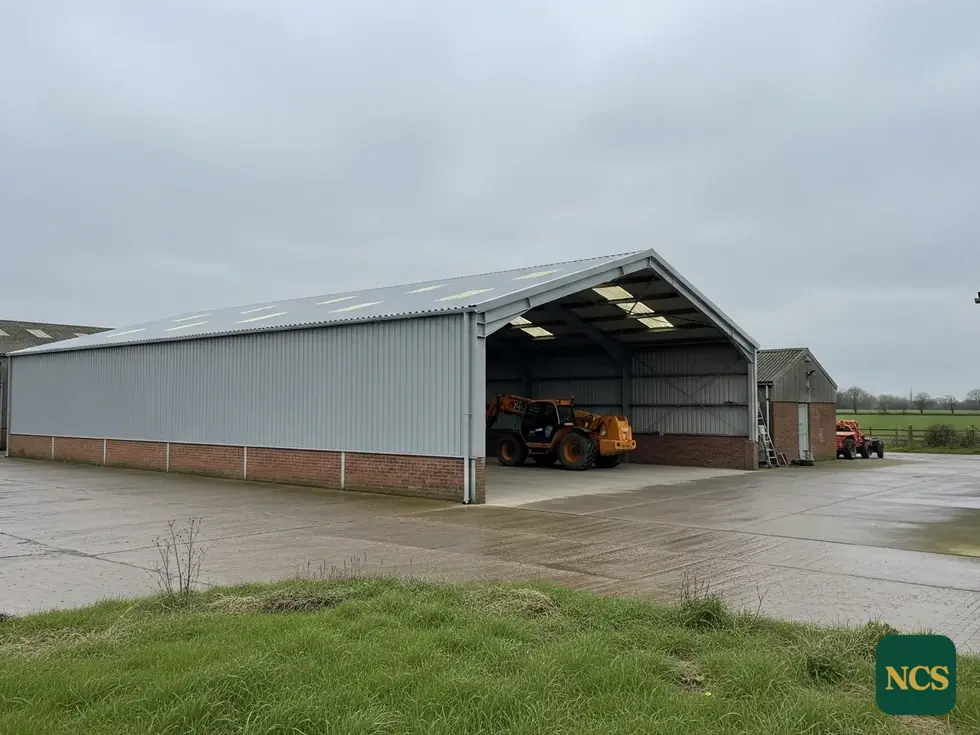
Working around livestock and the season
Livestock buildings are rarely empty. We plan our work around housing and turnout times, and we’ll tackle fodder and grain stores when they’re clear. That upland weather also dictates when we can work, so timing the job for settled spells is crucial. Any coating programme on a Sheffield farm has to fit both the farm’s calendar and the conditions. We schedule accordingly; we won’t try to force a job into the wrong week.
Survey before quote
We won’t price an agricultural coating from a photo. We send a surveyor out to inspect the roofs, inside and out. They’ll report back so you can see exactly which buildings are candidates for coating and which need repair or replacement. For farms in the Sheffield area, that survey is free, and you’re not committed to anything by booking it.
We carry out agricultural building coatings work in and around Sheffield. For the full survey-led service and how we assess each building, see our Agricultural Building Coatings service, or request a free site survey.
Recently — July 2026
Summer is the steadiest season for exterior coating: longer dry spells mean preparation, application and curing can be programmed with fewer weather delays.
Every recommendation we make comes from getting up on the roof and looking, not from a photograph or a phone call.