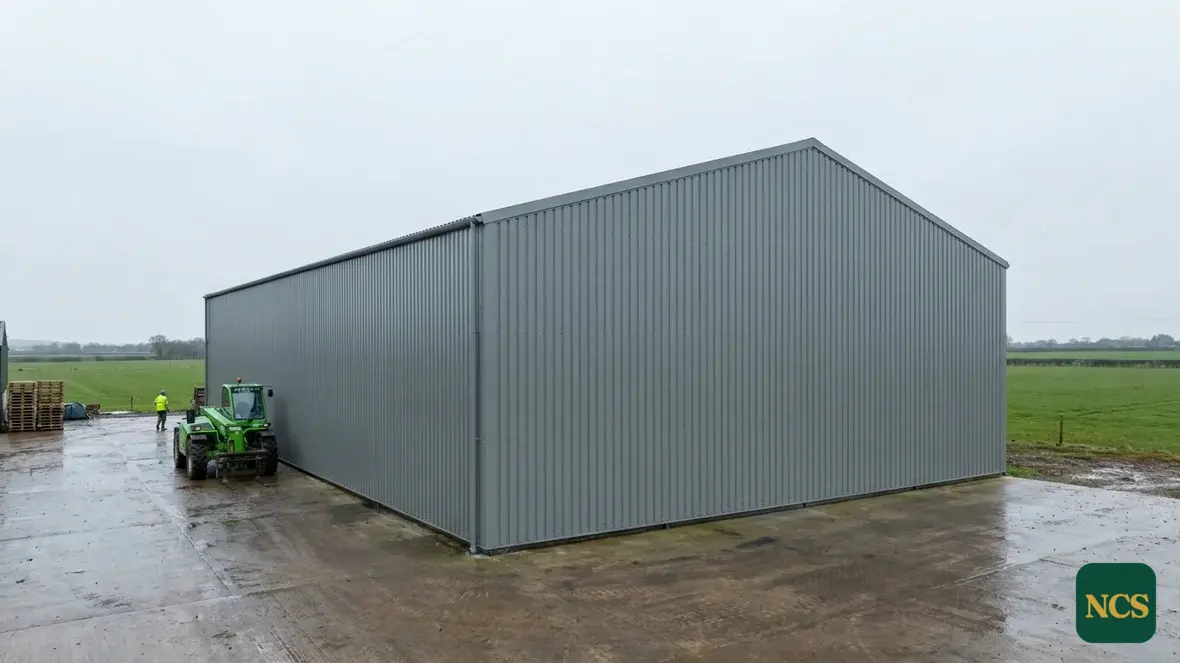
Why a Southampton-area farm starts with a survey
Southampton sits on the water, but the farmland behind it stretches out across south Hampshire towards Eastleigh, Romsey, Winchester and the edge of the New Forest. It is mixed country, with arable, grazing and a fair amount of horticulture, and the building stock follows suit: grain and fodder stores, general-purpose barns, machinery and implement sheds, and livestock buildings. The roofs are mostly profiled metal or fibre-cement, and the coastal influence adds salt-laden air that pushes corrosion harder than it would inland.
Every agricultural coating job around Southampton begins with a survey. It is the only honest way to know which roofs are worth protecting and which have moved beyond the point a coating can help.
Repainting a run of grain store cladding near Southampton before it rusts through is far cheaper than replacing the sheets after. The survey tells you how close it is.
The buildings we assess
We look at profiled steel and box-profile roofs on barns and stores, fibre-cement on the older buildings, cladding on machinery sheds, and the walls of livestock buildings where condensation and ammonia keep the structure damp. A coating extends the life of sound metal, improves weather resistance and lifts a tired roof. On weathered but intact fibre-cement it can seal the surface. What it cannot do is rebuild a roof that has failed, and we draw that line clearly on every Southampton survey.
Repair, coat or replace
The realistic answer is usually a mix across a holding. Coat the sound roofs, repair the bays that are failing at the laps and fixings, and plan to replace any building that has reached the end. We will not coat over perforated sheets or brittle, cracked cement just to take the job. Asbestos-cement needs the most caution: it features on plenty of older agricultural roofs near Southampton, and the rules on disturbing it are strict. A sound sheet may suit encapsulation; a damaged one points to licensed removal rather than a coating.
- Salt-accelerated corrosion on coastal-influenced metal roofs
- Brittle or cracked fibre-cement on older buildings
- Failed laps, ridges and fixings
- Gutter and valley faults driving internal damp

Timing it to the farm year
Access shapes the programme. Grain and fodder stores want attention while they are empty, livestock buildings are easier to reach when stock is out, and the horticultural units near Southampton have their own busy seasons to work around. We plan the work to fit the calendar, spreading larger programmes across the year where that suits the holding better than a single push.
What our survey gives you
A clear, building-by-building report: what is sound and worth coating, what needs repair, and what would be money better spent on replacement. No pressure to coat everything, and no quote invented from a phone call. For farms across the Southampton area the survey is free and there is no obligation to proceed.
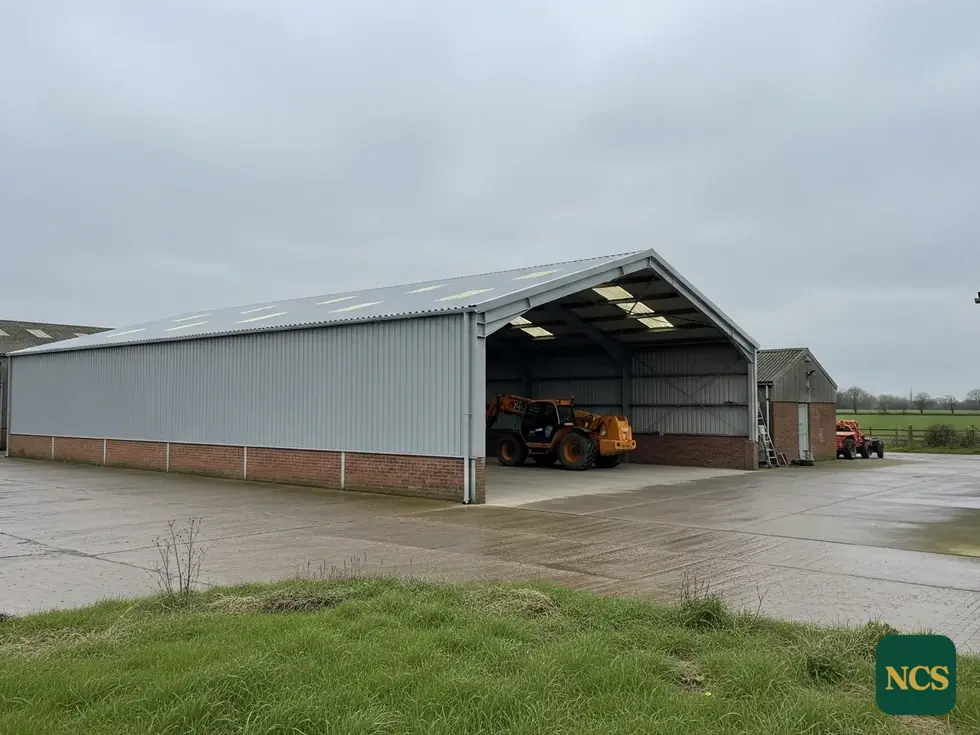
Commercial and Agricultural Coatings in Southampton
Southampton’s coastal exposure and mix of ageing industrial estates make it a prime candidate for protective coatings. The Port of Southampton alone houses hundreds of steel-framed warehouses and grain stores battling salt corrosion, while the Nursling and Millbrook industrial zones have 1970s-era asbestos roofing still in use across logistics yards and farm equipment sheds. These buildings face relentless south-westerly winds driving rain into cracked panels, with many lacking proper insulation or waterproof membranes. Our survey team routinely finds poultry units near Marchwood with failing roof sealant and dairy parlours in Totton where condensation drips onto milking equipment – both cases where a properly specified coating would halt deterioration.
We approach Southampton jobs with a site-specific survey, mapping out access challenges (low-clearance loading bays at the docks, narrow farm tracks to New Forest holdings) and substrate conditions. The city’s clay-heavy soil means many agricultural buildings suffer from rising damp, requiring breathable coatings rather than standard sealants. For exposed locations like Fawley refinery’s perimeter stores, we layer aluminium-rich primers under elastomeric topcoats to handle thermal expansion. Every specification starts with a moisture meter test and ends with a maintenance plan – because Southampton’s weather won’t change, but your building’s protection can.
We carry out agricultural building coatings work in and around Southampton. For the full survey-led service and how we assess each building, see our Agricultural Building Coatings service, or request a free site survey.
Recently — July 2026
Recent enquiries here have been a mix of metal industrial roofs, profiled cladding and ageing asbestos-cement sheets, all assessed on a free site survey before anything is specified.
Settled summer weather suits coating and spraying work, with stable temperatures and dry surfaces helping systems cure and bond as specified.