Where asbestos cement roofs hide around York
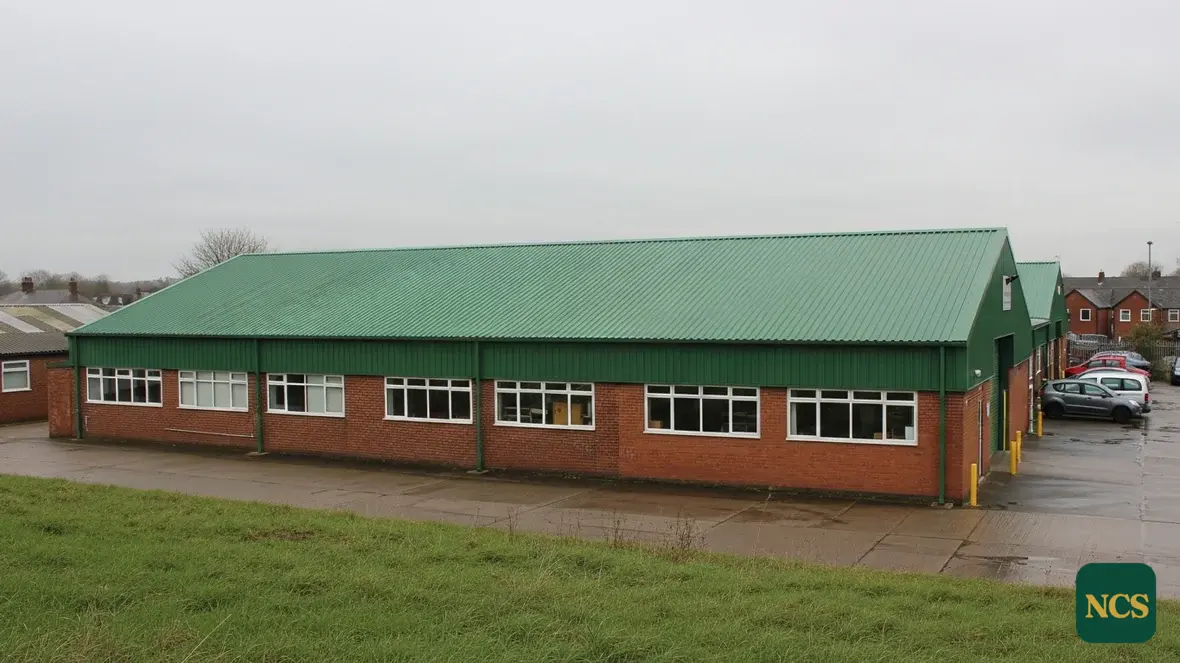
York’s a city with a long history, but drive out onto its trading estates or into the Vale of York and you’ll see a different kind of roof. The industrial units, warehouses, depots, and workshops around the city, and the farm buildings dotted across the agricultural land, were mostly roofed in corrugated asbestos cement. That was the standard, economical sheet for a portal-frame shed, a grain store, or a livestock building between the 1960s and 1980s. After decades outside, many of those roofs are now porous, covered in moss, and leaking at the fixings and laps, even if the sheets themselves are still sound. We use a survey to measure that gap between a tired surface and a genuinely failed roof. That’s the difference between a roof we can seal and one that has to come off.
Owners in York ask for asbestos roof coating, sealing or painting, and it is the same careful job: survey, controls, then a system the sheets can take.
Encapsulation explained, and why owners choose it
Encapsulation is an engineered process, not just a cosmetic coat. We inspect the roof sheet by sheet, then clean it under controlled conditions. This lifts the moss and debris without releasing fibres or cracking sheets underfoot. We renew any failed fixings, make minor repairs, deal with brittle rooflights, then apply a coating system designed specifically for asbestos cement. Once it’s cured, the coating binds the surface, locks the fibres in, gets the roof shedding water again, and gives it a good few more years of useful life. Compared to stripping the roof, getting rid of the sheets as hazardous waste, and paying for a full replacement, the cost saving is usually significant. Plus, the building below stays in use throughout the work. No need to shut down.
The duty to manage under CAR 2012
Regulation 4 of the Control of Asbestos Regulations 2012 puts the duty to manage asbestos on whoever controls maintenance of non-domestic premises. That means finding asbestos-containing materials, checking their condition, keeping a written record, and managing the risk over time. It doesn’t mean you have to rip it all out. Asbestos cement that’s in sound condition can stay in place, be sealed, and monitored. That’s exactly where encapsulation fits in: it’s a recorded, planned measure inside your management plan, not a workaround. For a business or estate in the York area, coating makes for a compliant choice, not a cut corner, provided the sheets are genuinely in the condition our survey confirms.

The honest part: when encapsulation is wrong
There are roofs we won’t coat. It’s better you know that before a survey than after a failure. Encapsulation is the wrong call if sheets are extensively cracked or holed, if the cement has gone soft and friable from long saturation, or if storm damage or structural movement has broken the roof’s integrity. It’s also strictly for asbestos cement. If our survey finds asbestos insulating board, lagging, or sprayed coatings, that material needs a licence and has to be removed by an HSE-licensed contractor. If removal is the right course for your building, we’ll tell you in writing and step back. We won’t apply a coating that won’t hold.
Survey-led work across the city and the Vale
We work from a South-East base and cover the whole of the UK. That keeps the city of York and the wider Vale of York well within our regular survey area. The process is straightforward:
- We’ll do a condition check of every sheet, fixing, rooflight, and gutter run.
- You’ll get a photographic record you can keep on file with your management plan.
- We’ll give you a straight written answer: encapsulate, repair first, or refer for removal.
- You’ll only get a specification and price if coating genuinely fits the roof.
- We carry out all our work under controlled, documented conditions.
If you own a building from the 1960s to the 1980s and its roof has never been assessed, our survey answers both the compliance question and the cost question in a single visit.
We carry out asbestos roof encapsulation work in and around York. For the full survey-led service and how we assess each building, see our Asbestos Roof Encapsulation service, or request a free site survey.
Recently — July 2026
We continue to survey every building before recommending a route. Whether to coat, repair or replace is decided on the condition of your roof, not a price list.
Settled summer weather suits coating and spraying work, with stable temperatures and dry surfaces helping systems cure and bond as specified.