Where corrosion starts on Chester’s commercial roofs
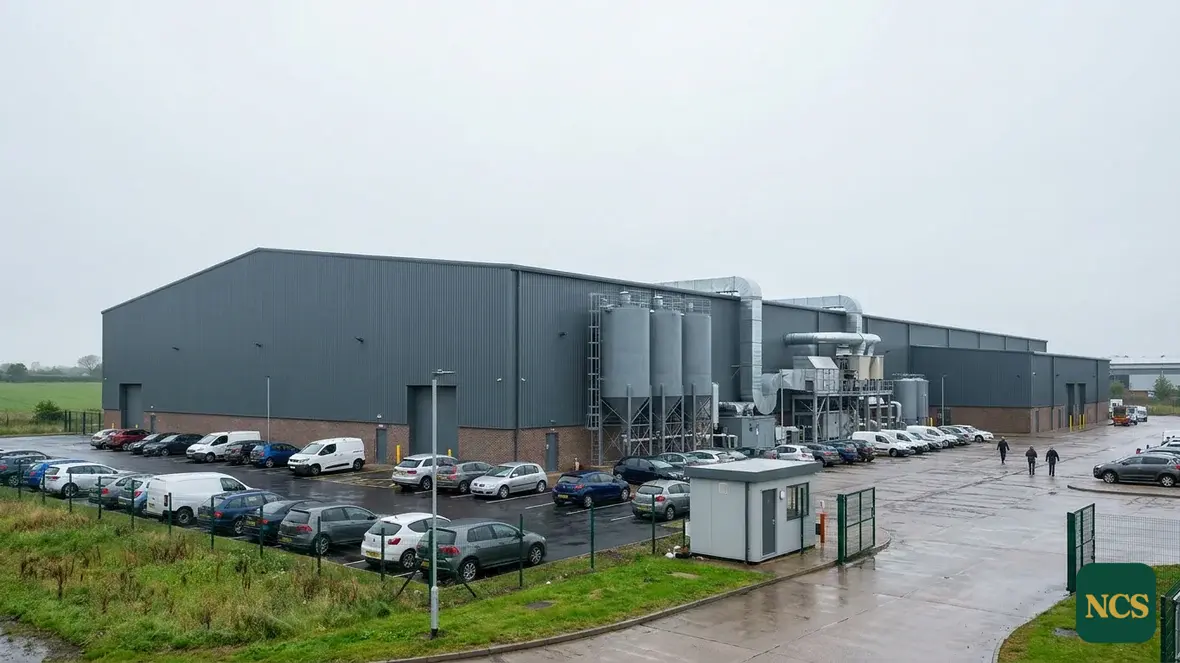
Forget the Roman walls and Tudor frontages. The buildings that keep Chester ticking over are out on the business parks and industrial estates, along the Deeside corridor. A lot of them have profiled coated-steel roofs. On those, one detail always gives out first: the cut edge. That’s the strip of bare metal left exposed when a sheet is trimmed to length and the factory finish stops.
We’re close enough to the Dee estuary for the weather here to have a marine edge. That means damp, faintly salty air blowing inland. It settles on roof surfaces and starts working on any bare steel it can find. And that exposed cut edge is always the first place it gets to.
From a stained eave to a failing slope
Rust at the cut edge doesn’t stay put. It creeps under the surrounding coating, breaking the bond between the finish and the steel. Then the coating lifts, peels, and exposes more metal to the air. That corrodes in turn, and the bare patch keeps growing. It’s a self-feeding problem, which is why a roof can look fine for years and then suddenly go downhill fast once the affected area gets to a certain size.
The overlaps hide the worst damage. Water gets pulled into the joint and sits between the sheets. When that water carries estuary salt, it bites harder than it would inland. By the time you see rusty streaks running into the gutters, the laps have usually been on their way out for a good while.
Treating cut edge corrosion on a Chester roof early costs a fraction of what the repair becomes later. The survey is free either way.
The financial case for moving sooner
As long as the steel at the edge is solid, the fix is contained. We take the affected sections back to clean metal, prime them to stop more rust, and then seal them under a flexible system that goes over the laps and edges. We do all of this on site, with the building still working below. The roof you’ve got stays put, and its working life gets extended, not cut short.
Hold off, and the numbers change. Fast. Holed sheet ends mean leaks. Leaks over production or storage mean internal damage. Enough failures eventually force a strip and resheet, which costs a lot more. There’s a scheduling benefit too: planned edge work can be booked for good weather. A roof left to fail picks its own moment, and it’s rarely a convenient one.
Being straight when a coating would be wasted
There are limits to what any treatment can do, and we stick to them. If our survey shows ends rusted right through, overlaps with no sound metal left to bond to, or corrosion that’s gone well past the edge into the main body of the sheets, we won’t coat it. It would fail, and you’d be paying twice. We’ll put that in writing, with photos, so you can see the evidence for yourself.
Around Chester, the honest answer often splits the difference: replace a handful of dead sheets, treat the rest. Sometimes it’s a full replacement. Either way, you get a straight assessment, both options priced openly, and no pressure to take the bigger job.
Carrying the work through to a full coating
The edges go first, but they rarely go alone. Near an estuary, the whole finish ages quickly. Treating the edges and overcoating the entire roof in one go protects every surface, smartens up the building’s appearance from above, and means you don’t pay for roof access twice within a few years.
We’re a survey-led coating contractor. We’re based in the South East but work across the UK, covering Cheshire and Deeside. It always starts the same way: a roof survey, photographs, and a clear recommendation you can hold us to.

Recently — July 2026
We continue to survey every building before recommending a route. Whether to coat, repair or replace is decided on the condition of your roof, not a price list.
With surfaces staying dry for longer, summer lets us prepare and coat a roof in a single planned visit rather than working around showers.