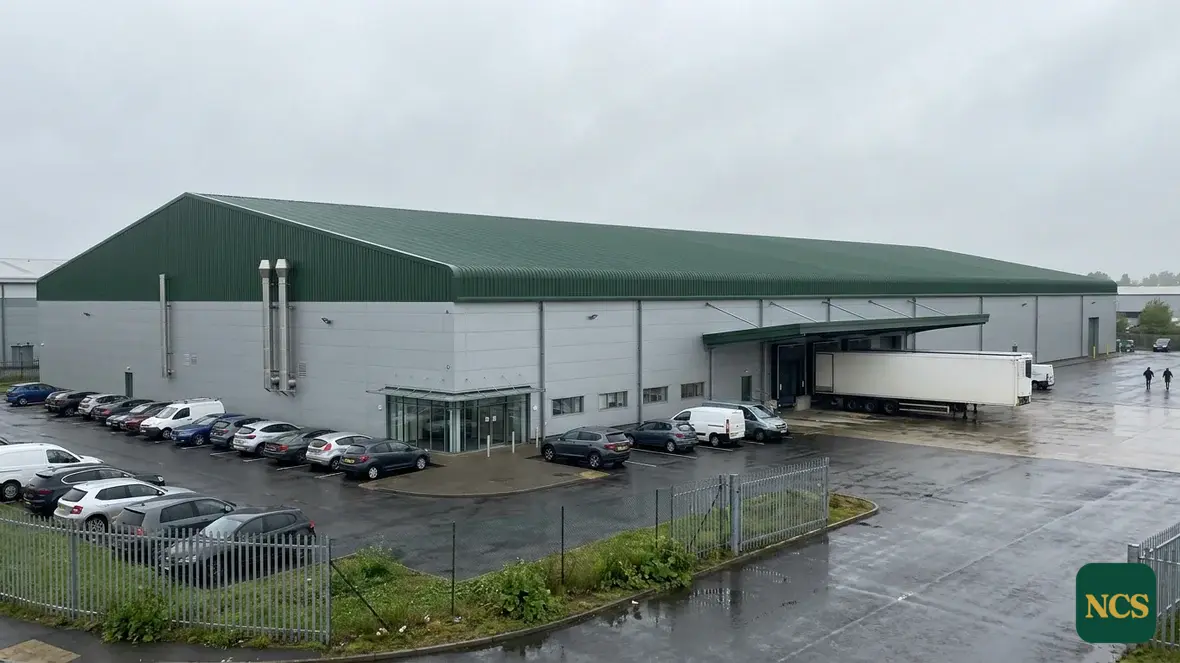
The trading estates around Chester might not feature on the tourist maps, but they’re a vital part of the local economy. You’ll find storage, engineering, trade counters, vehicle businesses, and light production, much of it housed under profiled metal roofs that were put up decades ago. With the wider industrial belt nearby, we see plenty of big, single-storey buildings where the original roof finish is quietly giving up. Their owners need a sensible answer that isn’t automatically a full replacement.
That’s where a coating system comes in. It adds years to a sound roof for a fraction of the cost and hassle of re-sheeting. The old roof stays put, the building stays dry, and we get the work done from roof level while the business keeps running below. No moving stock out, no stopping production, no weeks of scaffolding and exposure. For many busy units, avoiding that disruption matters even more than the money saved.
The survey comes first, every time
A specification isn’t worth the paper it’s written on until someone has actually been up there and checked the roof. Our surveys look at the condition of the sheets, the state of the cut edges at the laps and eaves, how well the existing finish is still stuck down, the fixings, rooflights, gutters and, if we can get to it, the underside of the deck. We put all the findings into a written report with photos and a straightforward recommendation. On the industrial stock around Chester, that recommendation is often coating with proper edge treatment, sometimes repair work first, and sometimes, no coating at all.

Cut-edge corrosion: small defect, large consequences
Profiled sheets get their protection from factory-applied coatings, but those coatings stop dead at the cut edge. That leaves a thin line of bare steel at every lap, eave, and gutter line. That’s where corrosion starts. From there, it creeps back under the finish, lifting it and eventually punching holes right through the sheet. It’s the most common serious problem we see on these types of roofs and it’s the main reason a coating job either works or fails. Treat the edges properly, with good preparation, priming, and sealing before the coating goes on, and the system will protect the roof. Skip them, and the rust just carries on underneath your new surface. It’s also the best argument for dealing with it early, while edge treatment is still all the roof needs.
An honest line on when not to coat
If our survey finds widespread holes, corrosion pushing through from the underside, saturated insulation in a built-up roof, or structural problems with purlins and fixings, we won’t suggest a coating. Covering up decay doesn’t stop it. Putting a smart new surface over a failing roof is a disservice we aren’t willing to sell. In those cases, the report will recommend repair or replacement and explain why, in terms you can take straight to an owner or the board.
Painting an industrial roof in Chester is downtime-sensitive work, so the programme is built around shifts, access and weather windows.
Arranging a survey in Chester
We’re a survey-led coating contractor, based in the South-East but working right across the UK, and Chester is definitely within that coverage. The process is kept simple:
- Tell us about your building and what the roof is doing.
- We’ll inspect and photograph the roof in detail.
- You’ll get a written condition report and a clear recommendation.
- If industrial roof coatings are the right call, the specification will match the roof’s actual condition.
- We’ll programme the work around your operation, phasing it where it makes sense.
Rust lines at sheet ends, flaking finishes, and stained gutters are your early warnings. A survey is how you find out exactly how early you’ve caught them.