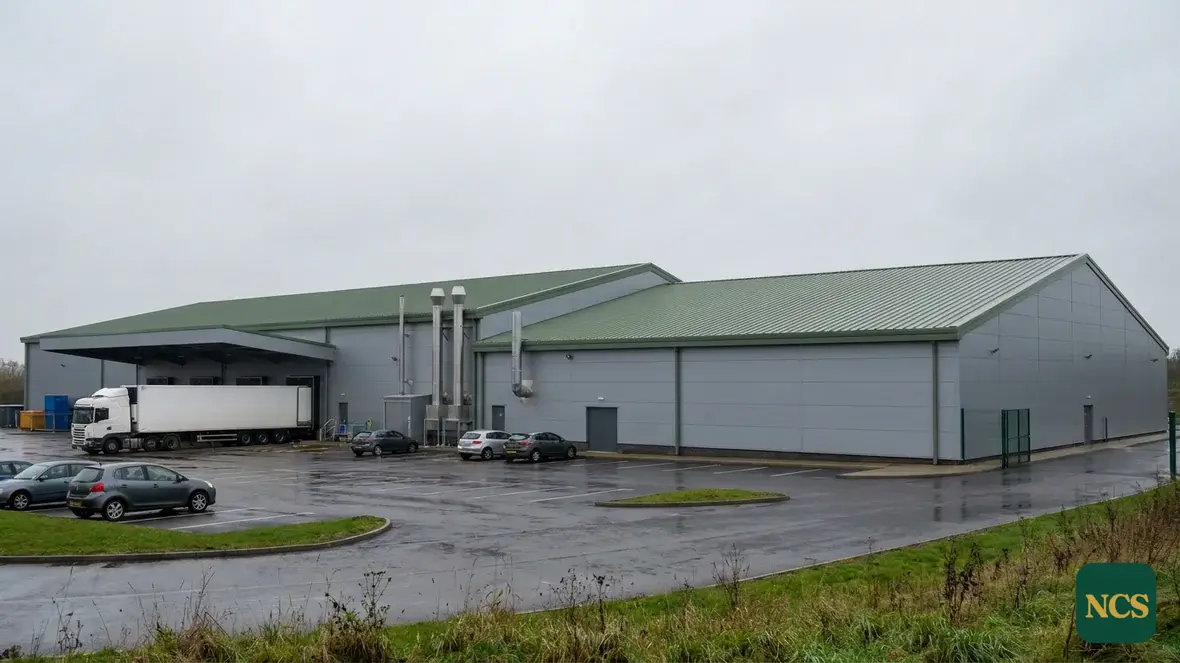
Shrewsbury’s industry sits mostly on the edges of the town: estates and business parks off the A5 and A49 where agricultural engineering, food businesses, storage and distribution operate out of profiled metal buildings of varying ages. Border-country weather is not kind to these roofs. Long wet spells keep lap joints damp, wind drives rain into details that were marginal when new, and the first sign anyone notices indoors is a stain on the deck or a drip over stock. Industrial roof coatings exist for exactly this stage of a roof’s life: old enough to be failing at the surface, sound enough to be worth saving.
The state of a typical Shrewsbury industrial roof
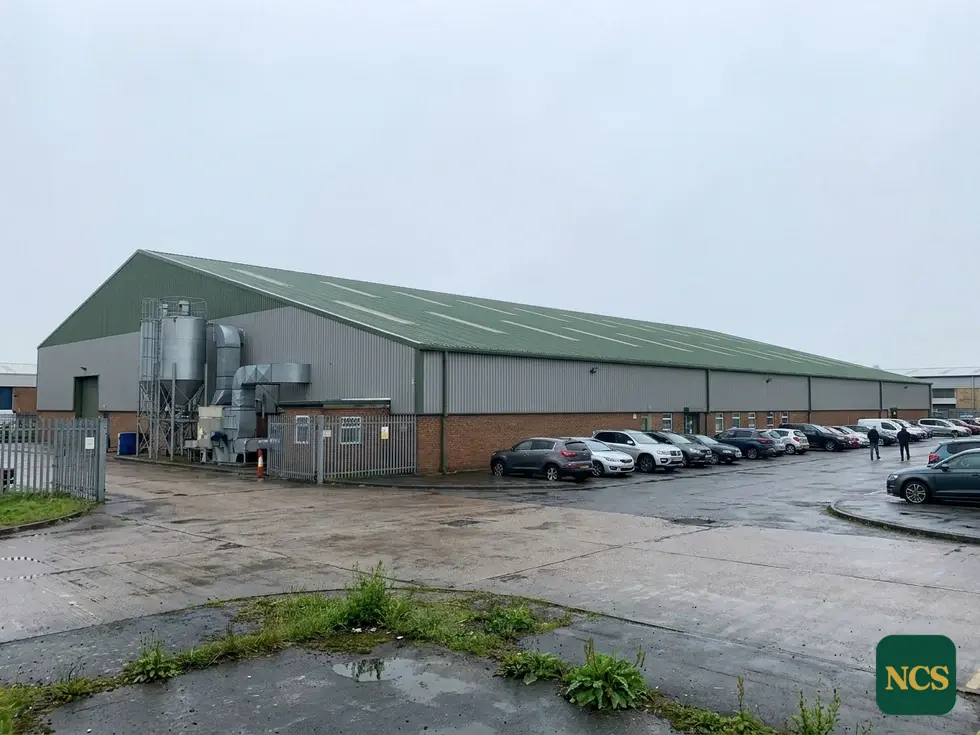
The pattern we see on profiled steel roofs of twenty years and older is consistent. The factory finish chalks and thins, then corrosion starts at the cut edges of the sheets where bare steel is exposed at laps and eaves. Fixings rust, washers harden and crack, rooflights yellow and become fragile, and sealant in the laps loses its grip. Individually these are small faults. Together they end the roof’s weatherproof life long before the steel itself is finished. A coating system, applied after proper preparation and repairs, resets that surface layer and pushes the replacement decision years into the future.
An industrial roof repaint around Shrewsbury done on a surveyed deck adds real service life. Done blind, it hides the faults until they leak.
Stopping cut-edge corrosion before it spreads
Cut-edge corrosion is the deciding fault on most metal roofs. While rust is confined to the edge zone it can be mechanically prepared, primed and sealed as part of the coating works, and the result is durable. Once it has crept far enough back to perforate the sheet, no coating will bridge the hole honestly, and affected sheets need replacing first. The difference between those two states is often only a few years of neglect, which is why we encourage estates teams around Shrewsbury to get a roof surveyed at the first sign of edge rust rather than waiting for leaks.
How a survey-led job runs
Every project follows the same sequence, and the survey controls everything that follows:
- Roof survey with photographs, covering sheets, edges, fixings, rooflights and gutters
- Written report with a clear recommendation, including coat or do not coat
- Preparation and repairs: cleaning, corrosion treatment, lap sealing, fixing replacement where needed
- Application of the specified coating system to the prepared roof
- Final inspection and a photographic record at handover
The guarantee position depends on the system specified for your roof, and we set out the available cover in writing after the survey so you know where you stand before you commit.
Working above a live workshop or store
Coating work is external, so machinery, racking and stock stay put and the doors stay open. There is no strip-off, no skip full of old sheets and no day when the weather decides whether your stock gets wet. We agree access and timing with whoever runs the site, and where an operation has quiet periods we plan around them. We are a South-East based contractor working across the UK, and Shropshire projects are planned so that distance has no bearing on the standard of work.

When coating is not the right call
We turn down coating work where it would not serve the building. Roofs with widespread perforation, saturated insulation in composite panels, failing purlins or structural movement need repair or replacement, not a surface treatment. Very brittle fibre-cement roofs can be unsafe to access for coating at all. And occasionally the roof is simply too far gone for the numbers to make sense: if a coating would buy only a short reprieve before replacement becomes unavoidable, we will say that the money is better held back for the re-roof. You get that judgement in writing, with the evidence, and the decision stays yours.