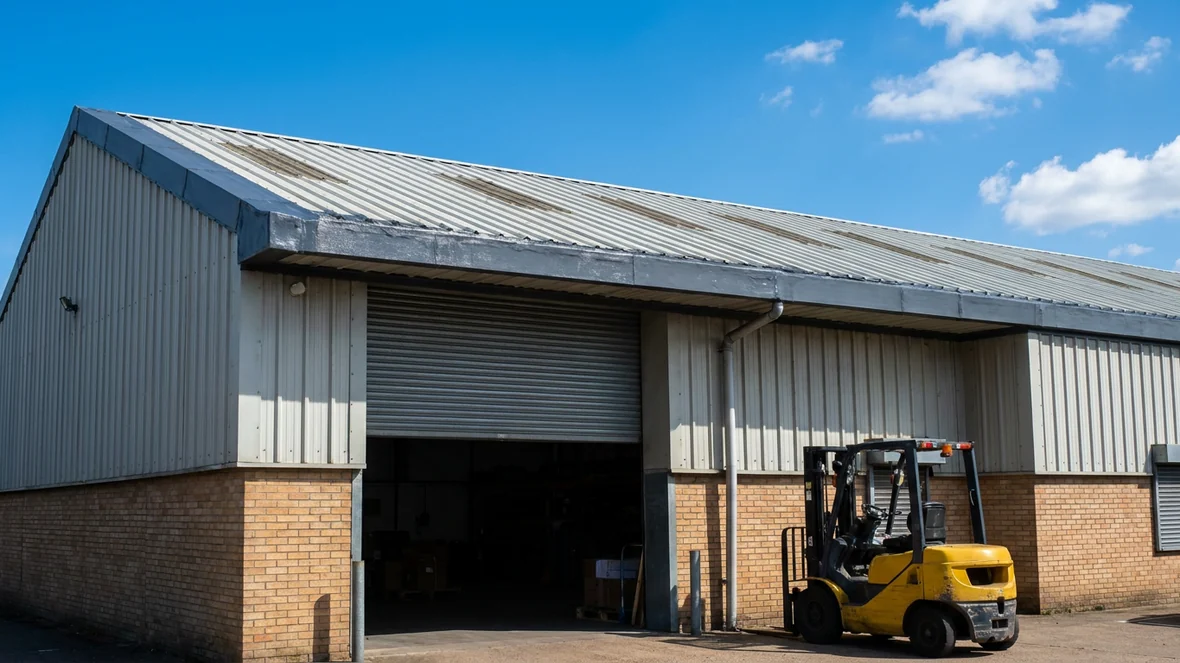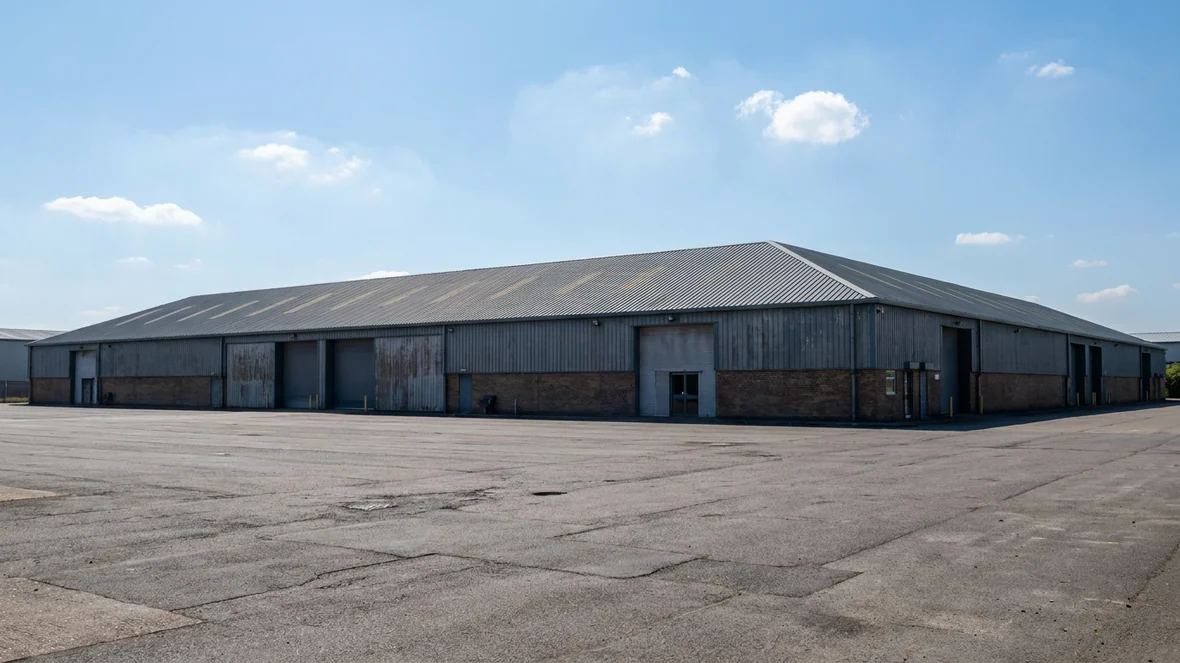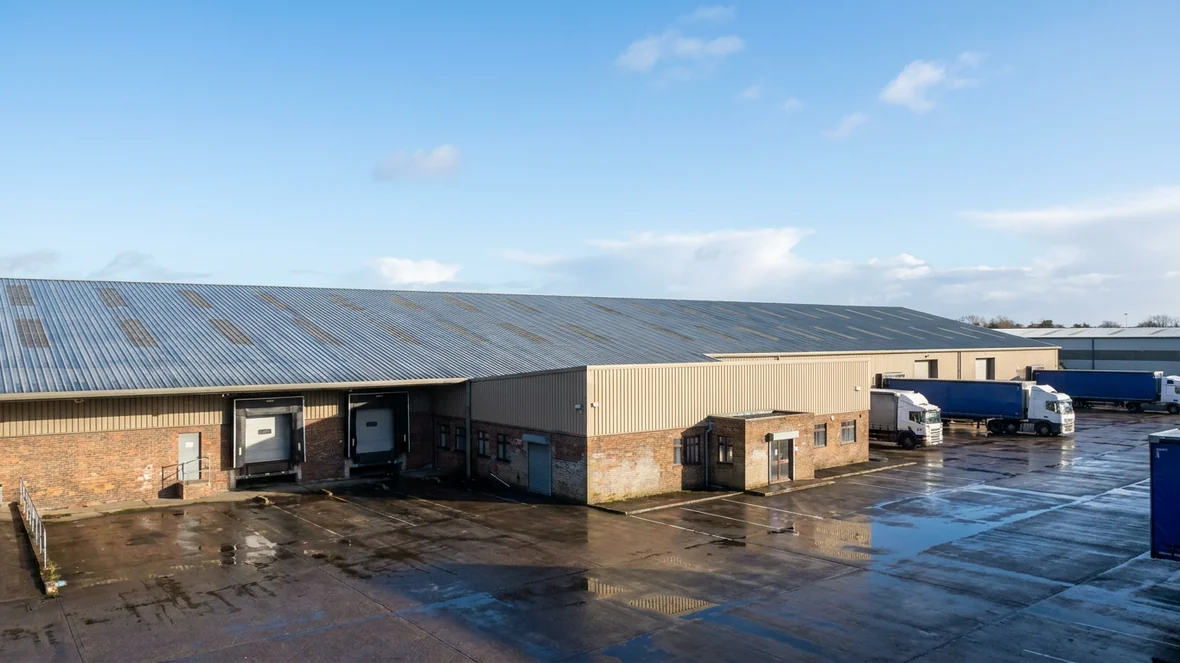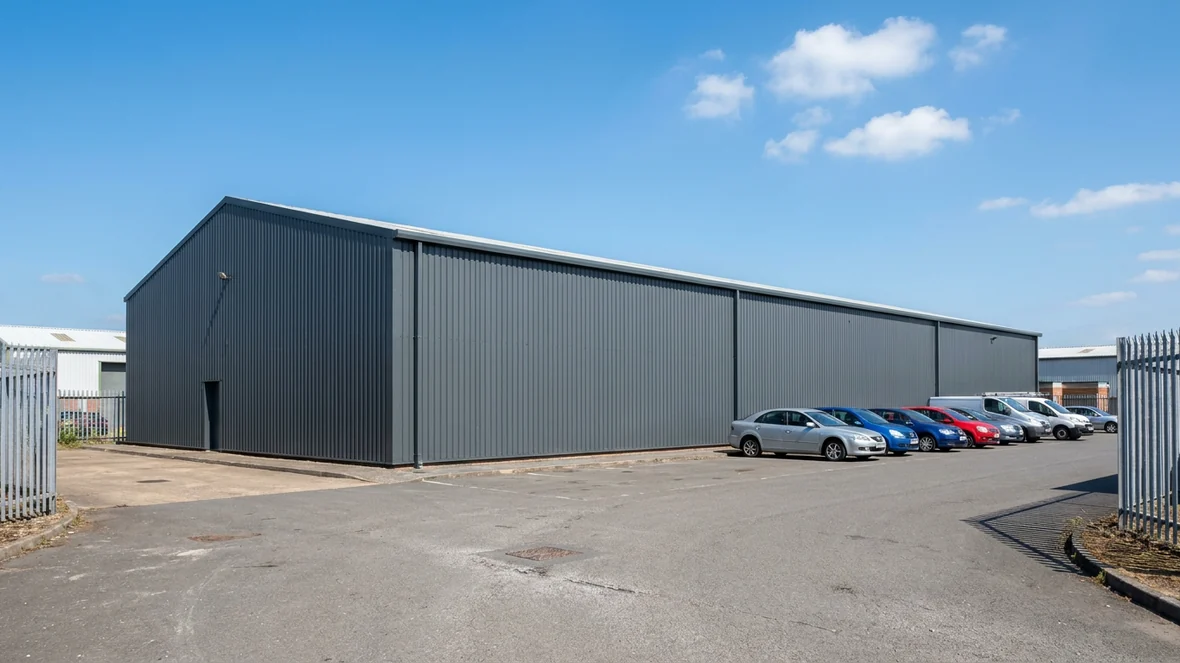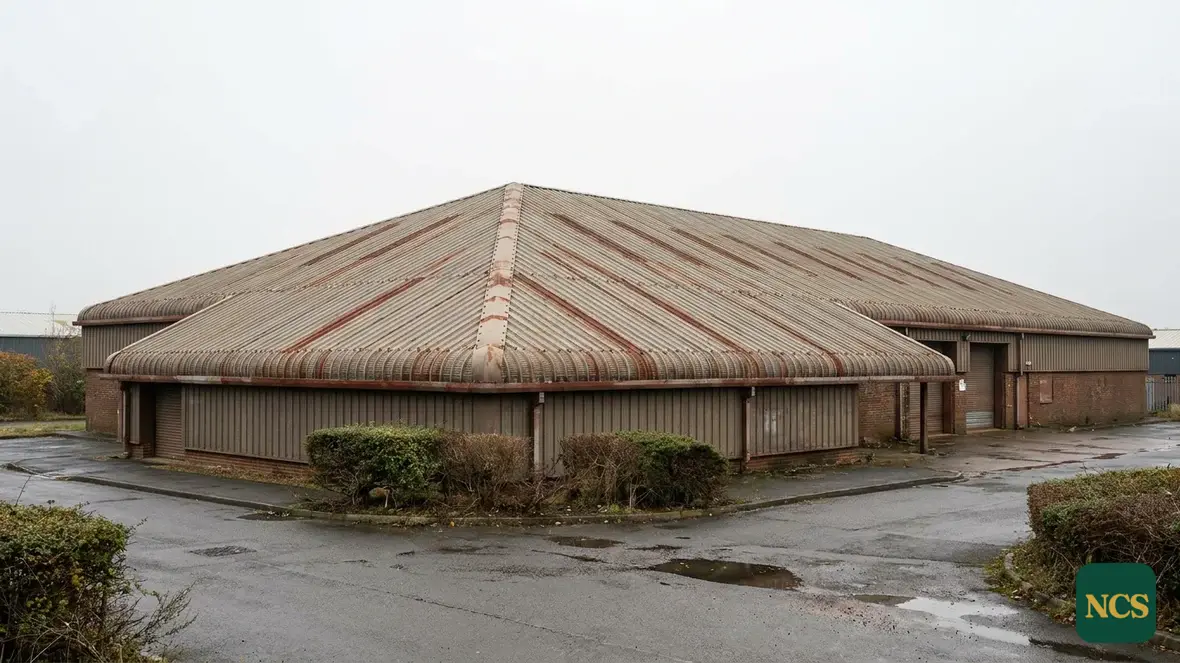










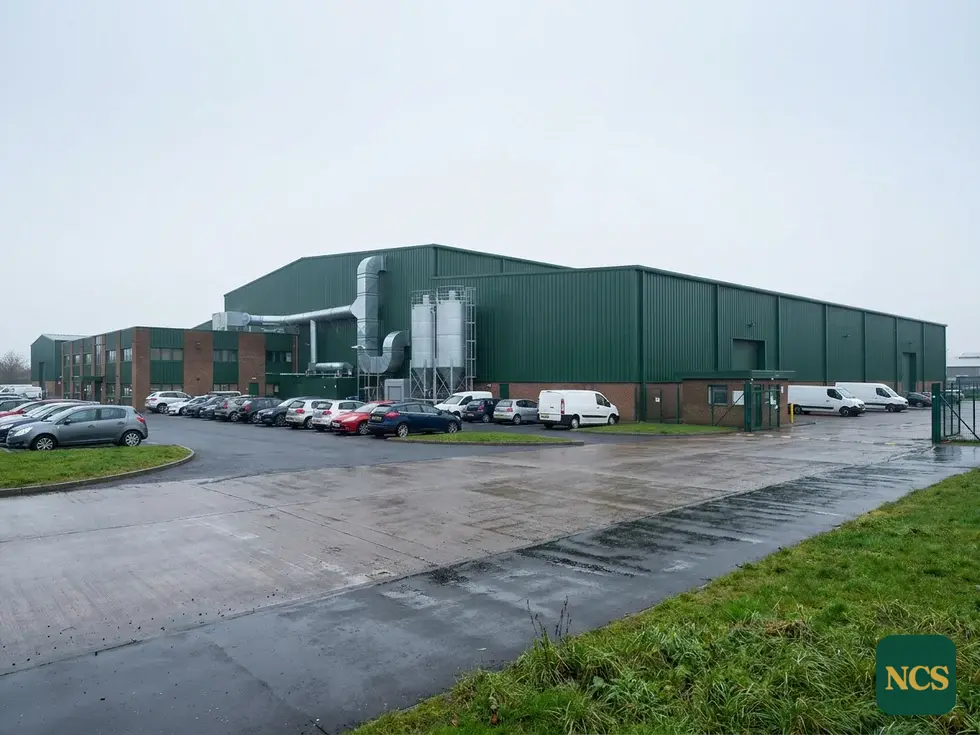
Wolverhampton’s industrial stock runs the full range: mid-century factory units built when the Black Country still made much of what Britain bolted together, alongside newer distribution sheds out towards the motorway junctions. A large proportion of it sits under profiled metal roofing, and on roofs of a certain age one fault appears more reliably than any other: rust at the cut edges of the sheets.
Rust at the sheet ends: the mechanics
Coated steel sheet is protected by a factory-applied finish, but that finish goes onto the coil before the sheets are cut to length. Every cut leaves bare steel exposed at the sheet ends and along the side laps. Water finds its way into the overlaps and stays there, the unprotected edge starts to rust, and the corrosion then works sideways under the coating, breaking its bond with the metal. It is a built-in weakness, not a sign that the roof was badly made, and it appears eventually on most coated sheet roofs that have seen twenty or more winters.
Why it never stays where it starts
The dangerous thing about cut edge corrosion is its direction of travel. Surface rust on the face of a sheet tends to sit where it is; rust under the coating keeps moving, because the lifted finish traps moisture against fresh steel. A lap that shows a centimetre of staining this year can be delaminating across a hand’s width in a few seasons, and once any point of the sheet perforates, water is into the building. Around Wolverhampton, where plenty of industrial roofs have been patched and re-fixed over the decades, it is common to find sound-looking sheets with corrosion well advanced inside the laps. That is exactly why we survey before we price: the visible edge tells only part of the story.
What treating it early looks like
Caught before the steel is structurally affected, treatment is a methodical process rather than a major project:
- Clean the affected edges and laps back to sound, stable material
- Treat and stabilise the remaining rust so it cannot keep spreading
- Seal the lap joints so water can no longer sit against bare steel
- Apply a flexible, purpose-made coating over the sheet ends
- Photograph and record the works for your maintenance file
The economics favour the early mover. Edge treatment on a stained but solid roof costs a small fraction of what sheet replacement costs once perforation arrives, and replacement brings disruption with it: access, downtime, and making good whatever the water reached inside. Two identical buildings can sit a few years apart on this curve and face very different bills.
Where we draw the line
We will not sell edge treatment on a roof that cannot benefit from it. If sheets are holed, if the coating is detaching across large areas of the sheet face rather than just at the laps, or if the steel has visibly thinned, then treatment is money spent delaying a decision that has already been made. In those cases the right answer is replacement of the affected sheets, and we say so plainly in the survey report even though that work goes to someone else. More often the picture is mixed, with most of the roof treatable and a small number of sheets past help, and an honest scope reflects that split rather than rounding it in either direction.
While the access is up: the whole-roof question
If cut edge corrosion has taken hold, the rest of the roof finish is usually weathered too, faded, chalking and nearing the end of its decorative and protective life. Treating the edges and then coating the entire roof as one system deals with both problems in a single programme, and spreads the cost of access across the whole job instead of paying for it twice. We are a survey-led coating contractor based in the South East, working across England, and Wolverhampton and the wider Black Country are well within our normal patch. If your roof is showing rust at the laps, the survey will tell you honestly which side of the line it sits on.