Commercial roof coating in Wolverhampton
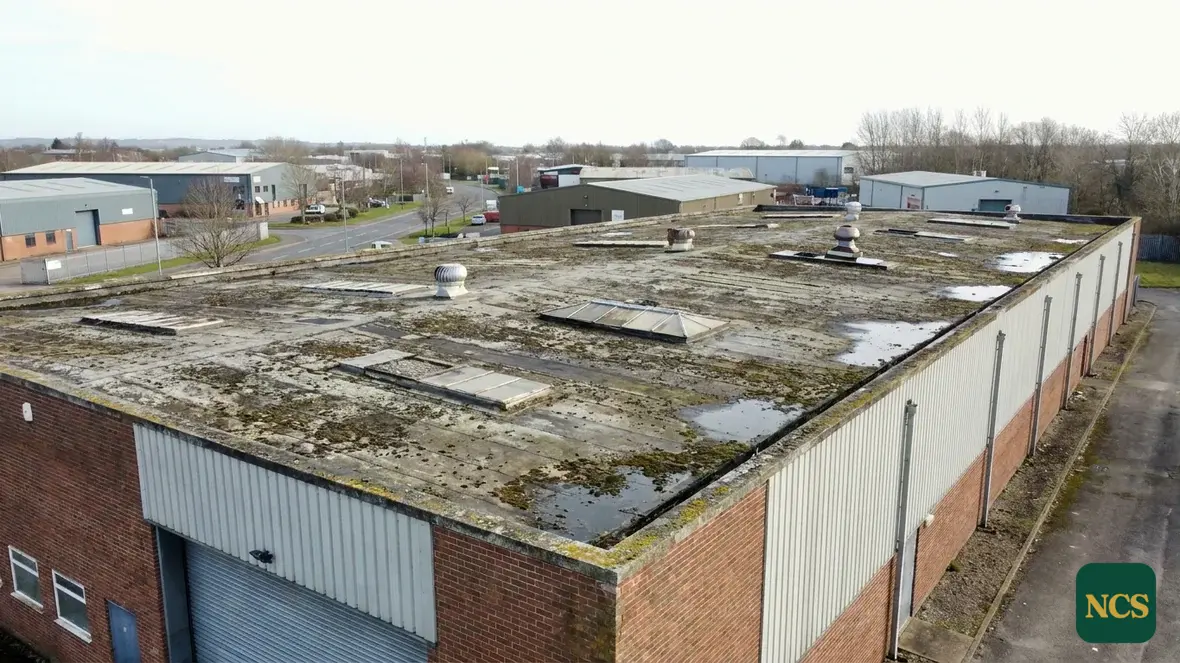
Walk around Wolverhampton’s industrial estates and you’ll see plenty of buildings that have outlasted several generations of the businesses inside them. Commercial roof coating is one of the main reasons many of them are still going. A lot of the commercial roof stock across the city and wider Black Country dates from the mid-20th century. Replacing those roofs is often financially out of reach for the owner or tenant. Coating a structurally sound roof restores its weatherproofing at a fraction of replacement cost and keeps the building trading underneath. The key word is sound. That’s why we survey every roof in the West Midlands before we’ll talk numbers.
The Black Country roof problem
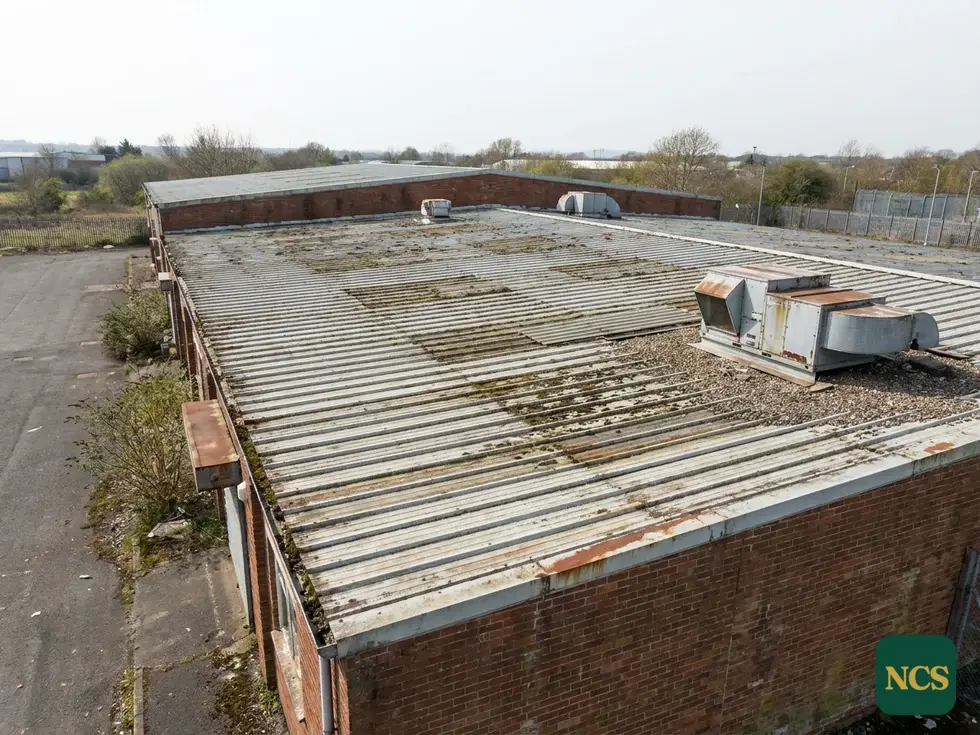
The area’s manufacturing history left Wolverhampton with a distinctive mix: older steel-truss factories and workshops, many carrying asbestos cement or early profiled metal roofs, alongside newer distribution and trade units. On those older metal roofs, decades of industrial atmosphere and weather mean cut-edge corrosion, rusting fixings and finishes that have chalked away to bare substrate in patches. Asbestos cement sheets, common on units of a certain age, slowly turn porous and let moisture wick through into the building. Both problems are exactly what coating systems were developed for, provided the sheet underneath still has structural life left in it. Rooflights, ridge details and gutter joints on this generation of buildings fail in predictable places too. An experienced surveyor knows exactly where to look first.
Where we draw the line
Not every roof should be coated. On older industrial stock, the failures are real. Sheets rusted through at the laps or around fixings need replacing before any coating goes near them. If corrosion is widespread, the whole roof may be past economic saving. Asbestos cement that has gone brittle can be unsafe to walk on, let alone prepare. Saturated insulation under a flat roof must never be sealed in. And if water is getting in through structural movement, no surface treatment fixes that. When a survey turns up these conditions, we say so directly and recommend the repair, overlay or replacement route instead. Coating a failed roof helps nobody.
As roof painters working across Wolverhampton and West Midlands, we specify to the roof in front of us rather than repeating one system everywhere.
How the survey-led process works here
We start on the roof, not at a desk. The survey covers sheet condition, corrosion depth, fixings, laps, flashings, rooflights and gutters, plus a look inside for staining and other leak evidence. You then get a straightforward verdict: coat, repair then coat, or do not coat. If coating goes ahead, preparation is specified to the substrate, repairs come first, and the building stays in use throughout, with out-of-hours working arranged where production schedules demand it. From Wolverhampton, we routinely work across the surrounding area, including Dudley, Walsall, Birmingham and Telford.
- On-roof condition survey before any price is given
- Corrosion treatment and cut-edge repair ahead of coating
- Systems matched to metal, asbestos cement or felt substrates
- Work scheduled around an operating business
- Written findings you keep, whatever we recommend
The case for survey-led over quote-first
Industrial roofs hide their problems well from ground level. A quote produced from a postcode and a satellite image cannot know how deep the corrosion runs or whether the fixings have failed. So it is either padded to cover the unknown or underpriced and corrected later, once the scaffold is up and your options have narrowed. A survey-led contractor removes the guesswork: the specification reflects the real roof, the price reflects the real specification, and the recommendation is honest because it is written against documented evidence rather than a glance from the car park. On Wolverhampton’s older commercial buildings, where the difference between surface rust and perforation decides everything, that discipline matters more than anywhere.