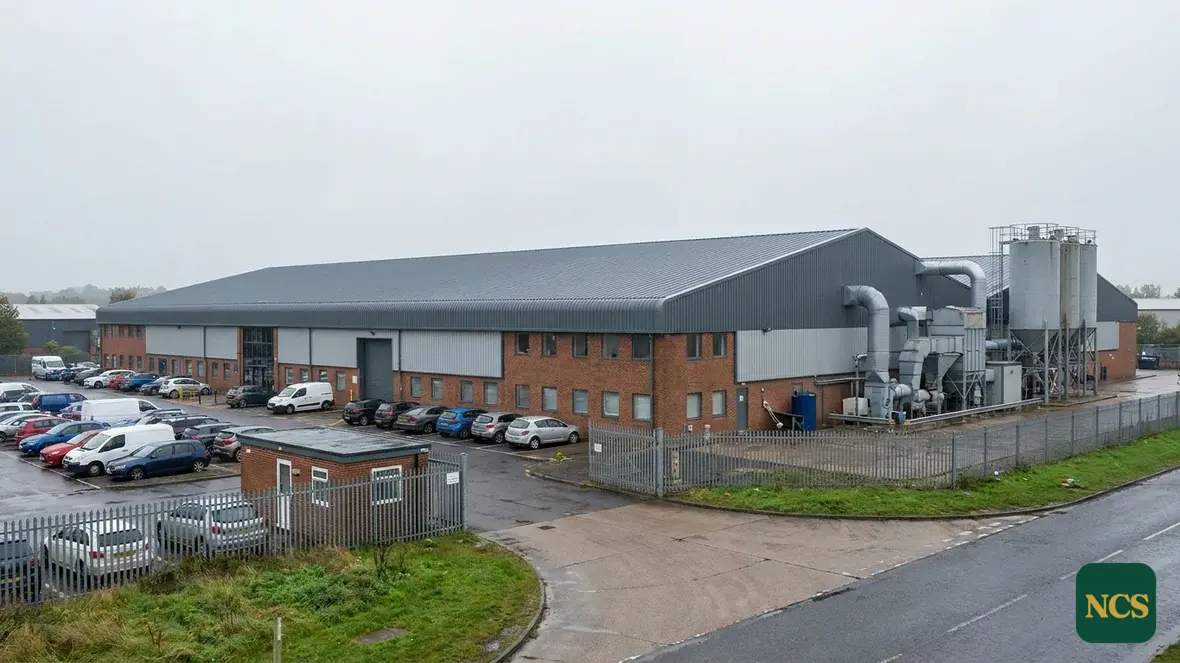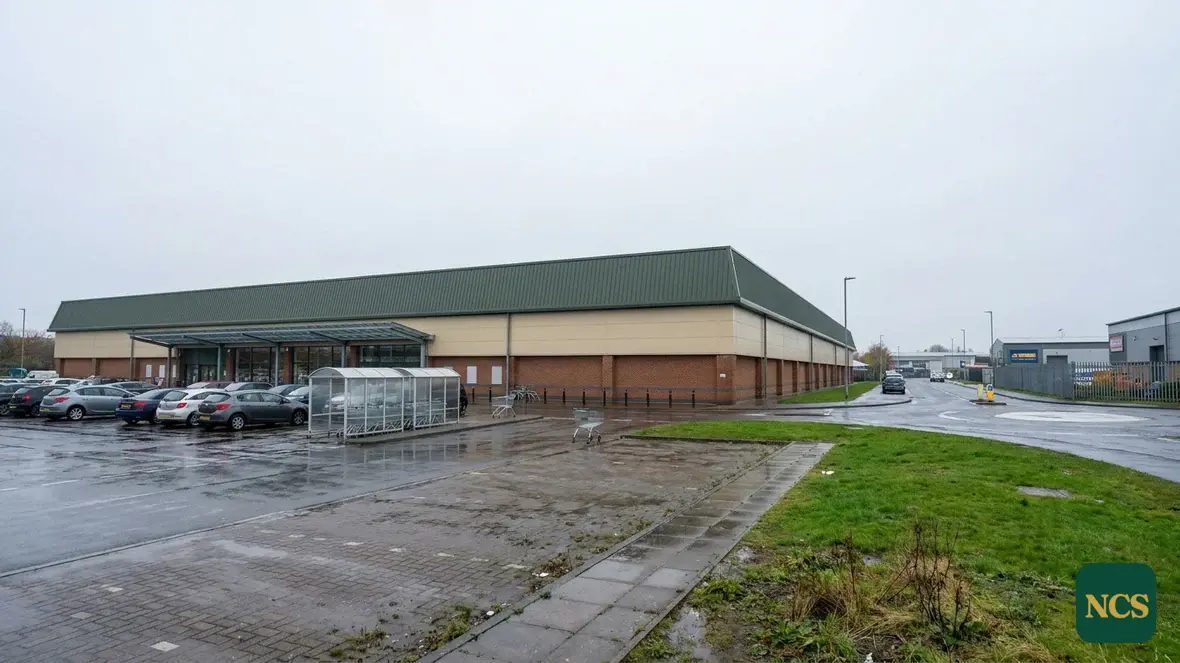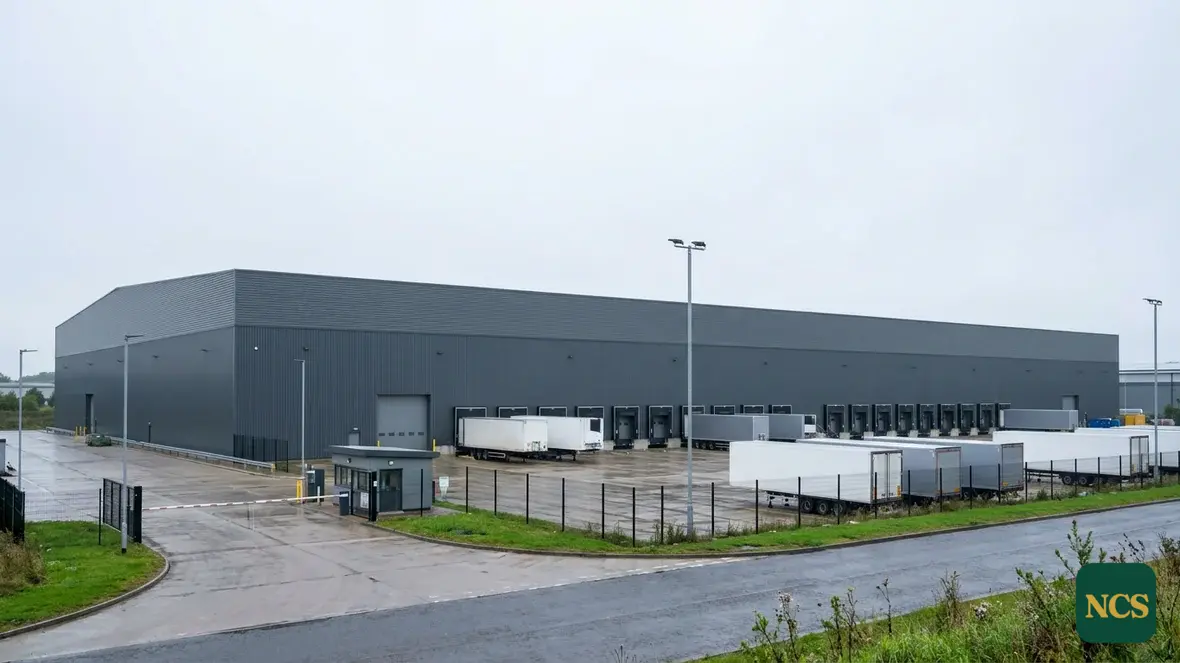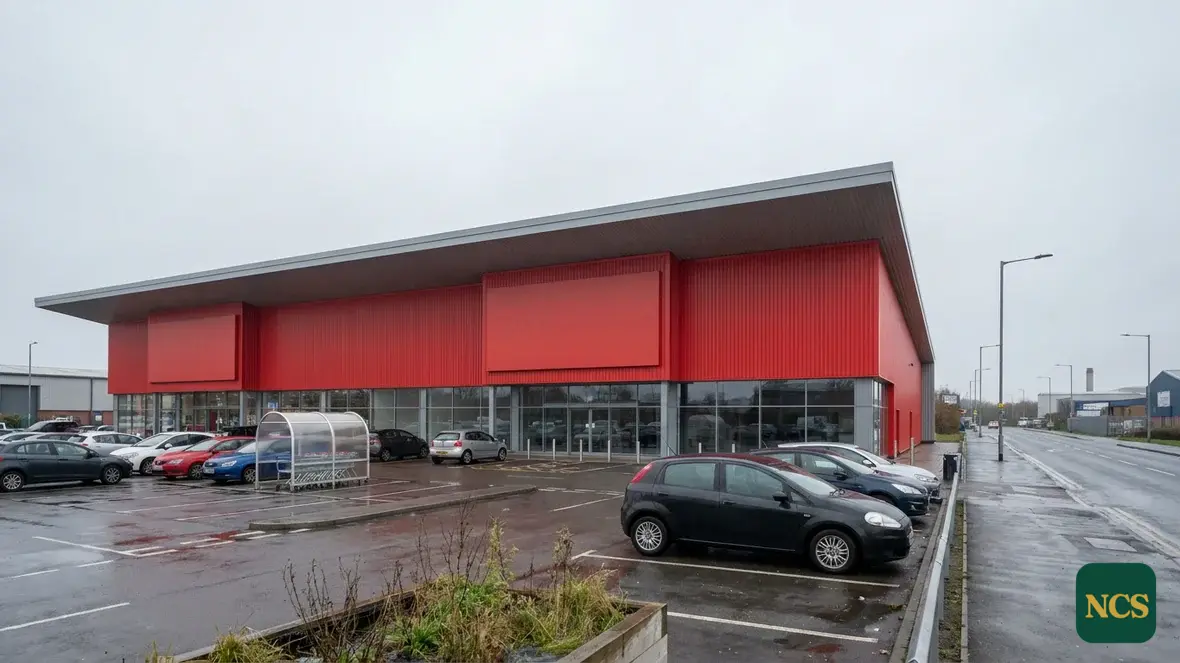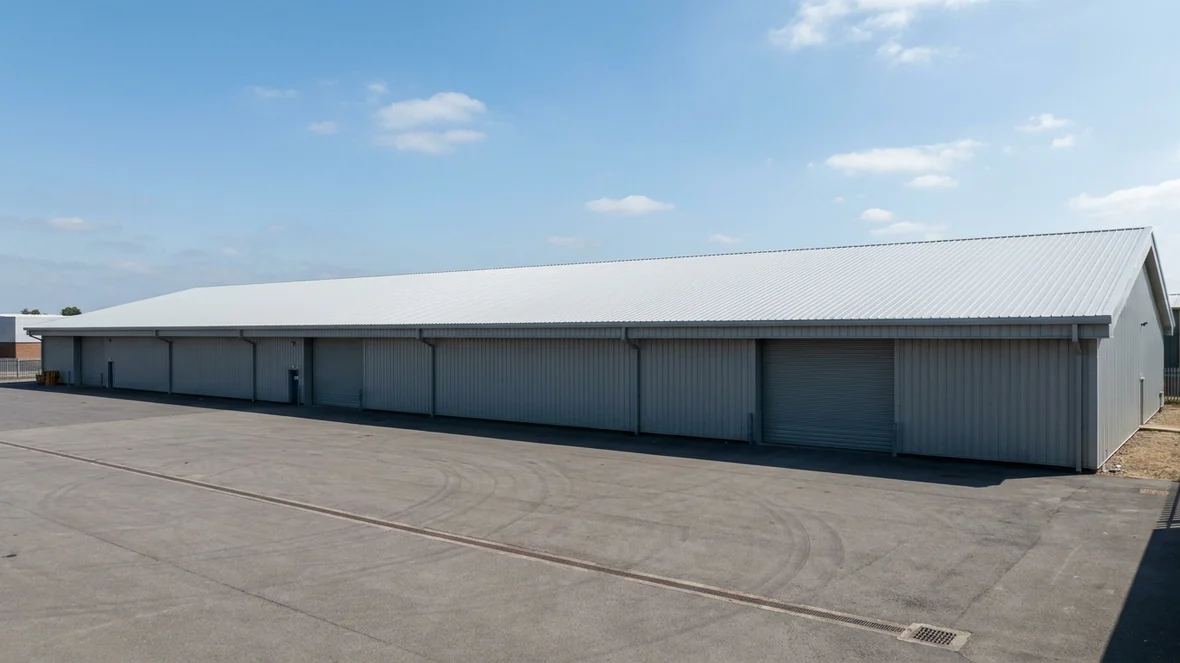
Kingston upon Hull has one of the most concentrated stretches of industrial roofing in the north of England: dockside storage, manufacturing plants, processing facilities and estate after estate of mid-sized units. The Humber gives the city its economy and also its roofing problem, because estuary air and exposed weather age profiled metal faster than the same sheet would age inland. For estates and facilities teams here, roof coating is often the difference between a planned maintenance line and an unplanned capital project.
Industrial roofs on the Humber take a beating
Wind-driven rain off the estuary finds every weak lap and loose fixing. Salt-laden air works on any exposed steel, and the broad, low-pitched roofs typical of warehouse stock hold water at end laps and behind debris in gutters. The original plastisol or polyester finishes on these roofs were never intended to last the life of the building. Once they chalk, crack or peel, corrosion starts at the most vulnerable points and spreads. Coating resets that clock: the prepared roof gets a new weathering surface bonded over sound metal.
Cut-edge corrosion and lap failure on profiled metal
Almost every ageing metal roof we survey around Kingston upon Hull shows some degree of cut-edge corrosion. The cut ends of each sheet expose raw steel, and at the overlaps that raw edge sits in a damp, shaded gap that never fully dries. Rust tracks back under the finish, the lap seal fails, and tenants start reporting drips that are hard to trace. Dealt with early, the remedy is methodical rather than dramatic: cut edges are cleaned, primed, sealed and then over-coated as part of the full system. The key variable is how far the corrosion has travelled before the work is done.
Coating versus replacement: the budget question
Replacement gives you a new roof, at a price that includes strip-off, disposal, temporary weather protection, heavier access requirements and serious disruption to whatever happens inside the building. Coating gives you a renewed weathering surface over the existing sheets at a fraction of that outlay, with the building kept watertight throughout. The honest comparison depends entirely on the condition of the metal. That is why we survey before quoting: the right answer is a finding, not a sales pitch.
Where we draw the line
Some roofs should not be coated, and we will tell you when yours is one of them. Widespread perforation, corrosion into the structure or fixings, saturated insulation in built-up systems, or fibre cement that has gone brittle and friable all point to replacement or major repair first. Coating over those conditions wastes money and delays the real decision. If our survey finds them, the report says so, with photographs, so you can plan properly rather than patch blindly.
How the work runs on a live site
Most industrial buildings in Hull cannot simply stop for roofing work, and with coating they do not have to. Typical arrangements include:
- Phased working by roof slope or bay, agreed with site management in advance
- Exclusion zones beneath access points rather than whole-yard closures
- No strip-off, so the building stays weathertight every night
- Deliveries and shift patterns worked around, not over
- A named contact for the duration of the works
If you manage industrial stock in Kingston upon Hull and the roof is overdue an honest assessment, start with a survey. It tells you what the estuary has actually done to your roof, and what it makes sense to do next.