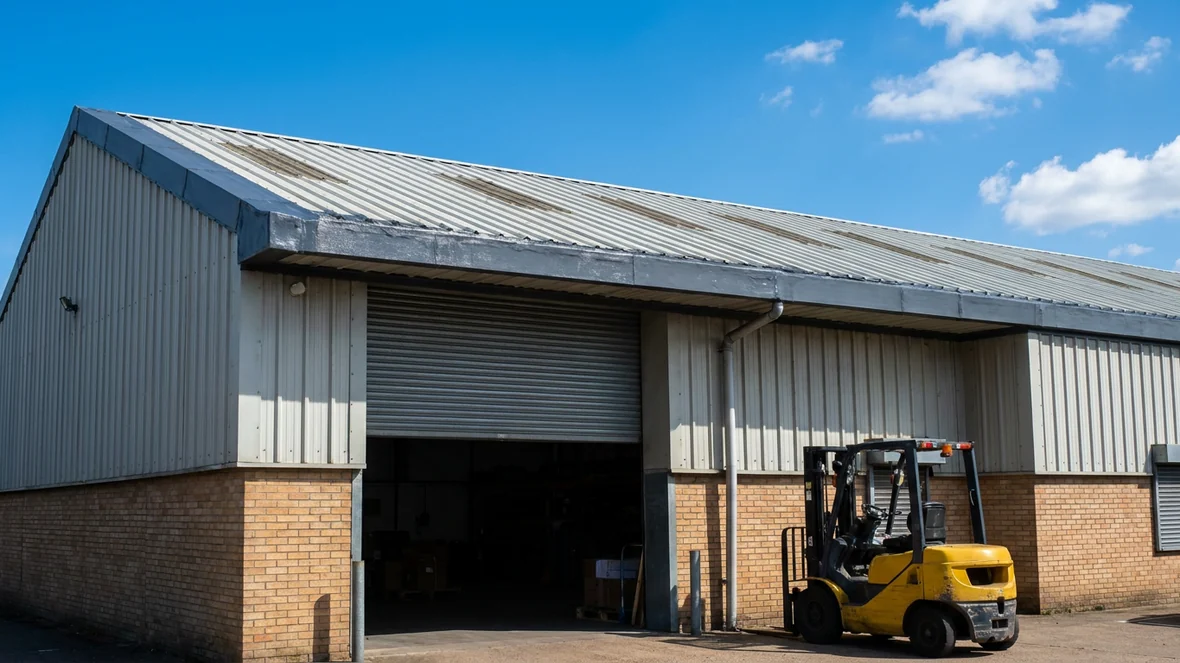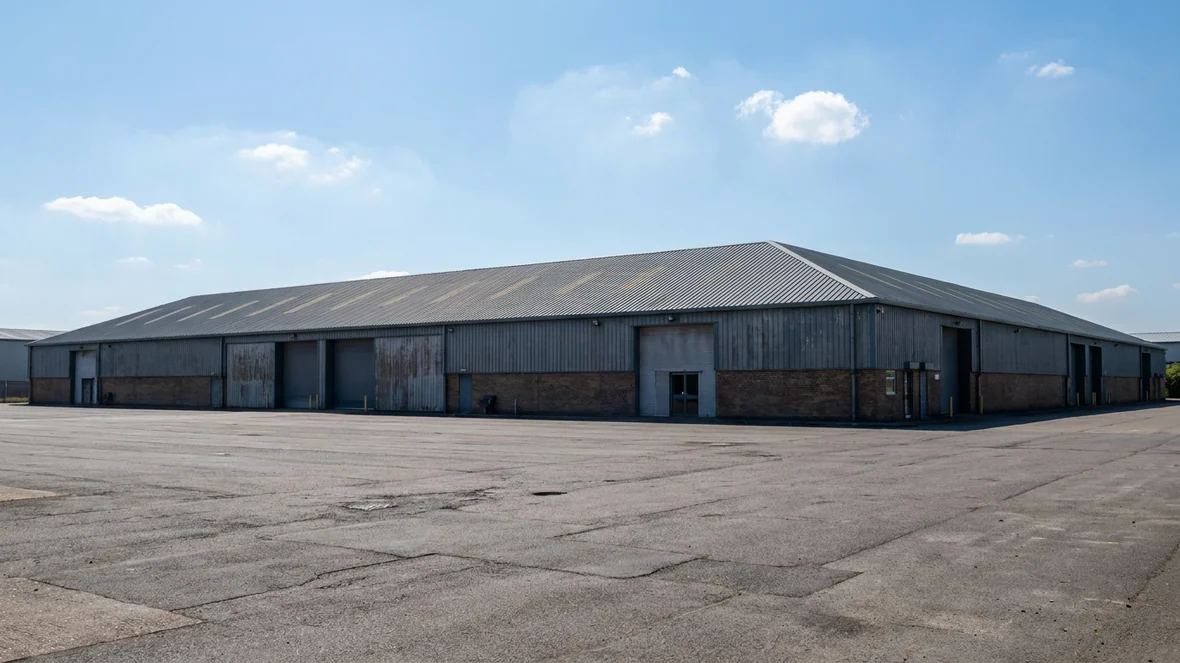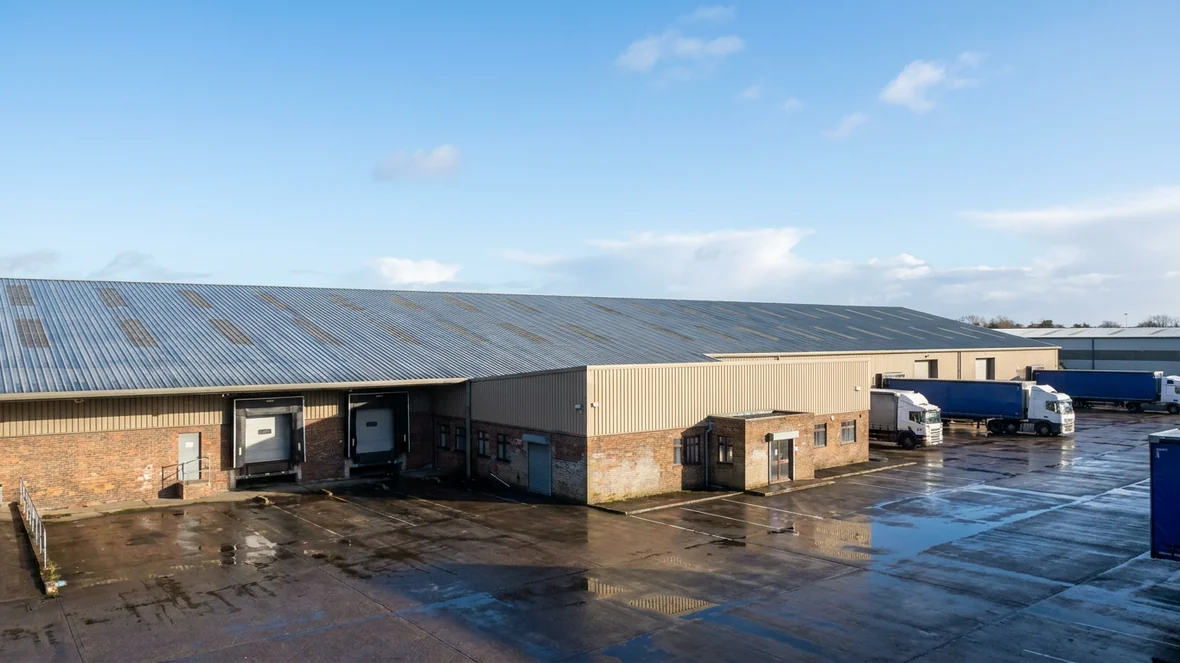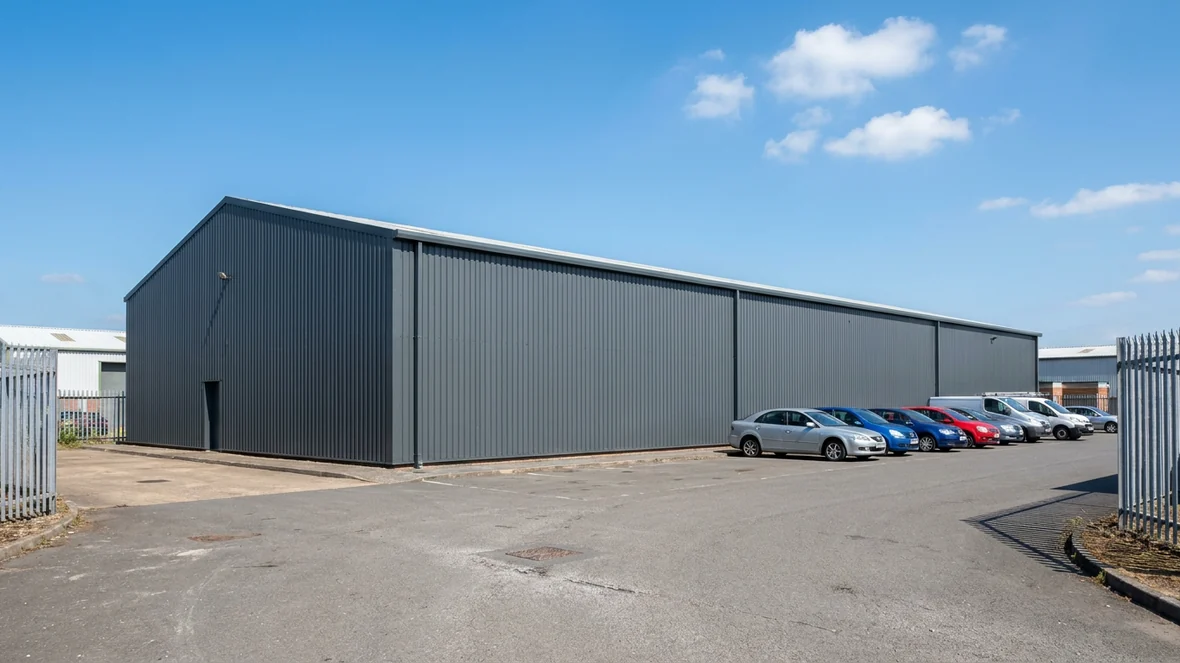










Stand at the gable of a steel-clad barn or a trading estate unit on the edge of Salisbury and look along the gutter line. If you can see a rusty band tracing the ends of the roof sheets, you are looking at cut edge corrosion, the most common defect on profiled metal roofs and one of the few that genuinely rewards early action.
Why the ends of roof sheets rust first
Profiled steel sheet is protected on its faces by a factory-applied coating, usually plastisol, but every sheet is cut to length, and the cut leaves bare steel at the end. On the roof, those ends sit at the eaves and inside the overlaps, exactly where rainwater collects and lingers. Moisture attacks the unprotected edge, rust forms, and the corrosion works its way back underneath the coating. The film loses adhesion, peels, and exposes more steel, which rusts in turn. It is a slow chain reaction, and on an exposed downland site it does not stay slow for long.
The building stock around Salisbury
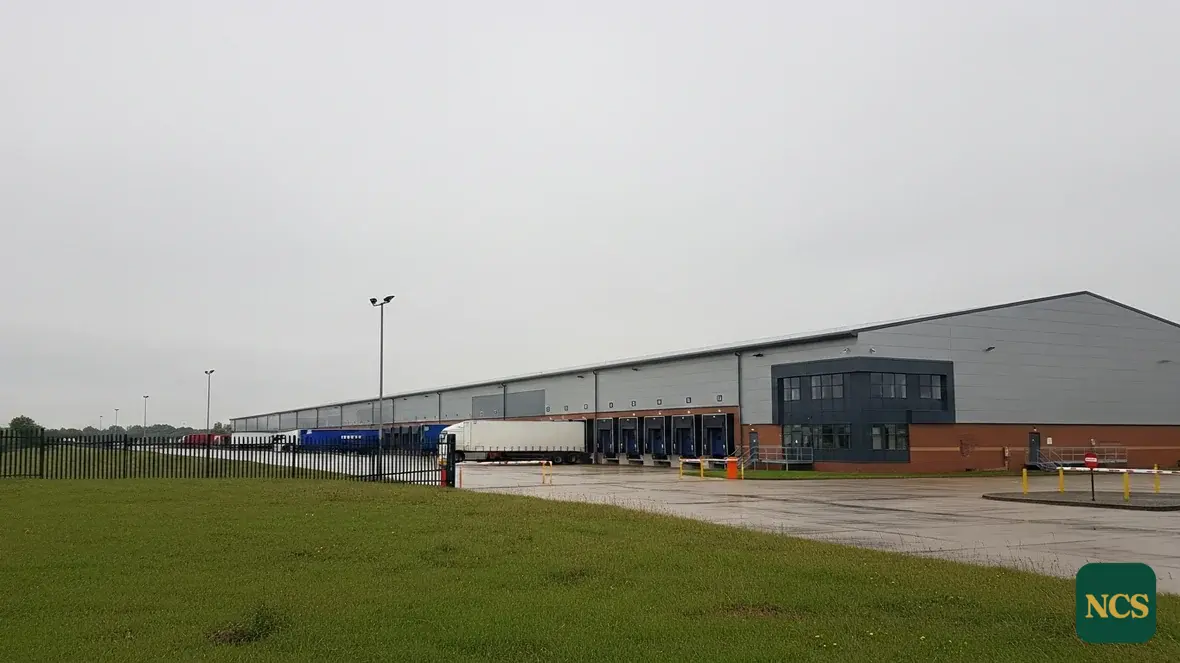
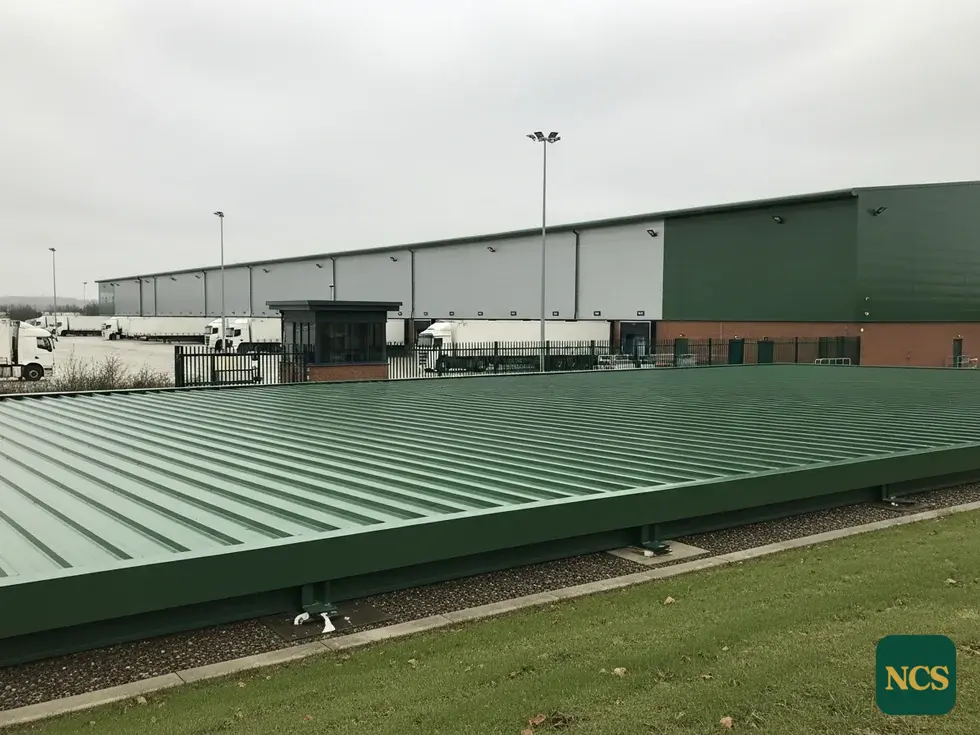
The mix in this part of Wiltshire is distinctive: agricultural buildings, grain stores and livestock sheds across the surrounding villages, alongside commercial and light industrial units on the estates at the city fringe. Farm roofs often suffer worst, partly because they tend to be older, partly because internal humidity from livestock or stored crops attacks the underside of the laps at the same time as the weather attacks the top. Commercial units fare a little better but follow the same curve, usually only a few years behind.
What early treatment involves
Treating cut edge corrosion before it perforates is a defined, methodical process rather than a patch-up:
- A roof survey recording the condition of every lap, edge and gutter detail
- Mechanical preparation of corroded edges back to sound, clean steel
- Rust-inhibiting primer applied to all prepared metal
- A flexible, waterproof lap and edge seal bridging the vulnerable zone
- Photographic records so you can see what was done and where
Done at this stage, the work preserves the sheets you already own. Done five years later, the conversation is usually about replacing them instead, at several times the cost and with far more disruption to whatever the building is doing underneath.
When we advise against treatment
Honesty matters more to us than winning the job. Where laps are already perforated, where rust has eaten well past the edge zone, or where sheet ends flex and crumble under preparation, edge treatment will not restore integrity, and we will tell you that at survey stage rather than after the invoice. The right answer is then sheet replacement or recovering of the affected areas, and a treatment quote from anyone at that point deserves real suspicion.
A natural pairing with full roof coating
Most roofs old enough to show cut edge corrosion also show a tired topcoat: chalking, fading and early delamination across the slopes. Treating the edges and coating the whole roof in one visit gives the entire surface a common starting point, seals the repairs under the same system, and avoids paying for access twice. National Coating Specialists works survey-first across England from our South East base, and Salisbury and the surrounding Wiltshire villages sit comfortably within our regular patch.