Coating farm buildings in the Kingston upon Hull arable belt
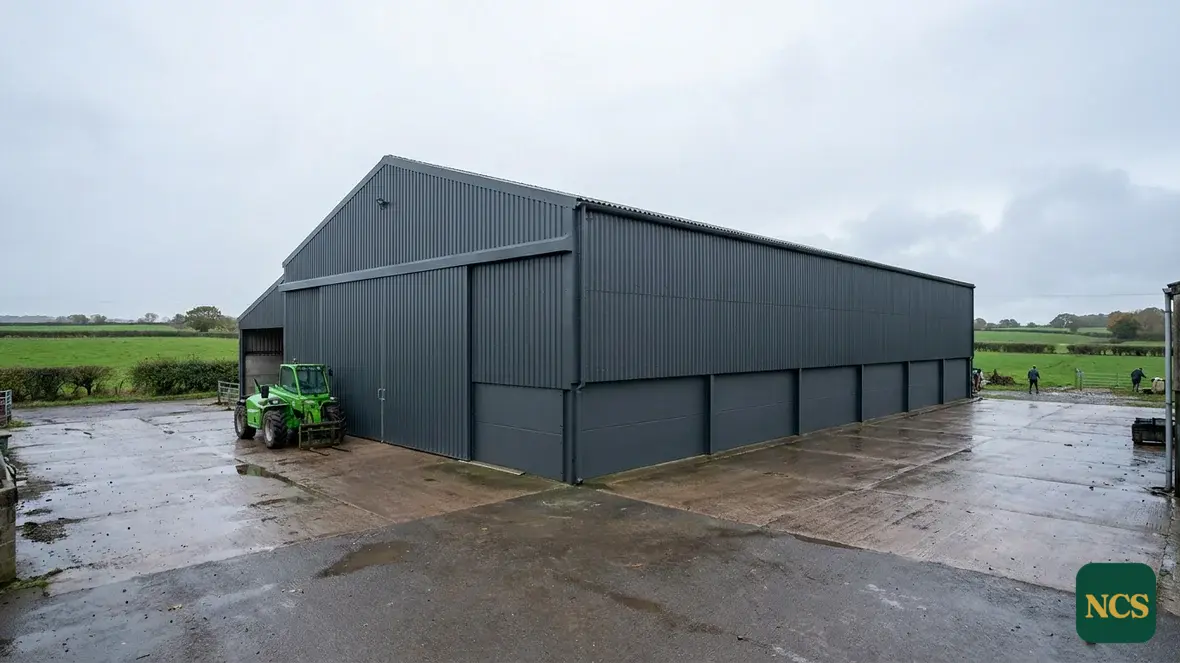
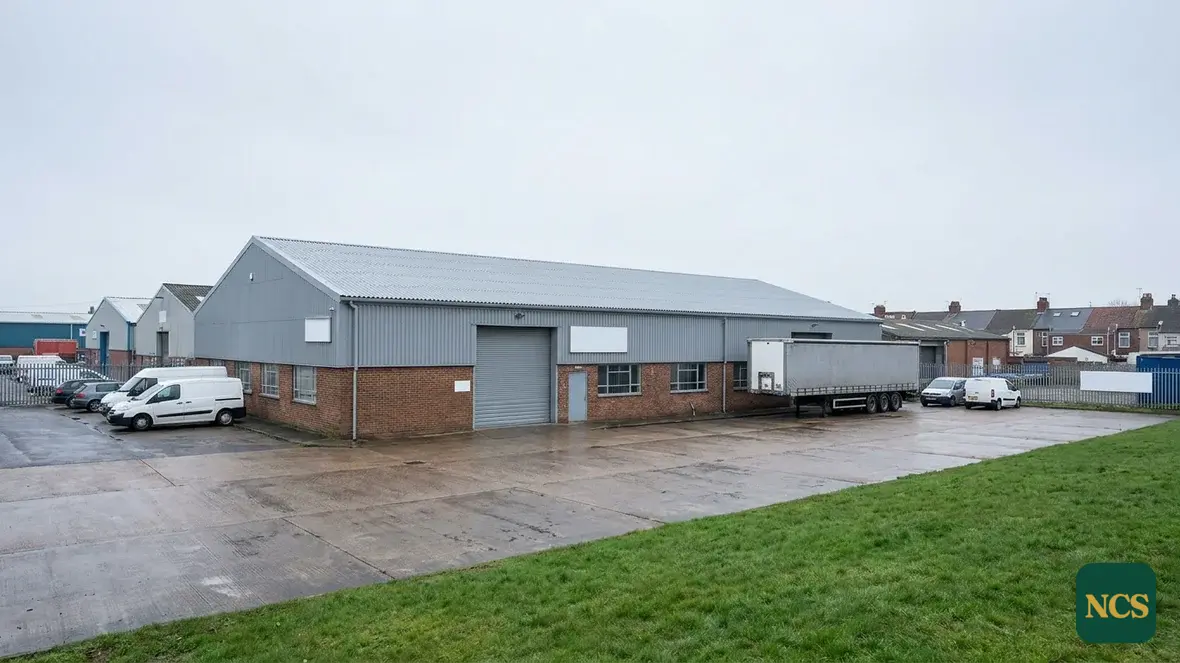
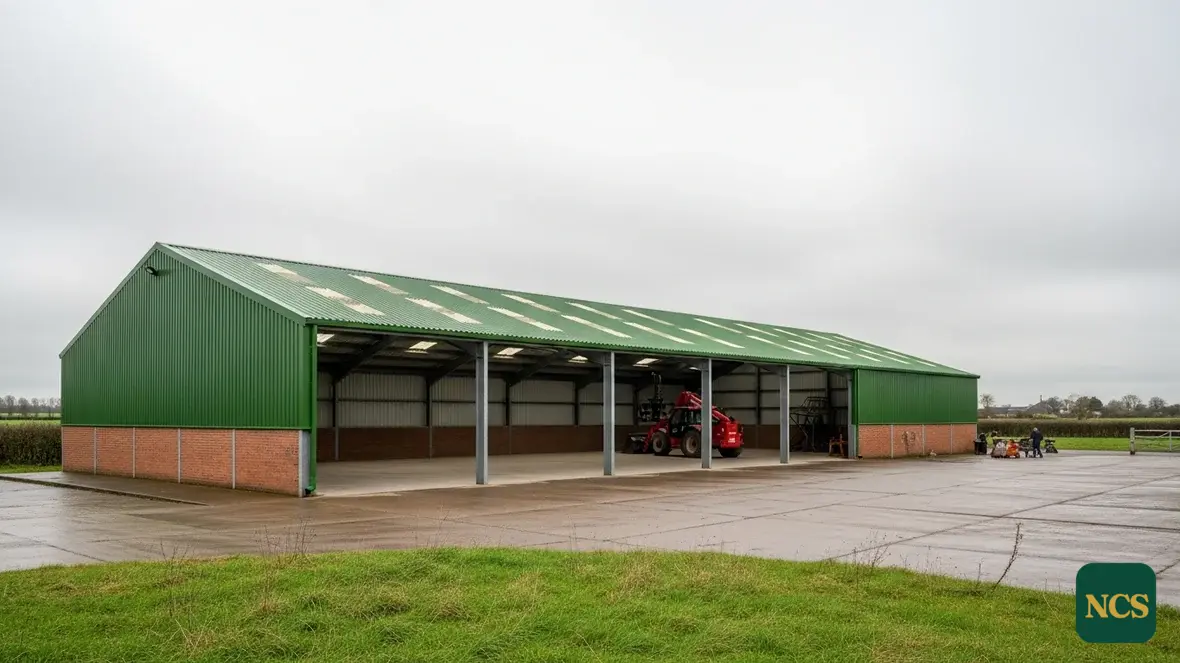
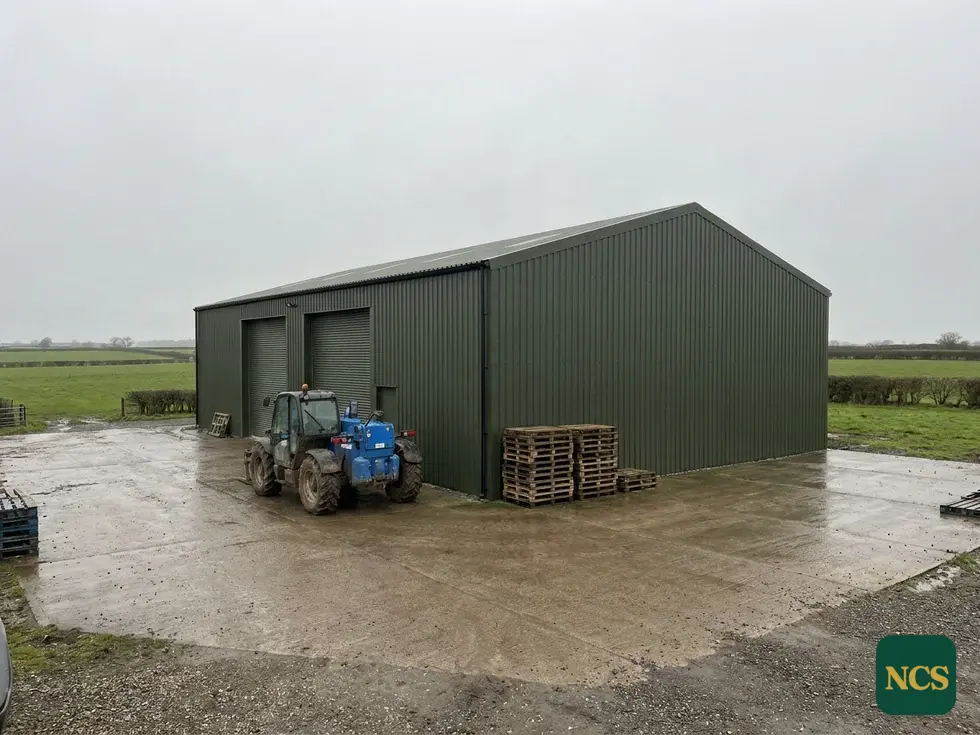
The countryside surrounding Kingston upon Hull is grain country first and foremost: wide arable fields running across the East Riding, big steel-clad stores set among older brick and fibre-cement barns, and farmsteads built around storing and moving large volumes of crop. National Coating Specialists surveys and coats these buildings across the Kingston upon Hull area, working from a South-East base on an England-wide basis, and the way these working stores are used shapes every programme we put together.
How heavy-use grain stores wear
A grain store earns its keep by being airtight, dry and full, and the roof carries that load season after season. On the larger steel-clad stores here, the first signs of wear show as cut-edge corrosion along the sheet ends, faded and chalking plastisol on the south slopes, and weeping fixings that streak rust down the cladding. Older fibre-cement barns alongside them grow moss on the shaded slopes and slowly turn porous. Add the moisture that ventilation and crop give off inside, and steel can corrode from the underside as well as the weather face. A coating programme protects the outer surface, while the survey flags any internal condensation that no external coating will resolve on its own. Catch that wear at the surface stage and the fix is a coating; leave it until sheets are perforated and the conversation changes to replacement, which is the whole argument for inspecting before a leak forces the issue.
What the survey covers
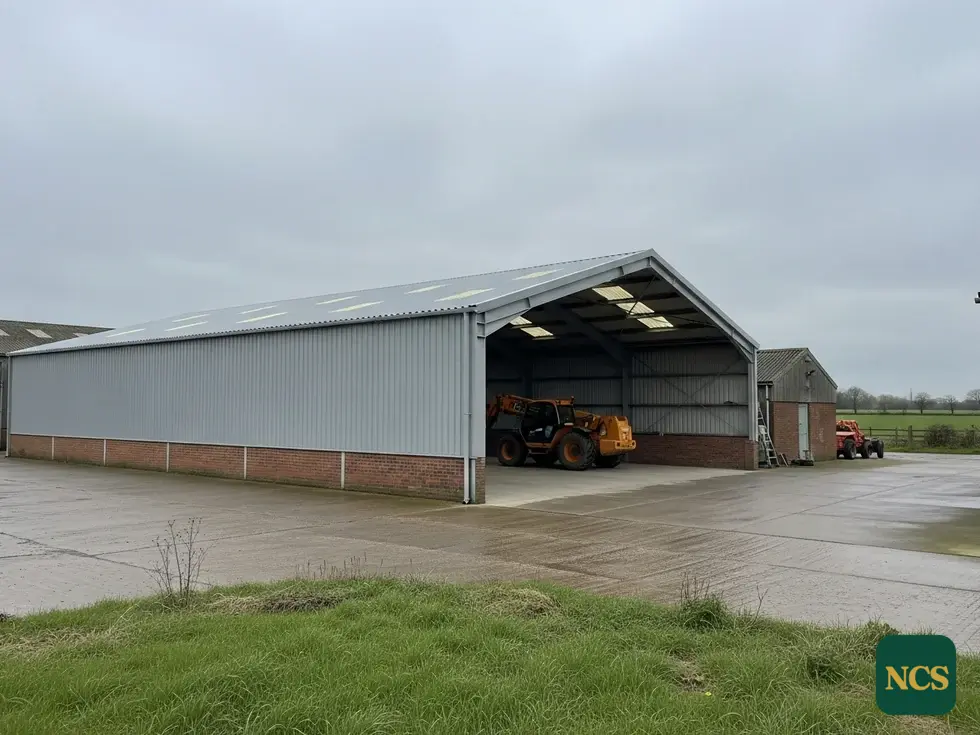
No two stores of the same age are in the same state, so work near Kingston upon Hull always starts with an inspection on the ground. A typical survey covers:
- Substrate identification: asbestos-cement, fibre-cement, plastisol-coated steel or mixed roofs
- Defect mapping: cracks, holed or slipped sheets, failed laps and corroding fixings
- Rooflights, ridges and flashings, assessed separately because they fail differently
- Rainwater goods, especially the valley gutters behind many farm leaks
- Operational constraints: stored crop, machinery movements and wash-down needs
You receive a written report and a recommended order of work, whether that is one whole-yard programme or a phased plan spread across a few seasons. Where the report flags work outside coating, such as a failed gutter line or a fragile rooflight, it is set out separately so nothing is buried in a single headline price. Many holdings near Kingston upon Hull tackle the most exposed store first, then bring the rest of the yard into a rolling plan as budgets allow.
Coat, repair or replace: the honest version
We will not coat a roof to disguise its problems. Asbestos-cement that is porous, mossy and weathered but otherwise sound is often a strong candidate for encapsulation, and coating it avoids the substantial cost of removal and disposal. Sheets that are cracked through, spalling or structurally tired are not, and pretending otherwise simply postpones the bill. The same applies to steel: cut-edge corrosion and faded plastisol respond well to treatment and recoating, but sheets rusted through need replacing before any coating goes on. Our reports separate the three honestly: what can be coated, what needs repair first, and what is past the point of being good value.
Planning around harvest and storage
Out here the calendar is set by when stores are full. The practical window for coating a grain store is the gap after it empties and before the next harvest fills it again, so we plan to that rather than expecting you to clear a working store on demand. Machinery sheds and livestock buildings are scheduled into their own quiet periods, with curing time allowed where stock returns indoors. Coatings need dry conditions and workable temperatures, so every programme builds in weather contingency rather than promising the East Yorkshire sky will cooperate to a date.