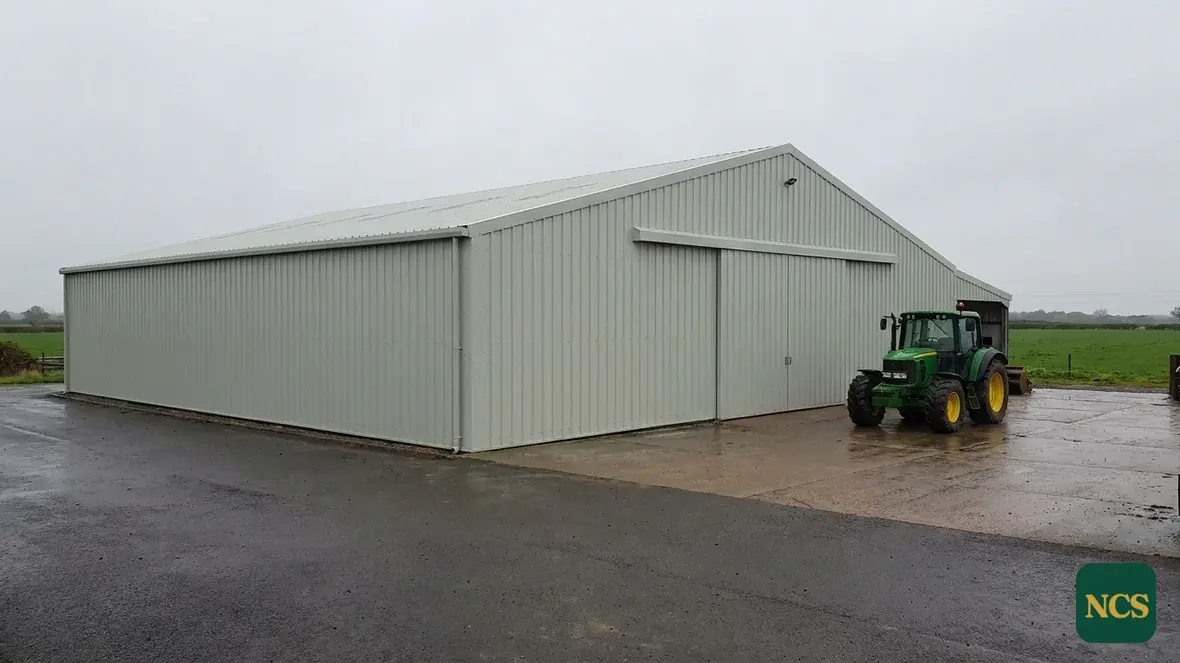
On the arable land around Cambridge, the calendar is unforgiving. A grain store has to be clean, dry and ready before the combines roll. Any coating work has to be finished, cured and aired well ahead of intake. That single deadline shapes how we plan agricultural building coatings across this part of the country. It is why National Coating Specialists, a survey-led contractor covering the UK from the South-East, starts every fenland enquiry with dates as well as condition.
Grain stores and machinery sheds on the fen edge
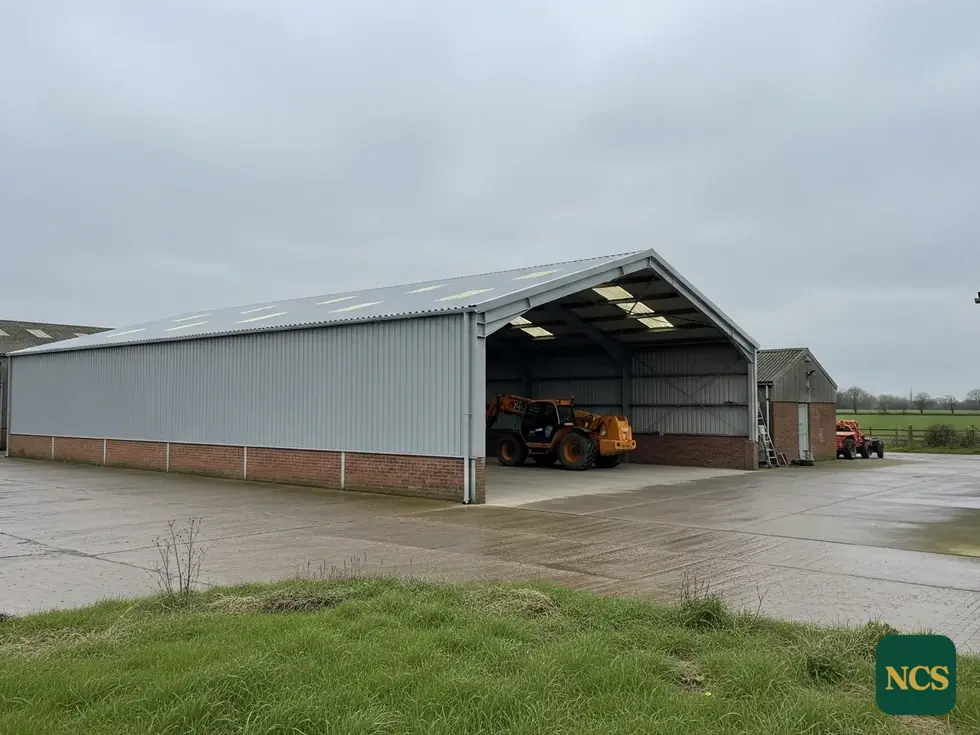
Farmland around Cambridge is dominated by big arable buildings. Grain stores with serious spans, machinery sheds housing combines, drills and sprayers worth more than most houses, and older general-purpose barns. Many still under their original asbestos-cement roofs. Flat, open country gives the wind a clean run at all of them. Factory finishes on steel sheets chalk and break down, cut edges and fixings rust first, and fibre-cement gathers moss wherever a slope faces away from the sun. The buildings themselves are usually structurally sound. Portal frames on the fen edge were built generously. Weathered but sound asbestos-cement can often be cleaned and encapsulated rather than disturbed. Sheets that have gone soft or cracked need a specialist removal contractor. Our survey says plainly which situation a roof is in.

Timing matters more here than almost anywhere
The arable year leaves real but firm windows. Stores tend to empty through spring as grain moves off farm. This opens a slot before harvest when coating can be completed and fully cured with the building ventilated well ahead of intake. Machinery sheds suit the weeks the fleet is out drilling or harvesting. Older livestock and general-purpose buildings on the mixed farms fit around the same arable peaks. Before any store is signed back over for grain, certain things have to be true:
- Coating work complete, with the manufacturer’s full cure time elapsed.
- The building aired and ventilated, with no residual odour.
- All masking, sheeting and debris removed from the floor.
- Fixings and laps checked after the work, not just before it.
- Rooflights and gutters left sound and clear.
We schedule backwards from your intake date and confirm the programme in writing. A store that is not ready in August is a failure regardless of how good the coating is.
The survey behind every recommendation
Fenland roofs get priced after inspection, not from a satellite image. We examine each slope from proper access equipment. We record the condition of sheets, cut edges, fixings, rooflights and gutters. We check the inside of the building for staining and corrosion that betray leaks the yard view hides. Around Cambridge we also pay attention to access and ground conditions. Fen drains, soft headlands and tight yards decide what plant can reach a building. Everything comes back to you with photographs and a recommendation you can challenge. Where a yard holds several buildings in different states, each one gets its own verdict rather than a blended average.
Grain stores and machinery sheds around Cambridge take a harder battering than most commercial units, and the paint system has to be chosen for it.
Not every roof should be coated
Our trade has a bad habit of recommending coating to everyone who asks, and we refuse to join it. A roof with a few damaged sheets needs repair, and we will say so even though it is a smaller job. A roof with widespread surface failure on sound sheets is the genuine case for coating, and there are a lot of those on the arable land around Cambridge right now. A roof that is holed, soft underfoot or failing at the frame needs replacing, and a coating would only delay the bill while adding ours on top. You get the verdict, the photographs and the reasoning, and the decision stays yours.
We carry out agricultural building coatings work in and around Cambridge. For the full survey-led service and how we assess each building, see our Agricultural Building Coatings service, or request a free site survey.



