Cut edge corrosion on Cambridge’s science and business parks
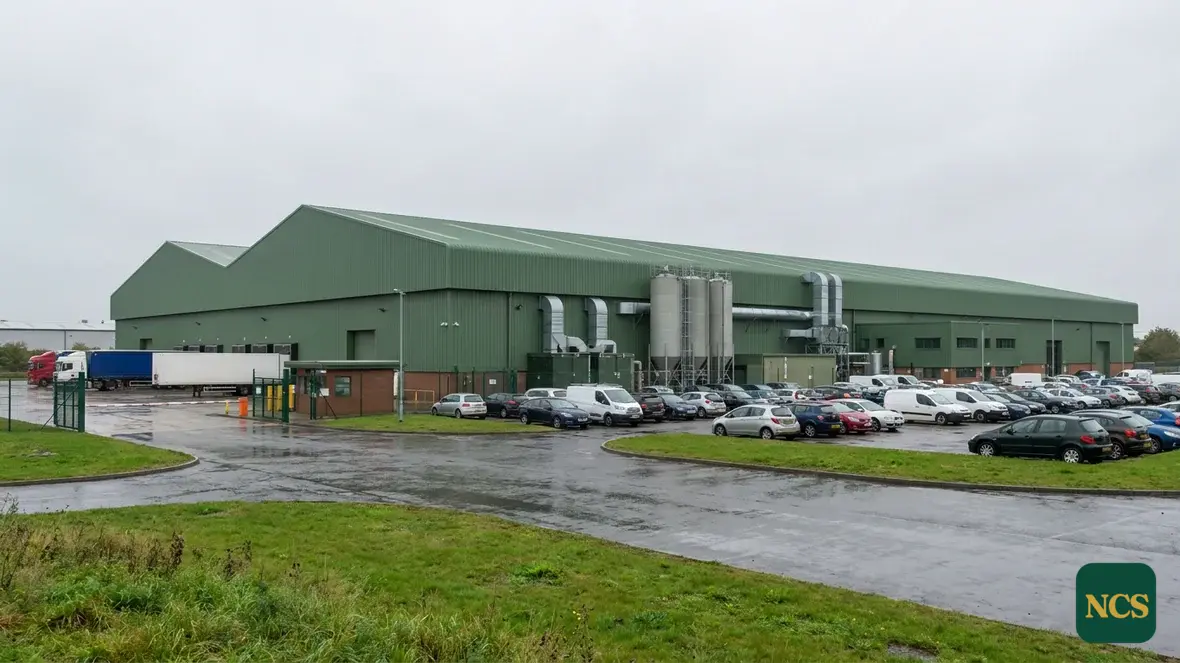
You’ll find more labs than warehouses in Cambridge, but the science parks, research campuses, and business parks around the city have plenty of profiled coated-steel roofing on their workshops, storage, and technical buildings. On every one of those roofs, the same detail fails first: the cut edge. That’s the strip of bare steel left when a sheet was cut to length at the factory, and the protective finish stopped short.
The fenland setting here really matters. Cambridge sits low on flat, open land. There’s little to break the wind or the rain it carries, so eaves, end laps, and gutter edges, exactly where that unprotected steel sits, take the weather full on. Long winter spells of damp, still air do the rest, keeping those edges wet between one shower and the next.
Edge corrosion around Cambridge hides under old coatings. The survey lifts the story of the roof before any repair or paint system is named.
What is happening along your sheet ends
Rust forms on the exposed cut, then spreads under the factory coating next to it, breaking its bond with the steel. The finish peels back, more metal gets exposed, and the cycle repeats and speeds up. At end laps, moisture gets pulled into the overlap by capillary action, keeping the joint wet. Corrosion develops between the sheets where you can’t see it, until staining or drips show up inside the building.
On a research or technical site, that hidden corrosion carries an extra sting. A leak over sensitive equipment, clean rooms, or stored materials is a far bigger problem than a leak over an empty warehouse floor. It means early detection on these buildings is more valuable, not less.
The case for treating it this year
While the steel is still sound, treatment is an in-situ repair. We prepare the corroded edges back to clean metal, apply a rust-inhibiting primer, and seal the laps, ends, and gutter lines with a flexible coating made for this exact defect. The building keeps operating throughout, and the existing sheets stay put.
The alternative timeline costs more at every step: perforated ends, water over equipment, patch repairs that never quite hold, and finally resheeting over an occupied building. For most owners and facilities teams around Cambridge, the question isn’t whether to deal with cut edges, but whether to deal with them at repair prices or replacement prices.

Our honest limit on what coating can fix
We survey before we recommend. Sometimes, the survey rules treatment out. Edges rusted through, laps with no sound steel remaining, fixings corroded beyond saving, or rust spreading across the body of the sheets all mean a coating would only disguise a failing roof. When the steel has gone that far, we’ll tell you plainly, hand over the photographs, and quote for the replacement the roof actually needs.
A large share of roofs fall between the extremes, with a few sheets beyond rescue and the rest in treatable condition. Replacing the failures and treating the remainder is often the most economical path. On a campus or shared estate, the survey report is set out so that owners, managing agents, and tenants can all work from the same photographic evidence.
Treating the edges, then protecting the lot
Edge treatment lifts the most pressing threat off the roof. A full coating laid at the same time addresses the slower decline, the steady weathering of the factory finish across every sheet. Done together, they reset the whole covering in one programme, with a single round of access costs and one contractor answerable for how it performs.
We are South East based and survey-led, working across the UK, with Cambridge well within our coverage. Arranging the survey is simple, and it gives you photographs, an edge-by-edge grading, and a written recommendation. If the sheet ends are already staining, the time to look is before another wet winter works on them.
Recently — July 2026
A summer survey gives us time to specify and programme the work before the wetter months make access and curing harder.
We survey before we recommend anything, and the recommendation goes in writing, including the times the honest answer is to repair or replace rather than coat.