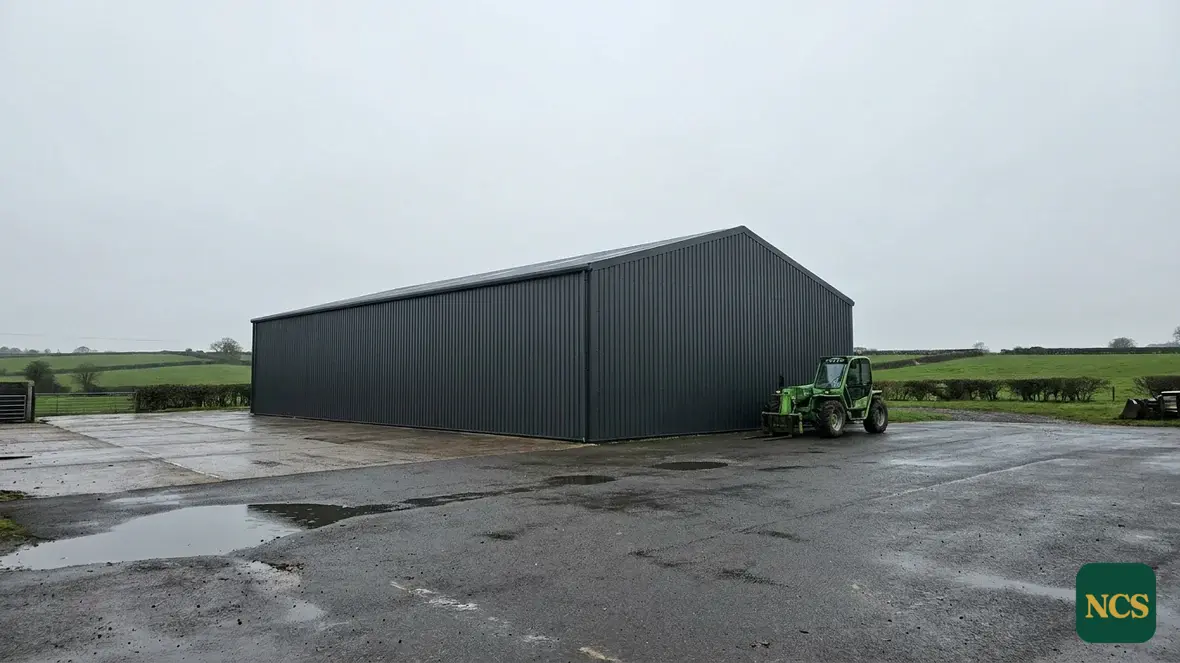
The low, open arable country around Doncaster, much of it drained peat and warp soils, grows cereals, vegetables and root crops on a large scale, and stores them in equally large buildings. Big grain stores, vegetable and potato stores, machinery sheds and older general-purpose barns make up most of the building stock. National Coating Specialists is a survey-led contractor covering the UK from the South-East, and on the South Yorkshire farms our work begins with a proper look at the roof and a clear understanding of the farm’s year, because both decide whether an agricultural building coating is the right job and when it can be done.
Big stores on the lowland soils
The flat land around Doncaster carries some serious arable buildings: high, wide grain stores, crop and vegetable stores, and machinery sheds housing kit worth more than most houses. Plenty of the older sheds still sit under asbestos-cement or later fibre-cement roofs. The open lowland gives wind-driven rain a clean, uninterrupted run, so the cut edges, laps and fixings on a steel roof corrode sooner here than on a sheltered site, and the exposed faces chalk and fade. Fibre-cement weathers to a porous, moss-covered surface that holds water and grows brittle. The portal frames are generally sound, which is exactly the case a coating is designed for, provided the survey confirms the roof is a candidate.
If a Doncaster barn is past painting, we say so before you spend anything on it. If it is sound, the sprayed system brings it back properly.

Two roof problems, two different answers
Most roofs we survey around Doncaster fall into two camps. Coated steel fails at the details first: edges and laps open, fixings weep rust and stain the sheets, and the finish goes while the sheet underneath is still serviceable. Asbestos and fibre-cement weather to a soft, water-holding surface. Where those cement sheets are intact, a cleaning and encapsulation system seals the surface, stops fibre release from it and extends the roof’s life without the cost of stripping and licensed disposal. Where they are cracked, holed or soft, that is a removal job for a licensed contractor, not a coating job. The survey establishes which situation you are in before any price is quoted.
The store window and the rest of the year
Programme timing on arable units is simple to state and tight to deliver. Stores empty through spring as the previous crop moves off farm, opening the one sensible window for coating: complete the work, let it cure fully, and air the building well ahead of intake. Machinery sheds suit the weeks the fleet is out in the fields. Before a store goes back into service, a short list has to be true:
- Coating complete, with the manufacturer’s full cure time elapsed
- Building aired and ventilated, with no residual odour
- Masking, sheeting and debris cleared from the floor
- Fixings and laps re-checked after the work, not only before
- Rooflights and gutters left clear and sound
We schedule backwards from your intake date and confirm the programme in writing, because a store that is not ready when it is needed has failed however good the finish.
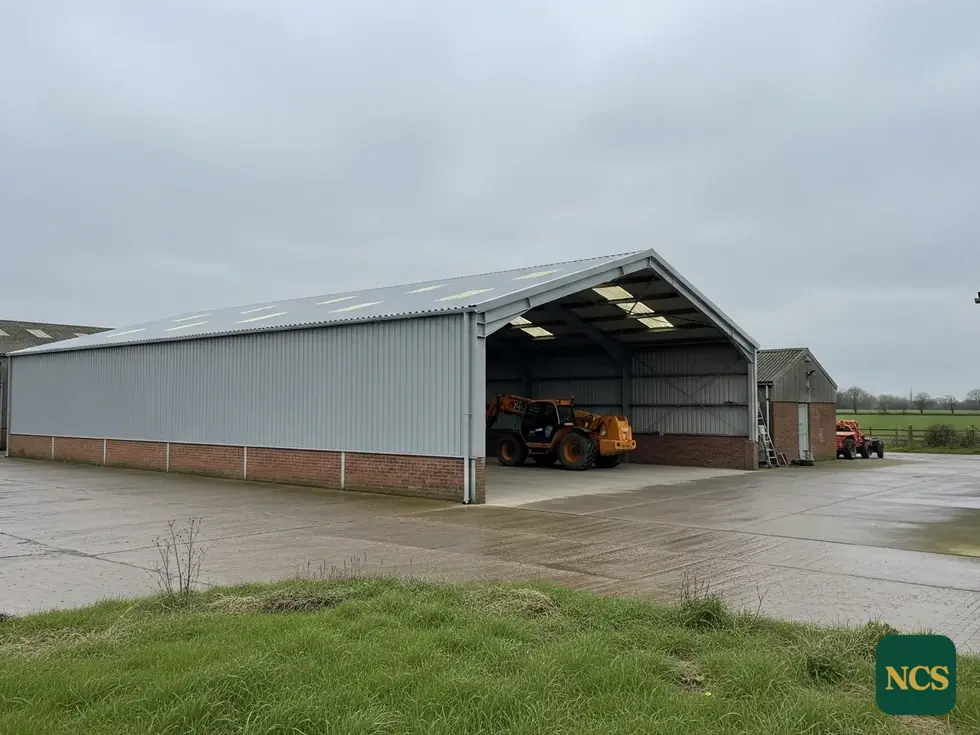
Repair, coat or replace, said plainly
We will not recommend coating to everyone who asks. A roof with a few damaged sheets needs repair, and we will say so even though it is the smaller job. A roof with widespread surface failure on sound sheets is the genuine case for an agricultural building coating, and there are many of those on the arable land around Doncaster. If your profiled steel roof is holed, soft underfoot or failing at the frame, that is a replacement job, and a coating would only delay that bill while adding ours on top. We price after inspection, never from an aerial image, and you get the photographs, the written recommendation and the reasoning, with each building on a multi-building yard judged on its own merits. The decision stays yours.
We carry out agricultural building coatings work in and around Doncaster. For the full survey-led service and how we assess each building, see our Agricultural Building Coatings service, or request a free site survey.