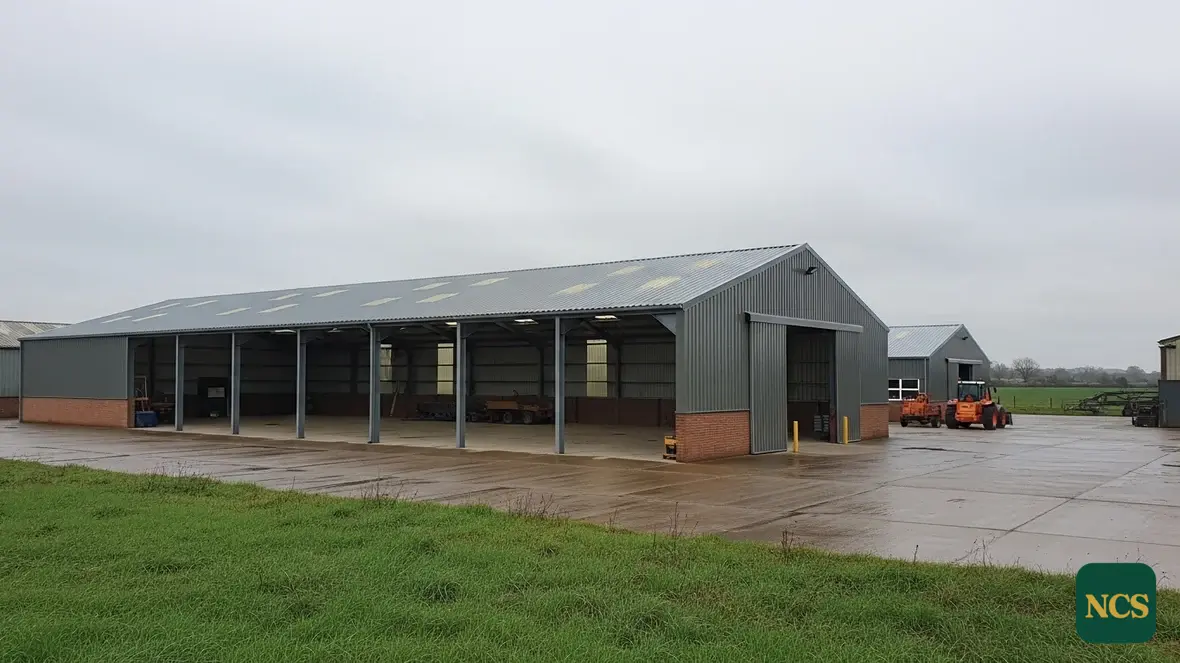
Farm buildings around the Portsmouth fringe
Portsmouth hugs the coast tightly, but head inland just a short drive towards Havant, Fareham, and the foot of the South Downs, and you’re into proper countryside. Mixed arable and grazing land means plenty of steel-framed sheds, grain stores, and machinery barns. They take a real hammering from the salt-laden air blowing in off the Solent. That coastal exposure really matters. Wind-driven rain and airborne chloride speed up corrosion on older profiled metal, so a roof near Portsmouth will often show its age sooner than the same building further inland.
We survey agricultural buildings all over this part of Hampshire. We’ll tell you whether a coating is the right move at all. Some sheds are well worth protecting. Others are past it. We won’t sugar-coat that.
Grain stores and machinery sheds around Portsmouth take a harder battering than most commercial units, and the paint system has to be chosen for it.
What we typically coat
The agricultural buildings here are varied. We look at fibre-cement and box-profile steel roofs on grain and fodder stores. We coat cladding on machinery and implement sheds, and the walls of livestock buildings where condensation and ammonia are a constant challenge. Coating systems can slow corrosion on sound metal, brighten up a tired roof, and improve weather resistance. But only if the substrate has enough life left to justify the work. Otherwise, it’s just throwing good money after bad.
- Profiled metal and box-profile roofs on grain and machinery stores.
- Fibre-cement sheets on older barns and lean-tos.
- Cladding and gable walls on implement and livestock buildings.
- Gutters, valleys, and laps where water sits and corrosion gets a foothold.
Working to the farm calendar
Access is everything on a working farm. A grain store needs attention when it’s empty in late spring, not during harvest. Livestock buildings near Portsmouth are easier to work around when stock is out at grass. We plan around drilling, harvest, housing, and lambing, not against them. A coating programme that interrupts the farm is a programme that gets cancelled. A survey first lets us schedule the right buildings for the right weeks.

Honest advice: repair, coat or replace
This is where we earn our keep. A coating isn’t a cure for a failed roof. If a metal sheet is perforated, if fixings have pulled out, or if a fibre-cement roof is brittle and shedding fibres, paint over the top changes nothing structural. Some buildings near Portsmouth need targeted repair before any coating makes sense. A few need replacing outright. The kindest thing we can do is tell you that early, rather than take your money for work that buys you a season at most. Asbestos-cement roofs need particular care. They were common on older agricultural buildings, and disturbing them carries legal duties. Where one is sound and suitable, encapsulation can be an option. Where it’s broken, the conversation moves to licensed removal, not coating.
Why a survey comes first
We don’t quote agricultural coatings off a photo or a phone call. Someone walks the roofs, checks the laps and fixings, looks at the gutters and the inside of the building, and reports back on its condition. From that, you get a straight view of which buildings are candidates for coating and which aren’t. For farms across the Portsmouth area, that survey is free, and it commits you to nothing.
We carry out agricultural building coatings work in and around Portsmouth. For the full survey-led service and how we assess each building, see our Agricultural Building Coatings service, or request a free site survey.
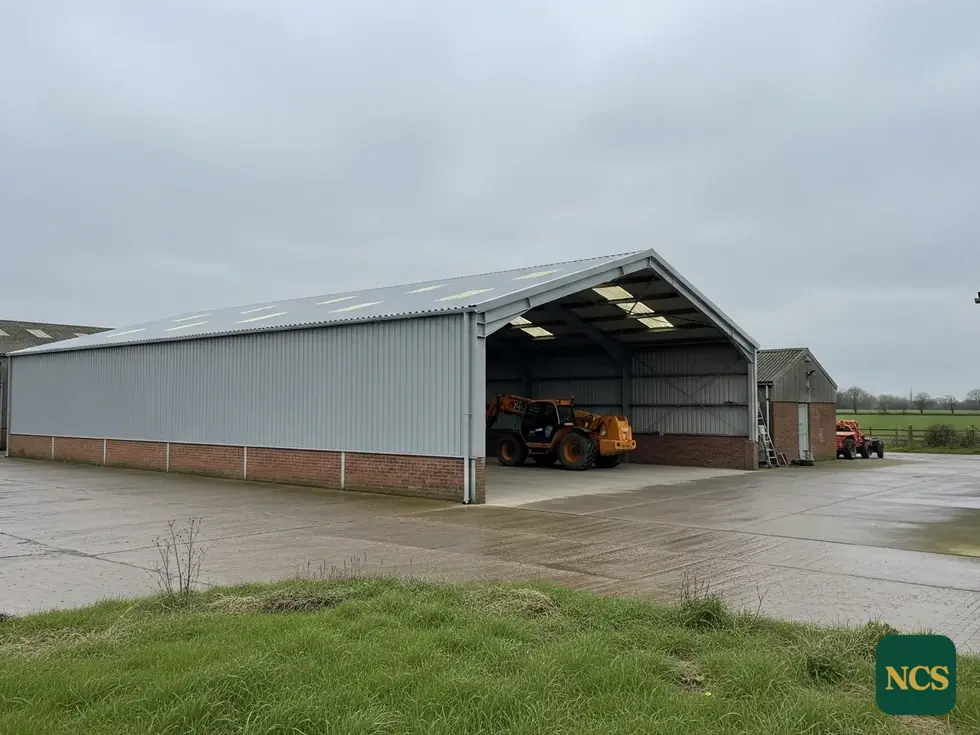
Recently — July 2026
A summer survey gives us time to specify and programme the work before the wetter months make access and curing harder.
We survey before we recommend anything, and the recommendation goes in writing, including the times the honest answer is to repair or replace rather than coat.