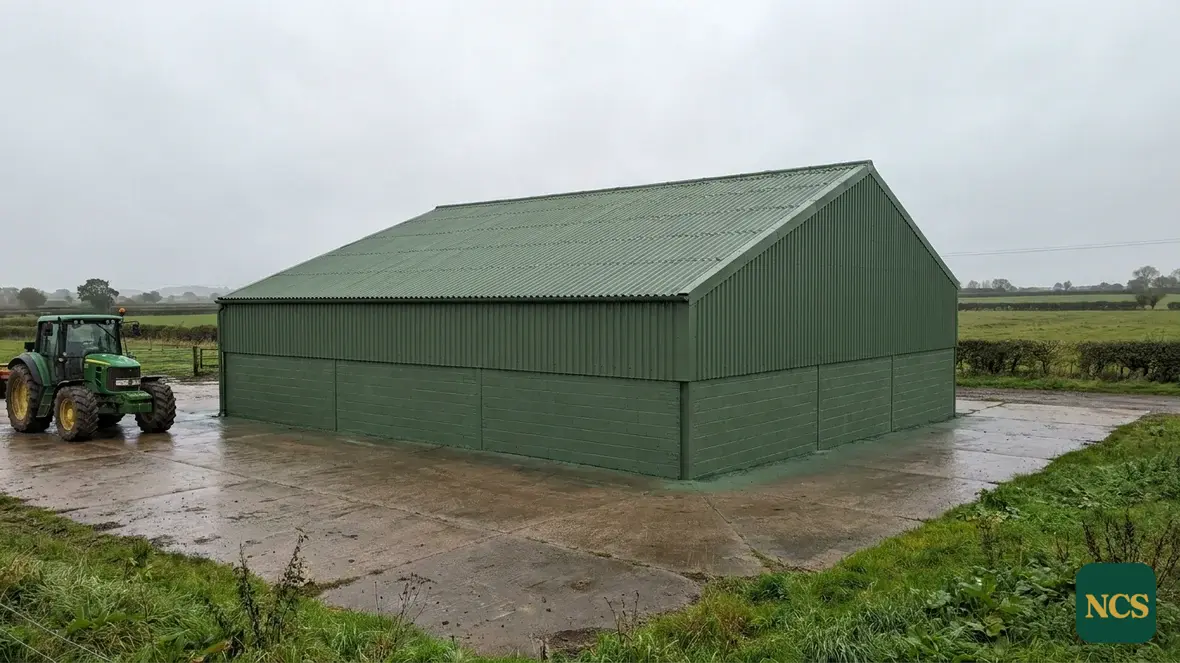
Agricultural buildings on the Salford fringe
Salford reads as a city, but its boundary runs out to genuine farmland on the western edge, with grazing and mixed holdings spreading towards Eccles, Worsley and the mosslands beyond. The buildings out there are the usual working mix: steel-framed general-purpose barns, machinery and implement sheds, fodder and grain stores, and livestock buildings on the dairy and beef units. Greater Manchester weather is the constant factor, with high rainfall and long damp spells that keep laps, gutters and metal undersides wet and accelerate corrosion.
We get up on agricultural buildings around Salford and across this part of Greater Manchester, then we advise honestly on whether a coating is worth doing. Some roofs are good candidates. Others are not, and we say so. We won’t quote for something that won’t work.
What coatings can and cannot do
A coating on a sound profiled-metal roof slows corrosion, improves weather resistance and lifts the appearance of a tired building. On fibre-cement that is weathered but intact, it can seal the surface and extend service life. What a coating cannot do is replace a roof that has failed. Perforated sheets, pulled fixings and brittle, cracked fibre-cement are repair or replacement jobs, not painting jobs. We are clear about that line on every Salford survey.
- Profiled steel and box-profile roofs on barns and stores
- Fibre-cement on older agricultural buildings
- Cladding and walls on machinery and livestock sheds
- Gutters, valleys and laps where corrosion starts
Farm buildings around Salford flex, carry muck and take knocks, so barn painting has to be specified for that life, not for a garden fence.
Repair, coat or replace
The honest assessment usually comes down to three options per building, and often a mix across a holding. Coat the sound roofs, repair the bays that are failing at the laps or fixings, and plan to replace anything past saving. Asbestos-cement needs the most caution: it appears on plenty of older agricultural roofs near Salford, and the rules on disturbing it are strict. A sound sheet may suit encapsulation; a broken one points to licensed removal, not a coating. We will not blur that distinction to win work.

Fitting the work to the farm
Livestock buildings are rarely empty and machinery sheds fill up at the busy times, so access drives the plan. We schedule around housing, turnout and the working year, taking grain and fodder stores while they are clear and spreading larger programmes across seasons where that suits the holding. The point is to protect the buildings without stopping the farm.
Survey-led, every time
We do not quote agricultural coatings blind. Somebody gets up on the roofs, checks condition, and reports back so you can see which buildings are coating candidates and which need a different answer. For farms around Salford the survey is free and you are under no obligation to go ahead.
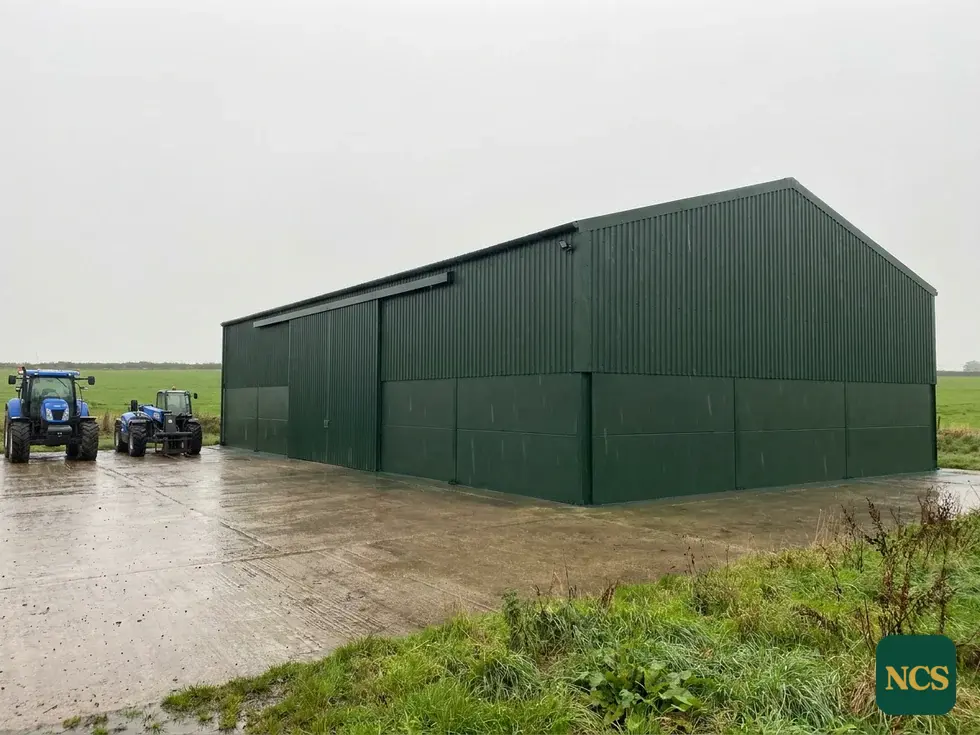
Protecting Salford’s Industrial and Agricultural Buildings
Salford’s mix of Victorian-era mill buildings, post-war industrial units, and modern agricultural sheds face some of the harshest weathering conditions in Greater Manchester. The exposed sites along the Manchester Ship Canal corridor take constant wind-driven rain, while older brick-built mill conversions suffer from deteriorating lime mortar and rising damp. On the agricultural buildings the recurring problems are much the same across this patch: flat and low-pitch roofs on older livestock sheds where pooling leads to membrane failure; cracked asbestos-cement sheets on older poultry and general-purpose units that cannot be removed under the current regulations; and salt-driven corrosion on steel-framed buildings near the roads and industry around Walkden, Worsley and Eccles.
We survey each building before recommending anything, rather than working to one coating for every job. The system has to suit how the building is used: a dairy parlour sits in an ammonia-rich atmosphere that attacks coatings one way, while a machinery or tractor shed around Boothstown deals with solvent and diesel exposure that breaks down ordinary paints another way. Once somebody has been up on the roof and checked the substrate and its condition, the recommendation follows from what is actually there, not from a price list.
We carry out agricultural building coatings work in and around Salford. For the full survey-led service and how we assess each building, see our Agricultural Building Coatings service, or request a free site survey.
Recently — July 2026
Through the drier summer months we can programme preparation, coating and curing with far less chance of a weather delay holding the job up.
We plan the work around how your site runs, so the building stays in use while we are on the roof.