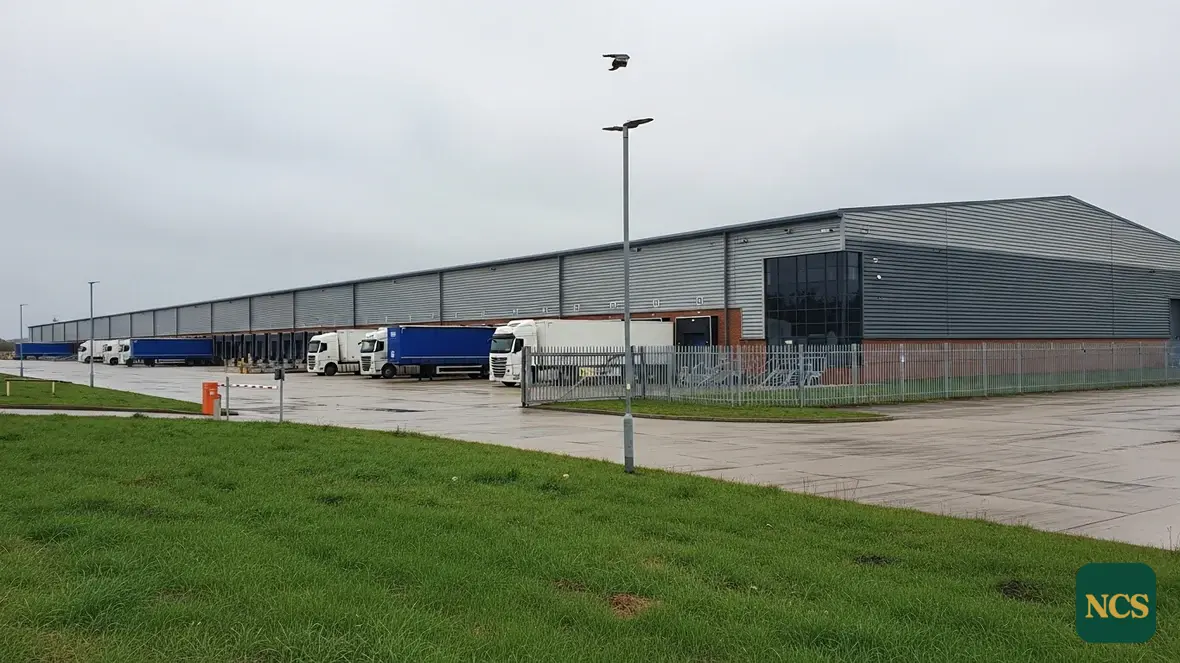
Profiled metal roofing covers most of the commercial buildings we see around Salford: the portal frame warehouses on the trading estates, the workshop units off the arterial roads, and the older sheds that have outlived two or three tenants. Nearly all of it shares one built-in weak point. Wherever a sheet was cut and lapped during installation, the factory coating stops and bare steel is exposed. That exposed sliver is where cut edge corrosion begins.
What is actually rusting, and why it starts at the edge
Plastisol-coated steel leaves the factory with its faces protected, but the guillotined ends are raw metal. For the first few years the exposed strip is too narrow to matter. Then water held in the lap joints gets to work. The coating starts to peel back from the cut edge, rust creeps beneath it, and what began as a thin brown line at the gutter becomes delamination running 50mm, then 100mm, up the sheet. The visible signs are easy to spot once you know what to look for:
- An orange or brown line tracking along the gutter edge of the roof sheets
- Coating lifting, bubbling or peeling back from sheet ends
- Rust staining around end laps and side laps
- Damp marks or drips inside the building in line with lap joints
- Rust rings forming around fixings near the eaves
We repair cut edges, laps and fixings across Salford before they become leaks, and coat the result so the repair holds.
Why it spreads instead of sitting still
Cut edge corrosion is progressive by nature. Once the coating has lifted, capillary action draws moisture further under the film, the rust front advances, and each winter the detached area grows. Greater Manchester’s rainfall makes the process quicker here than in drier parts of the country, because laps on a roof in Salford simply stay wet for longer, and wet time is the main driver of how fast an edge deteriorates. A defect that looks stable in July is rarely still stable by March, and the area needing repair grows with every season of delay.

The economics of acting early
Caught while the corrosion is still on the surface, treatment is a maintenance task: mechanical preparation back to sound metal, a rust-inhibiting primer, and a flexible waterproof seal over the lap and edge zone. Left alone, the job changes character entirely. Perforation at the laps means leaks, damage to stock or fit-out below, and eventually sheet replacement, with fixings stripped and sheets lifted above a working unit. Early treatment protects the roof you already own; late intervention starts to look like re-roofing, with all the disruption and cost that brings to an occupied building.
The honest answer when sheets are too far gone
We survey before we quote, and sometimes the survey says no. If sheet ends are perforated, if rust has travelled deep beneath the coating along long runs, or if the steel has thinned so far that preparation would open holes rather than expose clean metal, an edge treatment would be cosmetic. In those cases we say so plainly and point you towards sheet replacement or partial recovering instead. Coating over failed steel helps nobody, least of all the owner who ends up paying twice for the same roof.
From edge repair to whole-roof protection
Cut edge corrosion rarely travels alone. The same survey that maps lap condition usually finds chalking plastisol, UV-faded slopes and fixings beginning to weep. Treating the edges and then coating the full roof in one programme deals with everything at once, rather than bonding fresh edge repairs to a coating that is itself near the end of its life. We’re based in the South East and work across the UK, Salford and the wider North West included, and every project starts with a proper survey rather than a guess from a postcode.