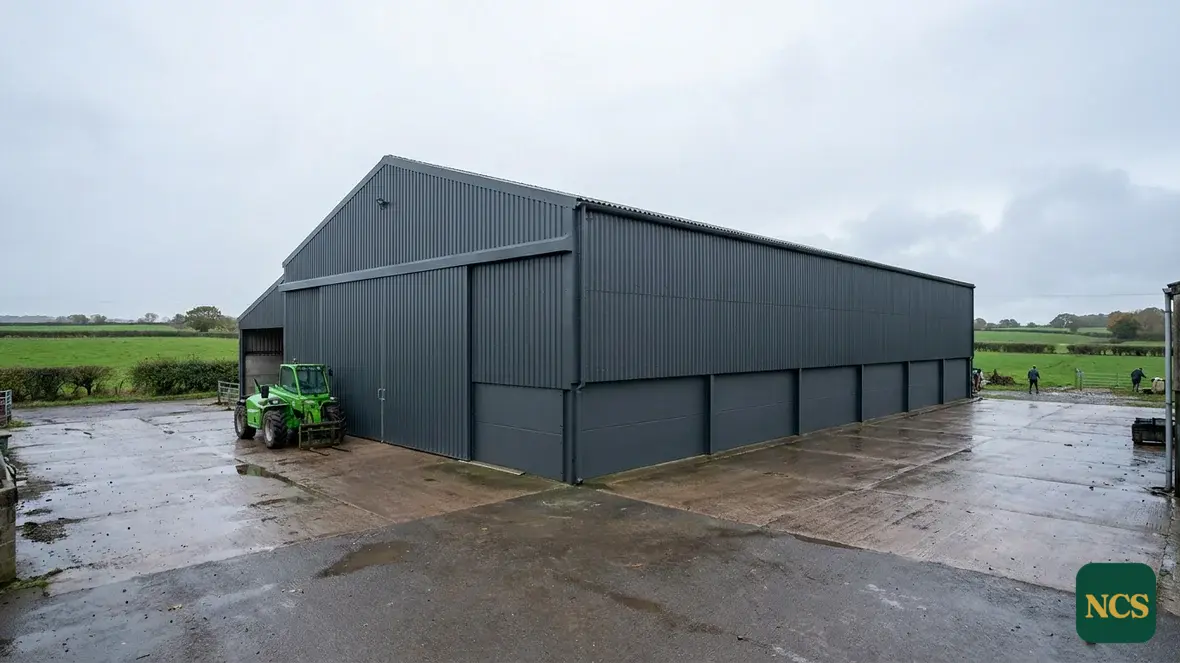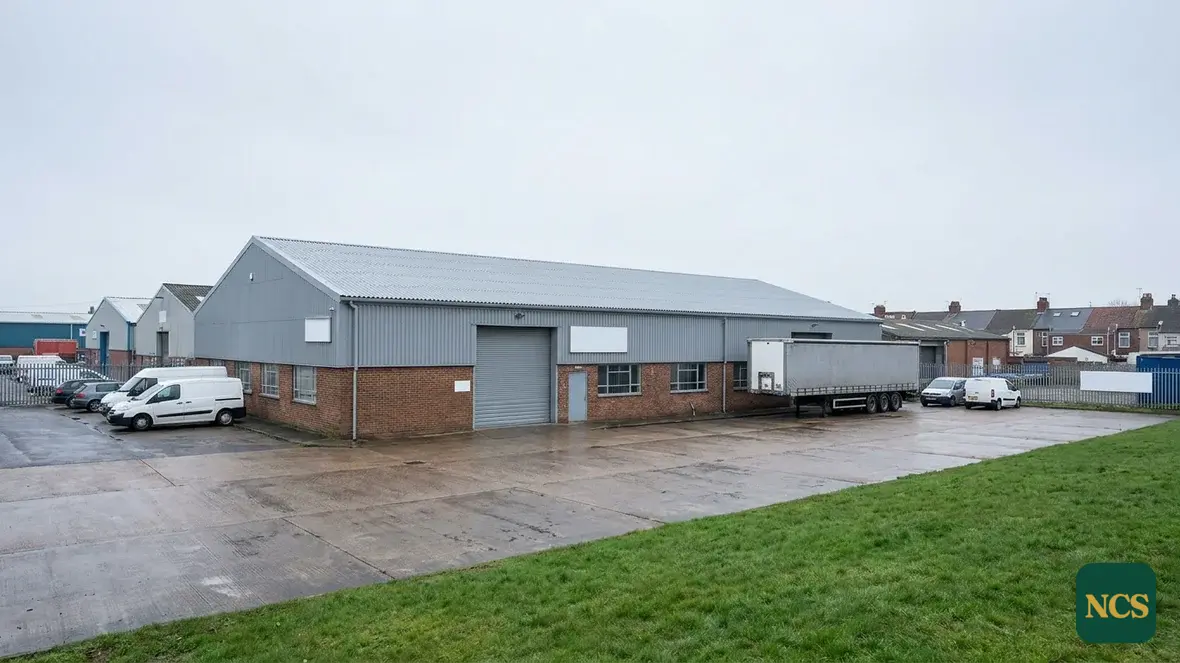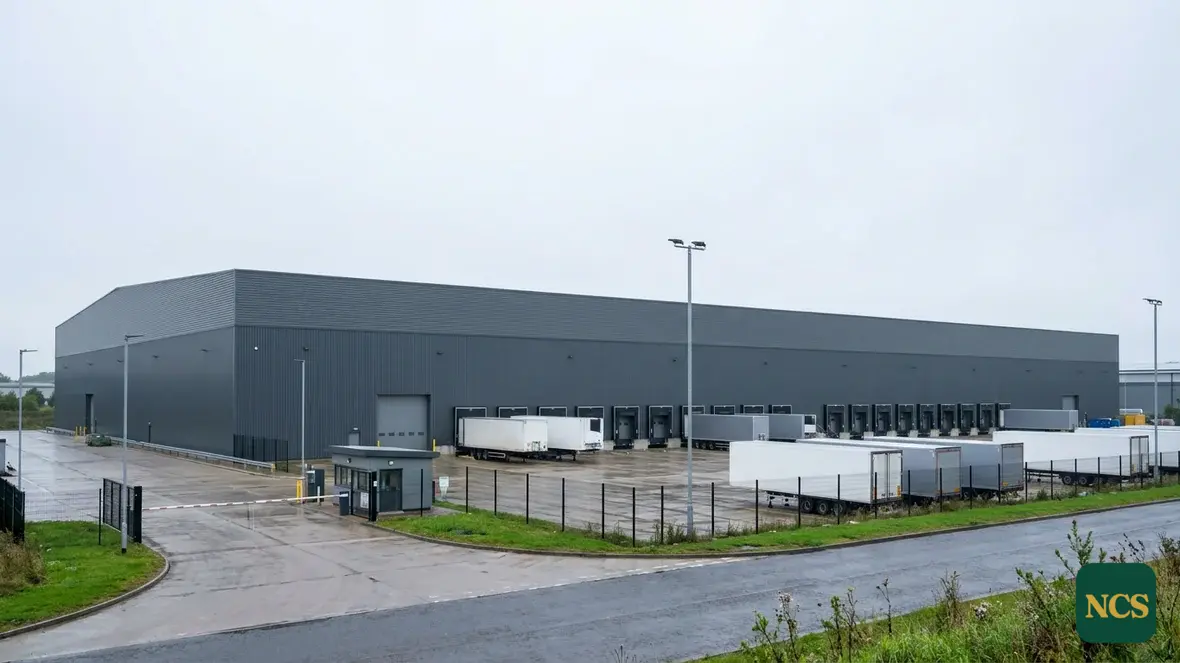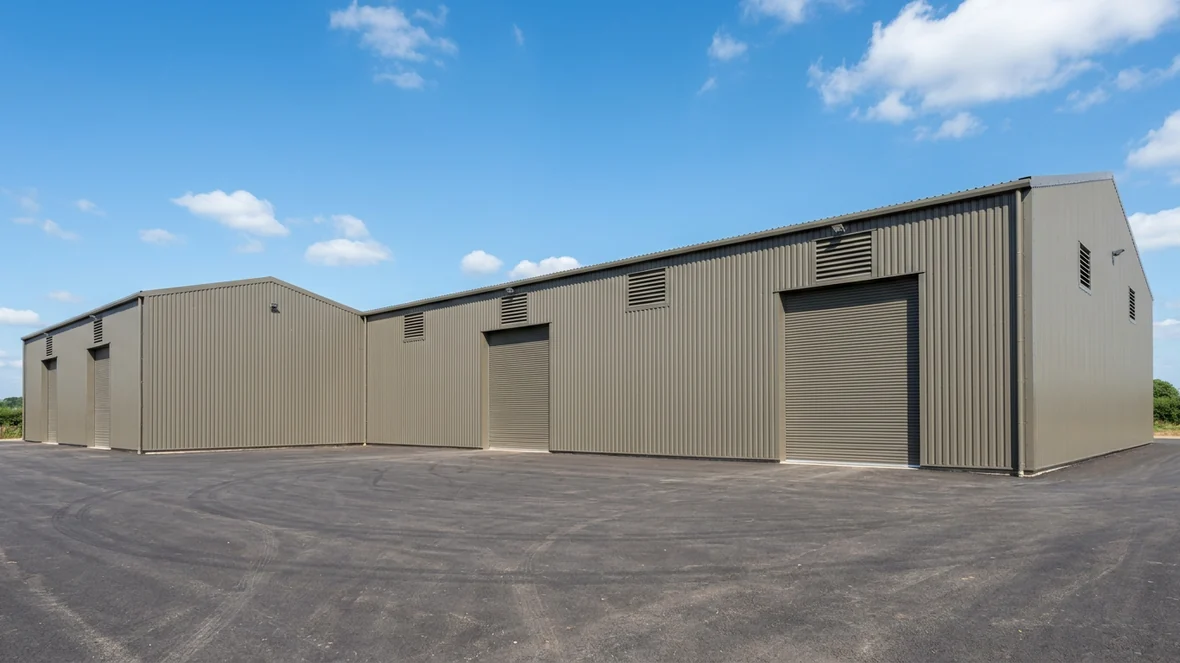
Coating farm buildings across the Hertfordshire arable belt
The land around St Albans is commuter-belt arable: cereal fields broken up by grain stores, large machinery sheds and the occasional older brick-and-steel barn that has been re-roofed more than once. Most of the metalwork we survey here is profiled steel or fibre cement laid down decades ago, and the failure pattern is familiar. Surface coatings chalk away, laps open up, and rust starts creeping out from the fixings. A properly specified coating programme buys real years on a sound roof, but only if the substrate underneath is worth coating in the first place.
That last point matters more around St Albans than people expect, because a lot of the building stock here is a working asset rather than a heritage one. A grain store earns its keep every harvest, so the question is rarely cosmetic. It is whether the sheet can carry a coating that will still be holding when the next intake arrives.
Why the harvest calendar sets the schedule
Arable holdings run to a tight rhythm, and that rhythm decides when coating work can realistically happen. A grain store full of wheat in August is not a building you can wash down, prepare and recoat. The sensible window is the quieter spring stretch before intake, when the store is empty, swept and dry, and the roof can be cleaned and treated without working over stock or product.
We plan around that. Surveys can happen any time, but the application phase is best booked for a dry settled spell when the store is out of use. Machinery sheds give a little more flexibility because kit can be moved, though even there the busy drilling and harvest periods are no time to have a contractor on the roof.
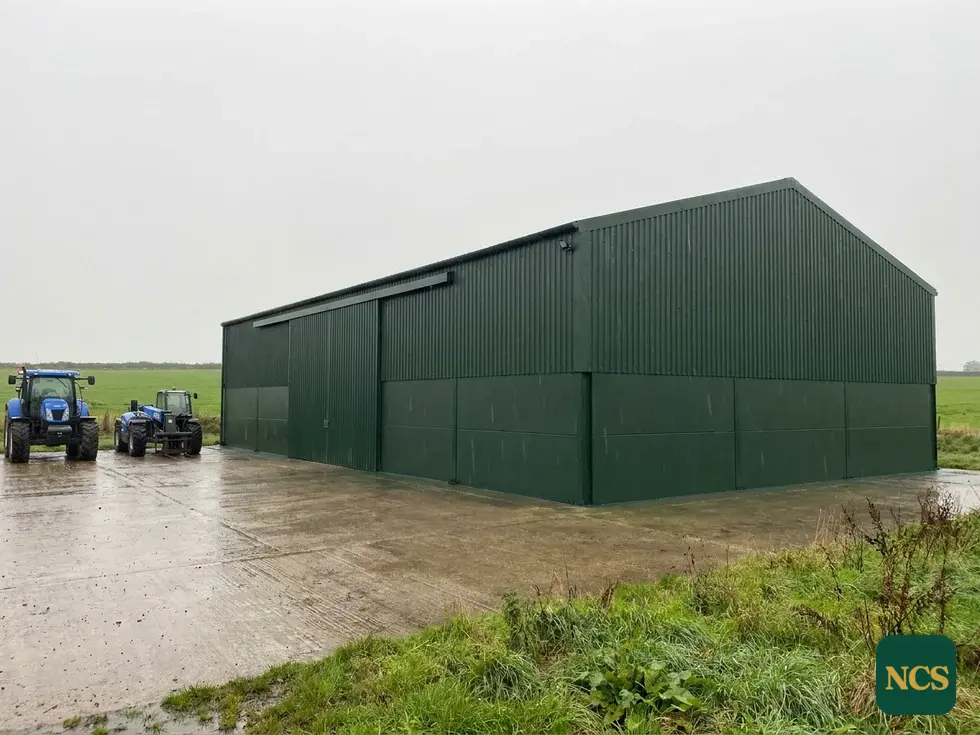
What a survey actually checks
Before anyone quotes a coating, the roof needs an honest assessment. We look at the sheet material, the state of the laps and fixings, the level of corrosion, and whether there is any movement or water ingress that a coating would simply hide. The aim is to separate three outcomes cleanly.
- Coat: a sound sheet with surface weathering that will take and hold a new system
- Repair first: localised corrosion, failed laps or loose fixings that must be put right before any coating
- Replace: a roof too far gone, where coating would only delay an inevitable strip and re-sheet
- Assess and hold: older fibre cement that needs proper checking before any decision
When a coat is not the right answer
We would rather lose a quote than coat a roof that should be replaced. If a steel sheet has corroded through at the laps, or a fibre cement roof is brittle and cracking, a coating is lipstick on a problem and it will not last. In those cases we say so plainly and talk through repair or replacement instead. Older fibre cement also needs careful handling. It may contain asbestos, and any work on it is regulated, must follow a proper assessment, and is never a default we assume. We will not quote a warranty length we cannot stand behind, and we will not invent one to win the job.
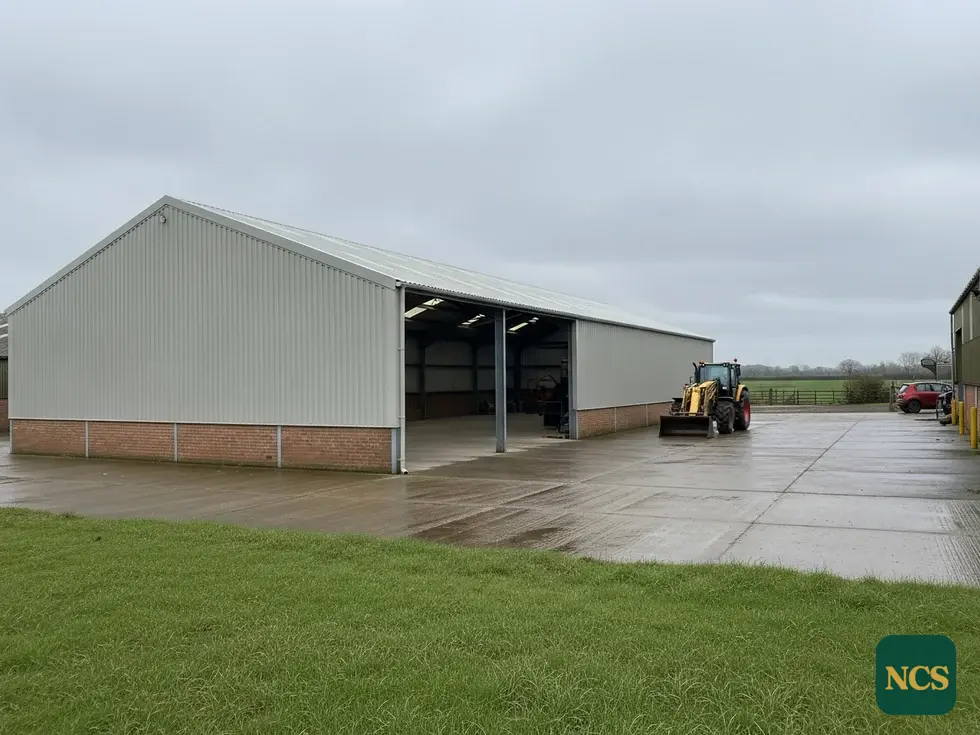
Getting started near St Albans
If you farm in or around St Albans and you are weighing up your barn, grain store or shed roofs for the season ahead, the first step is a survey rather than a price over the phone. Once we have walked the roof and understood how the building is used through the year, we can tell you whether coating is the right call, what preparation it needs, and how to fit the work around your calendar. Use the quote form and we will arrange a visit at a time that does not clash with your busy weeks.