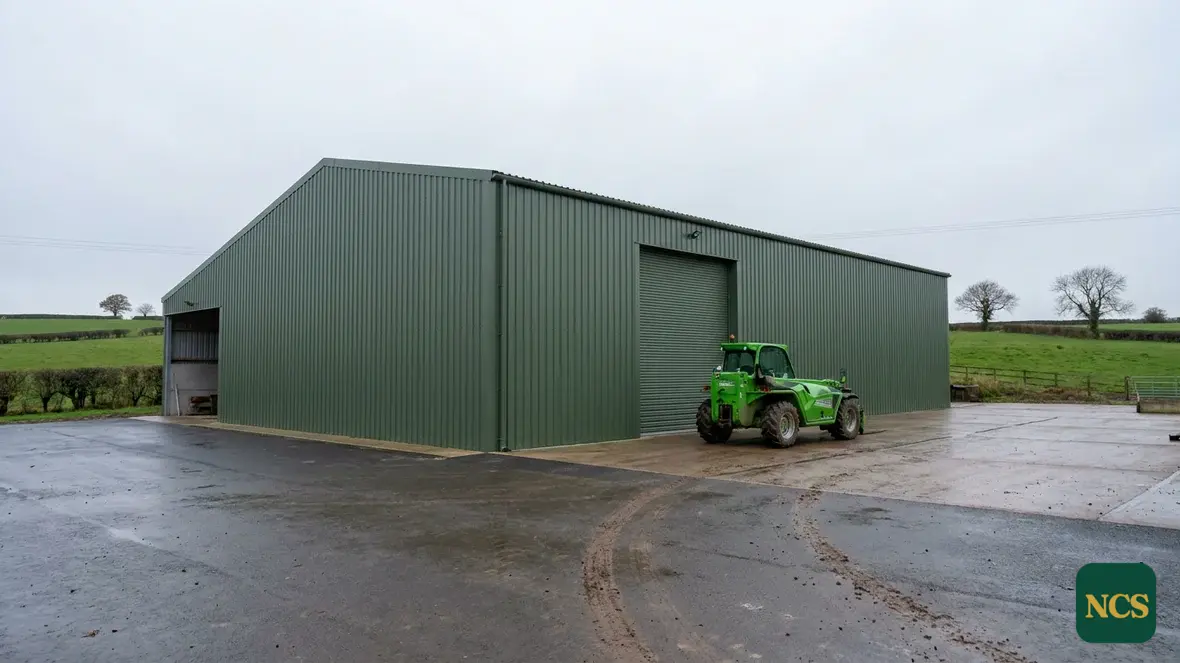
Farm building coatings on the West Yorkshire fringe
The land around Wakefield shifts from easy arable ground in the east to the wetter, windier Pennine foothills further west. We see farm buildings that reflect that mix: big grain stores and machinery sheds on one side, then housing for livestock where the fields climb and the grazing takes over. Most of these roofs are profiled steel or older fibre cement, and the story is always the same: coatings chalking, fixings corroding, laps opening up, and moss taking hold on the north-facing slopes.
Because the terrain near Wakefield is so varied, there is no one-size-fits-all answer for an agricultural building coatings programme. We judge each building on its own merits, what it’s used for, and how exposed it is. That’s why we survey first, before we even think about a quote. A grain store on lower ground and a stock shed up on the western fringe might have the same sheet profile, but they won’t be in the same state after the same number of winters, and they won’t suit the same schedule.
Fitting the work to a mixed calendar
A mixed farming area means a mixed calendar, and that’s what dictates our scheduling. Arable buildings, like grain stores, are best tackled in the empty spring window, after they’ve been swept out and dried, and before harvest comes in. Livestock housing is usually better when the stock are out at grass and the sheds are empty. On a holding around Wakefield that does both, we’ll sequence the work so each building gets treated at the right moment, not all at once, keeping your farm running while we get the job done.
The higher ground to the west also has shorter, wetter weather windows than the lower arable land. So, a building up there might need to wait for a better spell than one down in the vale. Early surveying lets us plan around all of it, lining up the right buildings for the right weeks instead of hoping one visit will cover everything.
Most farmers around Wakefield do not ask for a coating system, they want the barn painted or the shed roof sorted, and that is exactly the work this is.
Being straight about what will not hold
We work out a clear outcome for every roof, we don’t just coat by default. A sound sheet with surface weathering will take a new system and hold it for years, and that’s the job worth doing. But a roof with corrosion through the laps, or a brittle fibre cement sheet, is past coating. We’ll tell you straight and talk through repair or replacement instead. A coating can’t put strength back into a sheet that’s already lost it, and we won’t pretend otherwise just to win the work. Anything in older fibre cement needs extra caution, because it can contain asbestos. That puts it under specific rules, it must be assessed before any decision, and we never treat coating it as the default. We don’t quote warranties we can’t stand behind.

What the survey covers
Before any price, we walk the roof and assess it properly. The decision is based on the actual substrate, not guesswork.
- Sheet material and the overall corrosion level.
- Laps, fixings and gutters, that’s where failure usually begins.
- Moss and growth on shaded slopes; it all needs cleaning before coating.
- Exposure of the site, which can differ sharply across the Wakefield area.
Arranging a visit near Wakefield
If you farm around Wakefield and your barn, store, or shed roofs need attention, start with a survey. Once we know how your buildings are used and how exposed they sit, we can tell you honestly if coating is the right move and plan the work around your year. You’ll get a clear, building-by-building view of what’s worth coating now and what should go on a longer-term replacement plan, so your budget goes where it does the most good. Use the quote form to book a visit.
We carry out agricultural building coatings work in and around Wakefield. For the full survey-led service and how we assess each building, see our Agricultural Building Coatings service, or request a free site survey.
Recently — July 2026
Long daylight and warm, dry days are when a coating cures and bonds best, so summer is a sensible time to get the work booked in.
Every recommendation we make comes from getting up on the roof and looking, not from a photograph or a phone call.