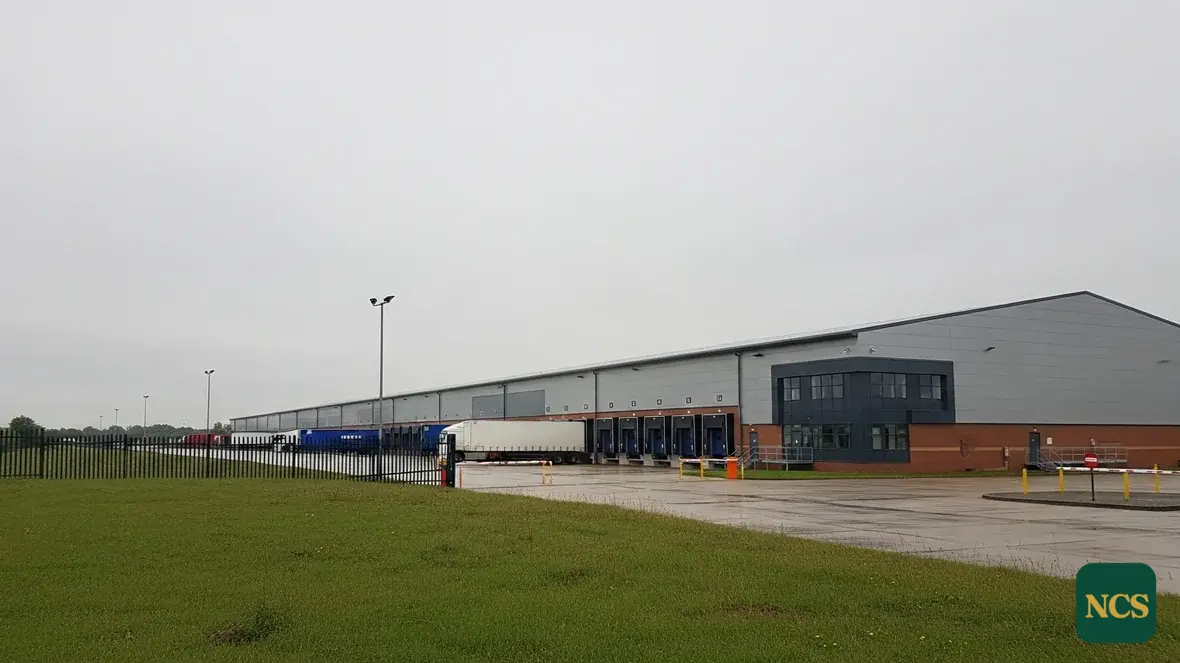
Leicester’s commercial roofscape is dominated by profiled metal: textile and food-processing units close to the city, dense trading estates, and big-box distribution sheds out towards the M1 and M69. Most of those roofs are coated steel, and on coated steel the edges always fail first. Cut edge corrosion is what that failure is called, and the window for treating it affordably stays open right up until it suddenly is not.
A short anatomy of the problem
Coated roof sheets are manufactured with protection on their faces, then cut to length. That cut leaves raw steel exposed along the edge. Assemble those sheets into a roof and the raw edges land at the end laps, side laps and gutter line. These are the precise places where rainwater gathers and stays. Rust forms on the exposed steel, then burrows back beneath the coating. This peels it away and opens more metal to the weather. Inside the laps, trapped moisture keeps the corrosion running even through dry spells.
The result is a roof degrading from hundreds of points at once, every sheet end on the building, on roughly the same schedule.
Age is the main variable. Roofs from the building booms of past decades are now well into the years where edge corrosion becomes visible. This is why the problem often appears across a whole estate at around the same time rather than on one unlucky unit.
What it costs to wait
Treated early, this is an edge repair. We prepare back to clean steel, apply a corrosion-inhibiting primer, and then a flexible seal over the laps, edges and gutter lines. The building stays open, the sheets stay on, and the roof goes back to being a maintenance item rather than a liability.
Left alone, the sheet ends thin and eventually perforate. At that point water is inside the building along every lap line. On premises like Leicester’s food and textile units, water over production or stock is a different order of problem from water over an empty warehouse aisle. The repair also stops being a repair. Perforated sheets need replacing, not treating.
Questions worth asking anyone who quotes
Cut edge corrosion attracts quick-fix offers, mastic smeared over rust being the classic. Before accepting any quote, including ours, ask:
- Did you survey the roof itself, or quote from the ground?
- How will corroded edges be prepared before anything is applied?
- What primer and coating system is specified, and why?
- Will the laps be sealed, or just the visible edge?
- What did you find that you are not going to treat, and why?
A contractor with a good answer to that last question is one being straight with you.
When we would turn the work down
If a survey shows sheet ends already holed, corrosion through the laps over large areas, or steel too thin to trust, we will not quote for treatment. No coating recovers steel that has gone. The report will say so in writing, with photographs, and set out the realistic alternatives: partial resheeting, full replacement or over-roofing. That approach costs us some jobs and keeps our advice worth having. We would rather you spend the budget on the right solution, even if someone else carries it out.
The full roof question
Edge corrosion usually announces a wider truth: the factory coating is ageing everywhere, and the edges are simply where it shows first. If the survey finds the finish across the sheets chalking and tired, we will price both options. That is edge treatment alone, and edge treatment with a full roof coating. This way you can weigh one mobilisation now against a second project a few years on. We are South-East based and work across the UK. Leicester sits well within our normal coverage. Send over the address and what you have noticed, and we will arrange the survey.