Why the edges fail before the rest of the roof
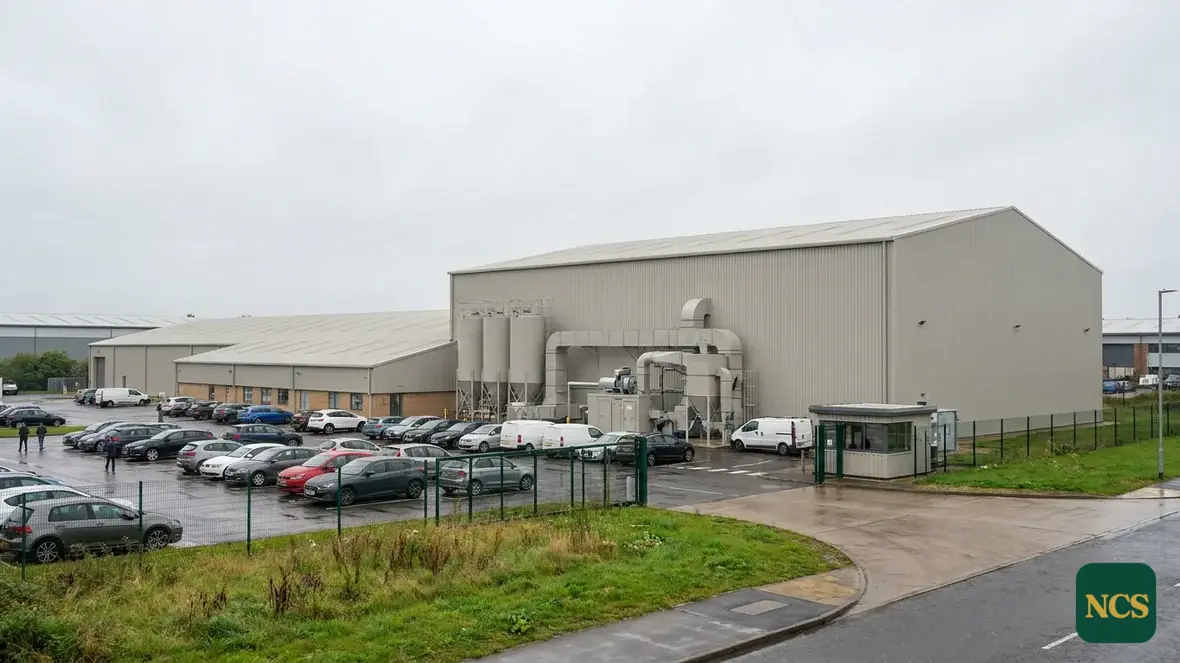
Look at the distribution sheds and light industrial units dotted around Lichfield, and you’ll often see the metal roofs giving up at the edges long before the main faces show any real trouble. It’s simple, really, once you know how it works. When profiled steel sheets are cut to length in the factory, that cut goes straight through the galvanising and the colour coat. That leaves raw steel exposed on every sheet end and side lap. The coated face is protected for years. The cut edge never was, because no factory finish can wrap a line made after the coating is applied.
From there, it’s a slow, steady chain reaction. Water gets to the bare steel, rust starts, and it tracks back, creeping under the coating and lifting it from the metal as it goes. That thin brown line you can spot from the car park? That’s the leading edge of corrosion that’s usually travelled a lot further than it looks.
An inland Midlands roof has its own pressures
Lichfield sits inland, so you don’t get the constant salt air that hammers coastal roofs. But that doesn’t make its metal roofs bulletproof. Here, it’s often about the age of the buildings and the everyday weather cycle. Many of the distribution and trade-counter units in and around the city were built during a certain generation of steel cladding. Decades of condensation, rain sitting in the overlaps, and the constant thermal movement as sheets heat and cool all open the door for cut-edge corrosion. We often see north-facing laps that stay shaded and damp for longer periods being the first to show it.
The treat-early argument in plain terms
If the corrosion is still shallow, the work is targeted and doesn’t cause much disruption. We clean the affected edges right back to sound metal, then we treat, prime, and seal them with a flexible coating designed to move with the sheet. The rest of the roof keeps working, the unit keeps trading. Leave it too long, and a sheet perforates. No coating in the world will recover a sheet that’s rusted right through. Then you’re looking at replacement: access equipment, stripping, new sheets, and real disruption inside your building. The huge difference in cost and downtime between a cut-edge treatment and re-sheeting is the only reason you need to deal with rust while it’s still on the surface.
Painting over rusted edges is the repair that fails first. Around Lichfield we treat the steel, seal the laps and then coat, in that order.

Signs worth a closer look
- Brown staining along the gutter line, visible from the ground
- Coating flaking or curling back at the sheet overlaps
- Rust forming around the fixings near sheet ends
- Rust flakes or coating bits collecting in the gutters
- Damp patches inside the unit beneath the laps
Each of these is a reason to get up there and investigate, not a measure of the damage. You only get a trustworthy figure from a survey. That means getting onto the roof, checking the worst laps where it’s safe to do so, and seeing just how far the corrosion has crept under the coating.
Our honest line on sheets that are finished
We survey every job before we quote, and sometimes that survey brings news that means we don’t get the work. If sheets are perforated, if the rust has tracked too far under the coating, or if the underside is corroding where we can’t reach it, we’ll tell you straight. Coating over a failed sheet is just throwing money away; it’ll lift again before long. The honest options then are to replace the worst sheets and treat the rest, or consider an overlay if the roof really has reached the end of its life. If the edges are failing and the faces are also chalking and fading, rolling the cut-edge work into a full roof coating usually gives you better value, protecting the whole surface in one visit. We’re based in the South-East but work across the UK, and what we recommend for a roof in Lichfield always comes down to what the survey photographs show us.
Recently — July 2026
Long daylight and warm, dry days are when a coating cures and bonds best, so summer is a sensible time to get the work booked in.
We coat roofs and cladding that still have life in them, and we say so plainly when one is past saving.