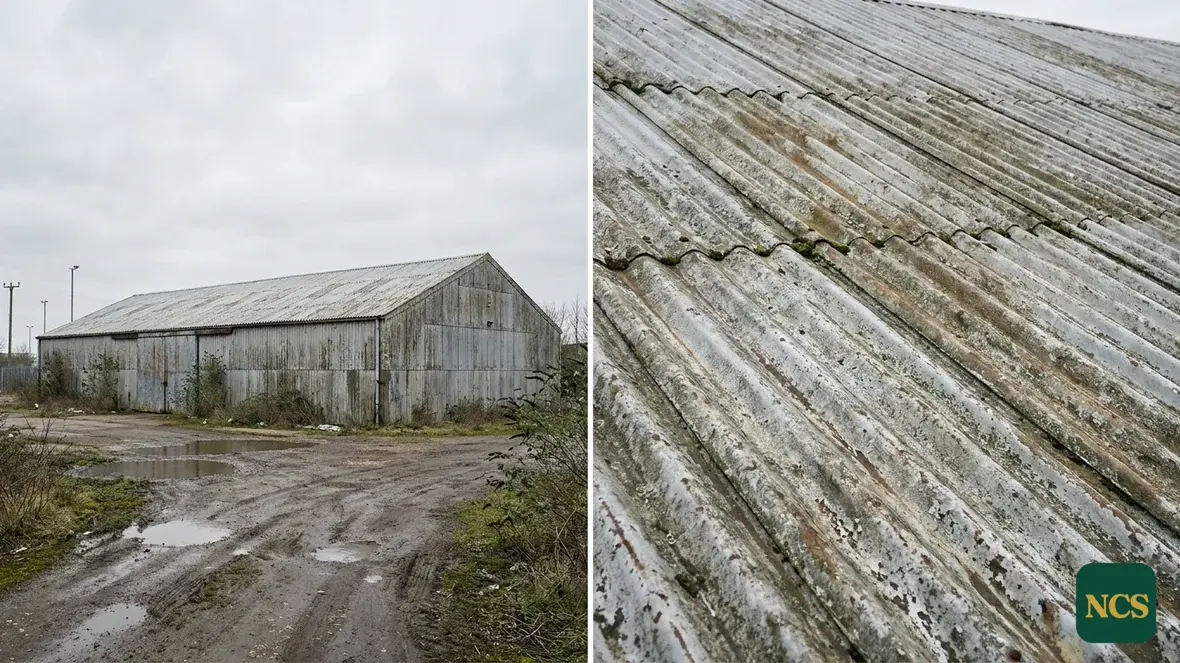
Newark-on-Trent sits where the A1 meets the A46 and the East Coast Main Line. The industrial buildings here grew up around that freight position: distribution units, manufacturing space and trading-estate workshops. Most are roofed in profiled metal that’s seen decades of weather. If you run one of these buildings, you already know the roof is ageing. The question is whether a coating buys you years at a sensible cost, or if the metal is too far gone. A survey is the only honest way to tell the two apart. It’s a lot cheaper than finding out through a leak.
How profiled metal roofs around Newark age
Profiled steel is a good roofing material. It just ages predictably. The factory finish chalks and fades under UV, fixing washers harden and split, and laps that stayed dry for twenty years start to weep in driven rain. Many units along the A1 corridor are in exposed positions, so wind-driven wet finds every weakness. It works into side laps and around fasteners that have lost their seal. None of that means the sheet is finished. In most cases, the steel still has years left in it, provided the surface is protected before corrosion really gets under the old coating. Our job with the survey is to confirm the substrate is sound enough to justify the work.
Warehouse and factory roof painting near Newark-on-Trent starts at the fixings and cut edges, because that is where the water gets in first.
Cut-edge corrosion: where it usually starts
On warehouse and factory roofs, we find cut-edge corrosion most often. Wherever a sheet was cut, whether at the rolling works or on site, the bare steel edge has no protection. Water sits in the side and end laps, rust tracks back from the edge, and over time it lifts the finish and thins the metal. Caught early, it’s routine work: edges are mechanically prepared, treated and sealed with a dedicated cut-edge system before the full roof coating goes on. Leave it for two or three more winters, and it perforates the sheet. That turns a coating job into a strip-and-replace project, at far greater cost. The whole point of catching it now is to keep the project on the cheaper side of that line.

Keeping a working site running
For most estates teams, disruption matters as much as the price. Coating is done from roof level, so the building is never opened up. There’s no strip-off, the unit stays weathertight throughout, and no skips of old sheeting cross a busy yard. We can phase work bay by bay, or elevation by elevation, fitting around deliveries and shift patterns, not the other way round. On a multi-let Newark estate, tenants generally keep trading with little more than a notice letter and some parking management beneath our access points. That ability to keep a unit earning while the roof is dealt with is often the deciding factor over a full re-roof.
What the survey covers
We don’t price a roof from photographs taken at distance. A physical inspection sets out exactly what you are dealing with:
- Cut edges, side laps and end laps, for the spread of corrosion
- Fixings and washers, the most common source of the drips tenants report
- Gutters, outlets and rooflights, which often fail before the sheets do
- Adhesion of the existing finish, so the new system bonds properly
- Any internal signs of moisture or deck damage that point to replacement
When we would tell you not to coat
We would rather lose the job than coat a roof that should be replaced. Widespread perforation, corrosion that has reached purlins and fixings across the roof, or saturated insulation in a built-up system all mean a coating only hides the decay and wastes the budget. The same goes for fibre cement that has gone brittle. Our survey establishes which side of that line your roof sits on, and the recommendation goes in writing either way, including the times when the honest answer is that industrial roof coatings gain you nothing. For an estates team weighing the figures, that straight verdict is worth more than a tidy-looking roof that fails again inside two years.
Recently — July 2026
With surfaces staying dry for longer, summer lets us prepare and coat a roof in a single planned visit rather than working around showers.
Recent work around here has been a mix of profiled metal roofs, cladding and ageing asbestos cement, each assessed on its own condition before anything was specified.