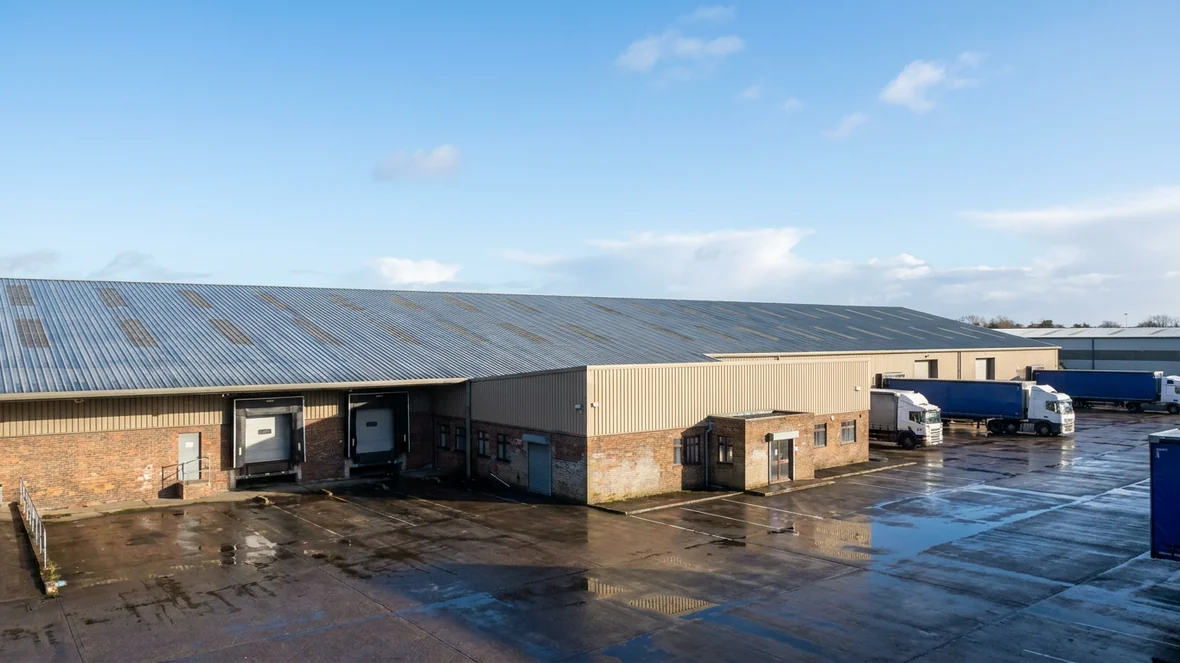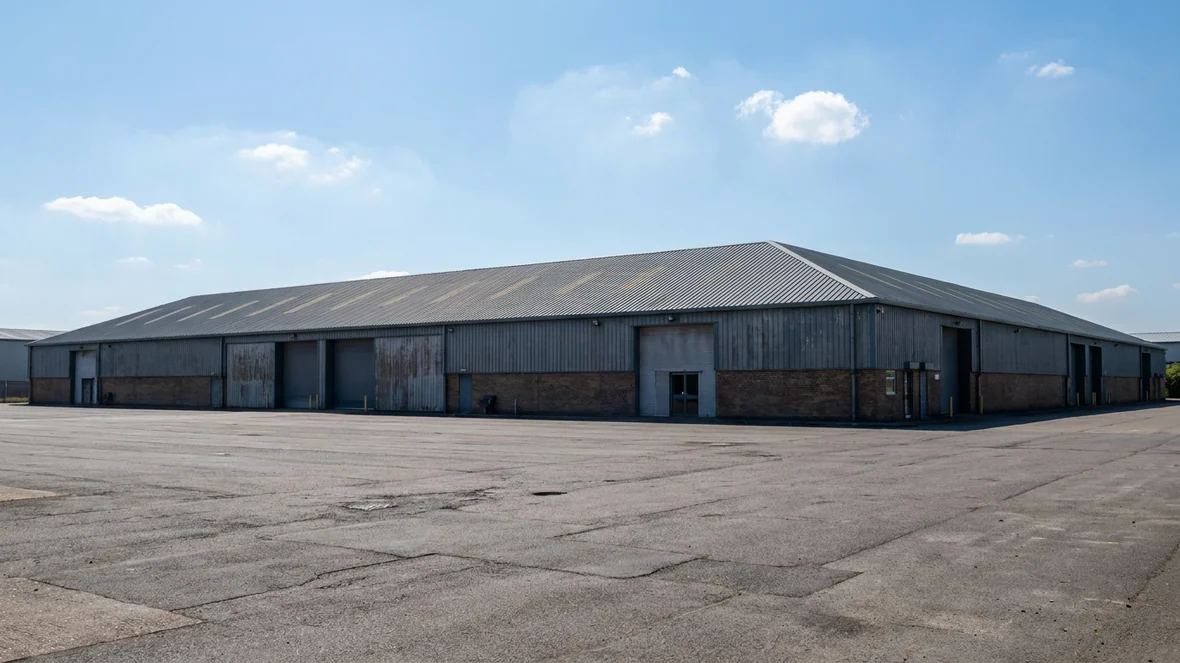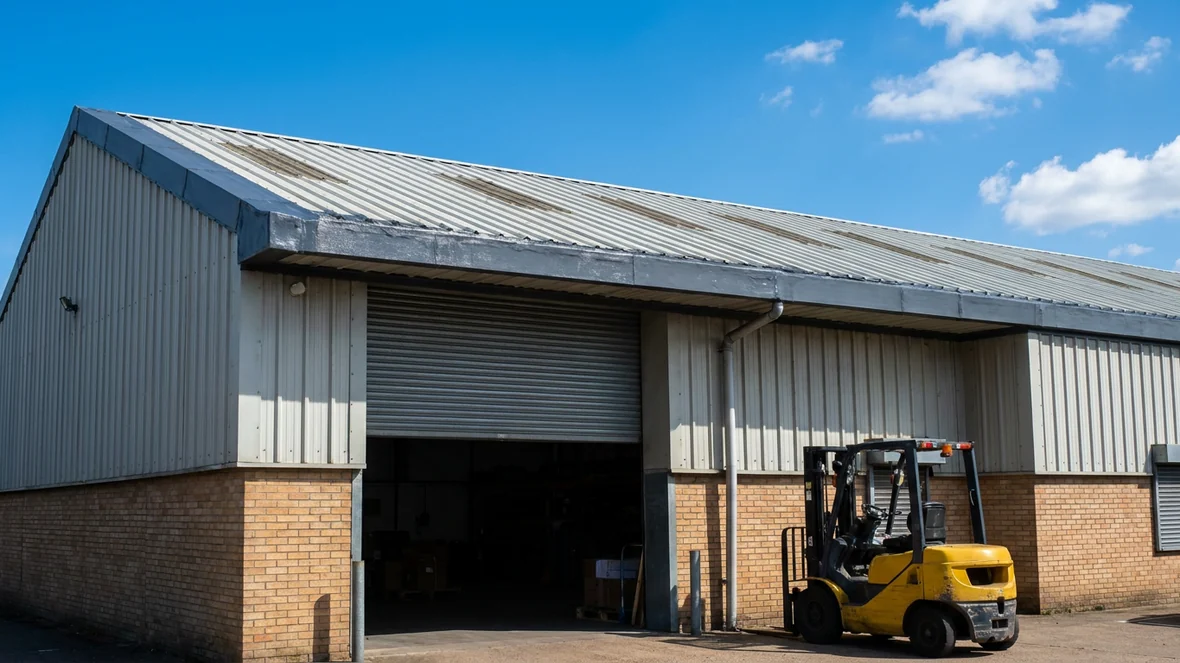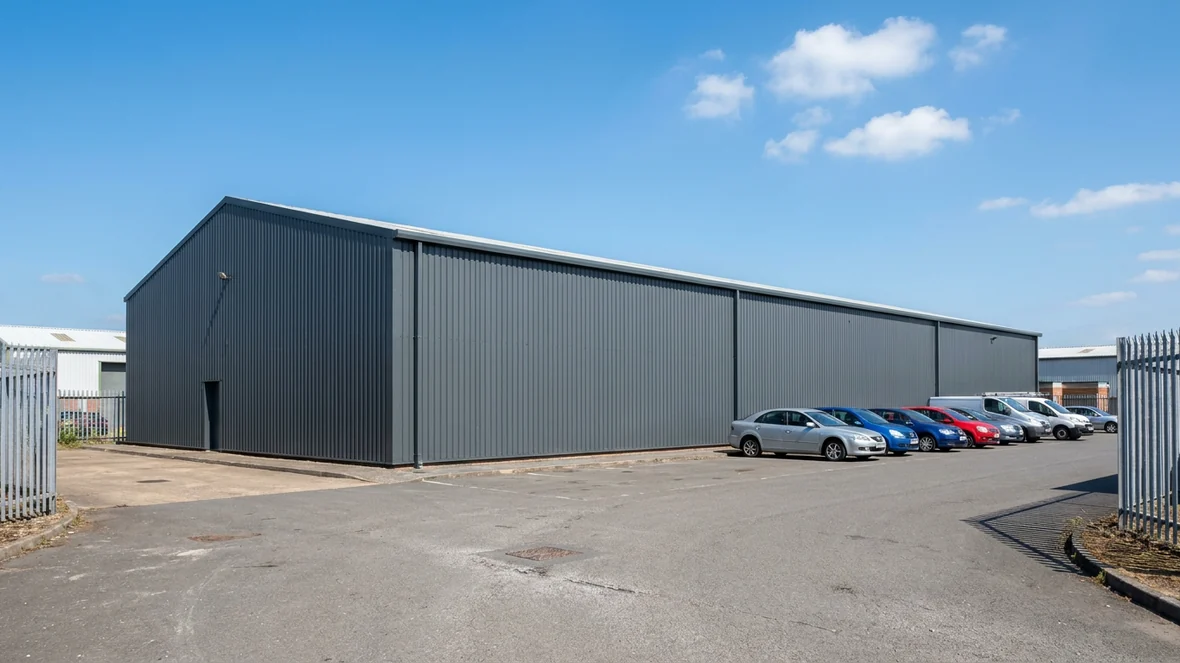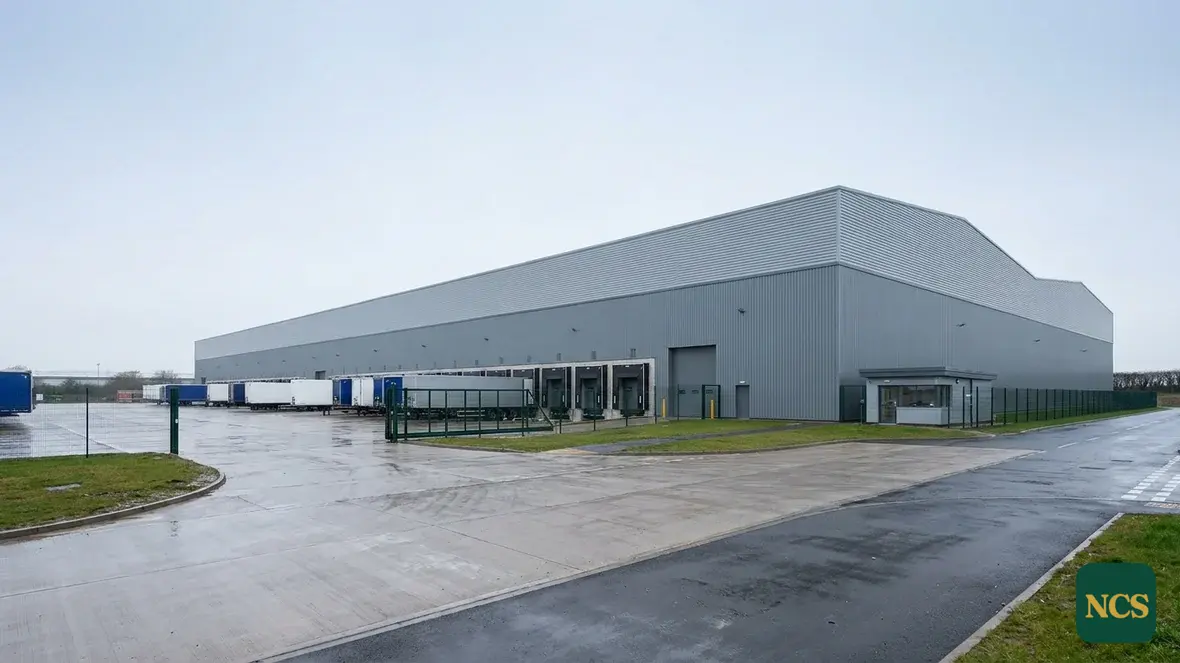










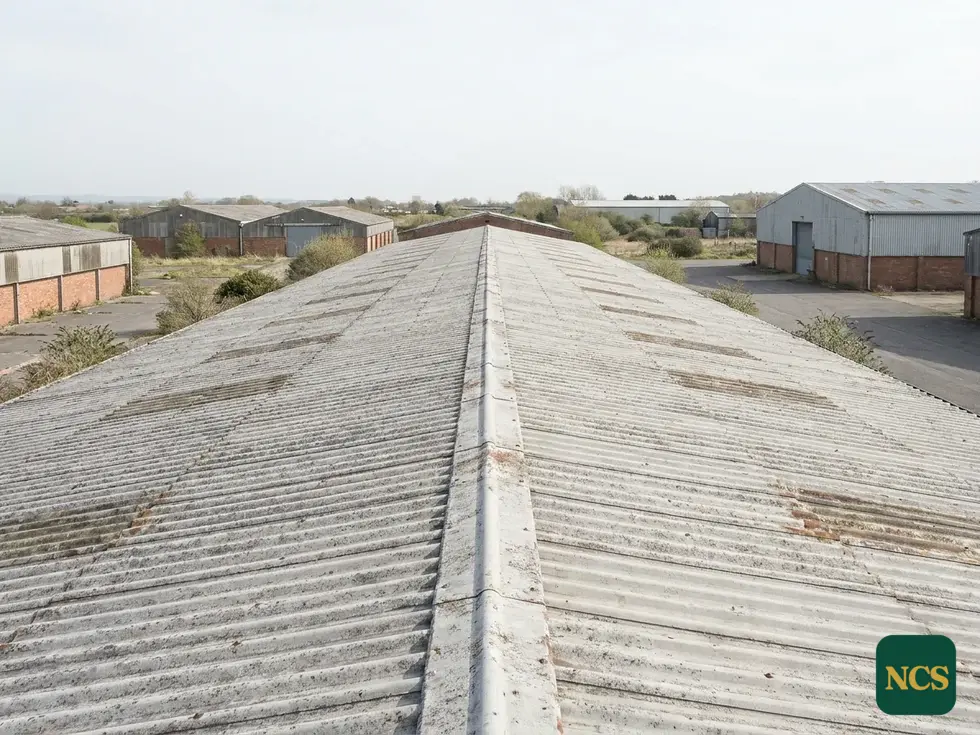
Sunderland’s economy runs on manufacturing and logistics, and the buildings show it: large factory sheds, supplier units and distribution space with some of the biggest roof areas in the North-East. Most of that acreage is profiled metal, much of it decades old, and all of it faces North Sea weather that gives roofs no easy seasons. Salt in the air, hard winters and long wet spells push surface corrosion along quickly, while the steel frames beneath typically remain sound for decades more. That gap between a failing surface and a healthy structure is precisely where industrial roof coatings earn their keep.
Coastal weather and large metal roofs
The bigger the roof, the more edge there is to fail. On profiled steel sheets corrosion starts at the cut edges, where the factory finish stops and bare metal is exposed at laps, eaves and ridges. Salt-laden air accelerates the process, and on long industrial elevations the affected length of lap joint runs into hundreds of metres. A coating system addresses this at the right moment: edges are prepared and primed, laps sealed, fixings dealt with, and the whole surface recoated to restore a continuous weatherproof layer. The same work attempted after the rust has gone through the sheet is no longer a coating job, which is why timing decides the economics.
Survey first: what we check before recommending anything
Every roof gets inspected before anything is priced. The survey covers:
- Corrosion spread at cut edges, and whether perforation has started
- Sheet condition across the field of the roof, not just the edges
- Fixings, washers and lap sealant
- Rooflights, flashings, penetrations and gutters
- Moisture indicators on composite and built-up systems
The report states plainly whether the roof is a sound candidate for coating, needs repairs first, or is past the point where coating is honest value. Facilities teams use it for budgeting even when the work is a year away, which is exactly what it is for.
Minimal disruption to manufacturing and shifts
Factories and supply-chain units around Sunderland often run shifts that leave no convenient downtime, so the work has to fit the operation rather than the other way round. Coating is applied from outside the building: no strip-off, no opened-up roof waiting on the weather, no decanting of production or stock. We sequence large roofs in sections, agree access and traffic routes with your site team, and keep the noisier preparation stages to agreed windows. We are based in the South-East and carry out work across England; North-East projects are planned and resourced so the distance is our problem, not yours.
When a coating would waste your budget
We are straightforward about the limits. If corrosion has perforated sheets in numbers, if edge rust has travelled deep under the finish, if composite panels are holding wet insulation or the fixings and purlins are failing, a coating will not save the roof and we will not pretend otherwise. Fragile fibre-cement roofs in poor condition can also be unsafe to coat at all. In these cases the survey report recommends the realistic route instead, whether that is partial sheet replacement, overcladding or a full re-roof, and you can take that report to any contractor you choose. Coating the wrong roof helps nobody, least of all the team that has to explain the leak two winters later.