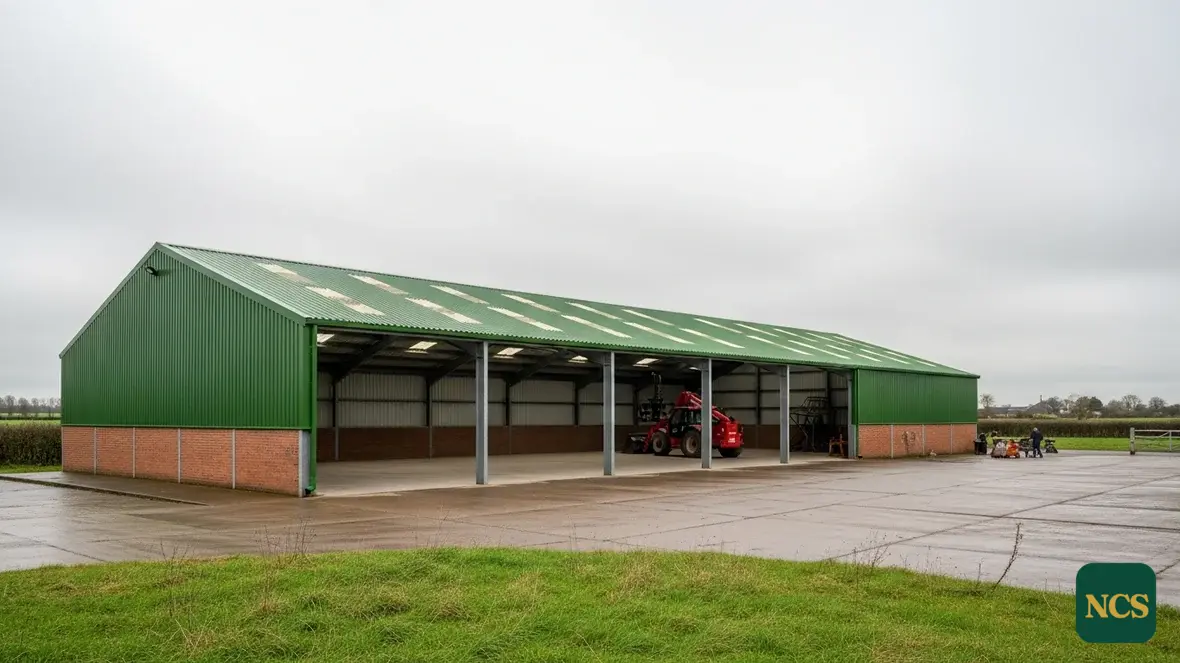
Exposed farm roofs in the North East
The farmland around Sunderland, where coast meets upland, means any agricultural building coatings work here faces serious exposure. We see wind coming in hard off the North Sea, shorter weather windows than in the south, and salt-laden air that gives metal roofs an extra reason to corrode. The building stock is mostly livestock and mixed: stock housing, fodder stores and general sheds in profiled steel, alongside older fibre cement that has weathered fast in this climate. Roofs that might still be sound after the same number of years inland often look a good deal older up here, simply because they have taken more punishment.
A coating system out here has to earn its place against genuinely tough conditions. That’s why the preparation and the substrate assessment matter more, not less, than they would in a sheltered valley. Cutting corners on the clean-down or coating on a marginal day to keep a job moving is how a system fails early. On an exposed North East site, there’s little margin for that kind of optimism.
Short windows, careful planning
The biggest practical constraint around Sunderland is the weather. There are simply fewer dry, settled, wind-free days to apply an agricultural coating. A system put on in marginal conditions won’t bond or cure properly. We’d rather wait for the right window than rush a job that fails early. That means surveying ahead of time, getting buildings prepared, and being ready to move when a genuine dry spell arrives, rather than scrambling to start from scratch when one does.
The farm calendar plays in too. We know livestock work is best done while animals are out at grass and the housing is empty, so the realistic application season is a fairly narrow band of warmer, drier weeks. Planning early is the only way to make that band count, and it’s why we encourage owners around Sunderland to book a survey well before the season they actually want the work done.
What we look for on a survey
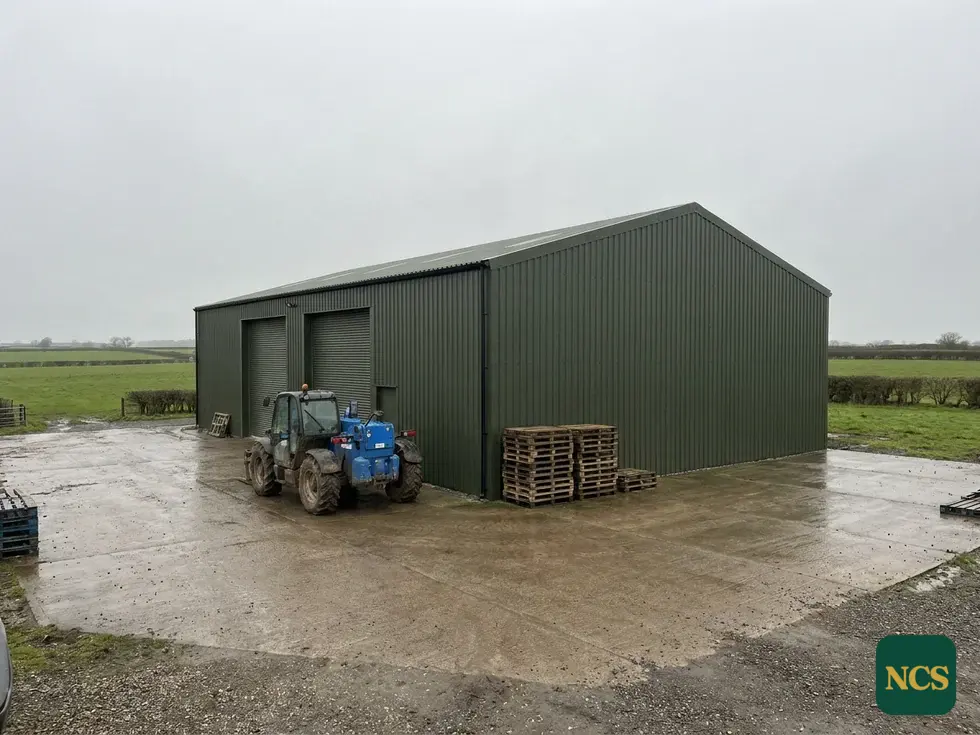
Exposure changes the failure pattern, so our survey focuses on where wind and salt do their damage first: windward elevations, ridge and verge details, lap joints and fixings. A roof can look sound from the yard and still be failing on the slope that faces the prevailing weather. That’s why we get up and inspect, rather than judging from the ground. We sort each roof honestly.
- Corrosion at fixings and laps, worst on the weather-facing slopes.
- Wind-loosened sheets and lifted flashings.
- Whether the substrate can hold a coating through hard winters.
- Older fibre cement that needs assessment before a decision.
Where coating stops making sense
On an exposed North East site, an honest answer sometimes is that a coating won’t give you the years you want. A roof already losing sheets to wind, or corroded through at the laps, needs repair or replacement first. We’ll say so rather than take the job and watch it fail through the next winter. There’s no point coating over a problem that the first hard gale will expose again. Where older fibre cement is involved, the rules come first: it may contain asbestos, so it has to be properly assessed before anyone decides anything. Coating it is regulated work rather than an automatic option. We don’t quote warranty lengths we can’t back, and we don’t pretend a coating fixes structural problems.

Arranging a survey near Sunderland
If your farm buildings around Sunderland are taking a beating from coastal weather and the roofs are starting to go, start with a survey. We’ll assess what the conditions have done, tell you honestly whether coating is the right move for your agricultural buildings, and plan any work around the short windows the North East gives us. There’s no obligation to go ahead off the back of a survey, and if a roof needs repair or replacement rather than a coat, we’d far rather you heard that before the next winter than after it. Use the quote form to arrange a visit.