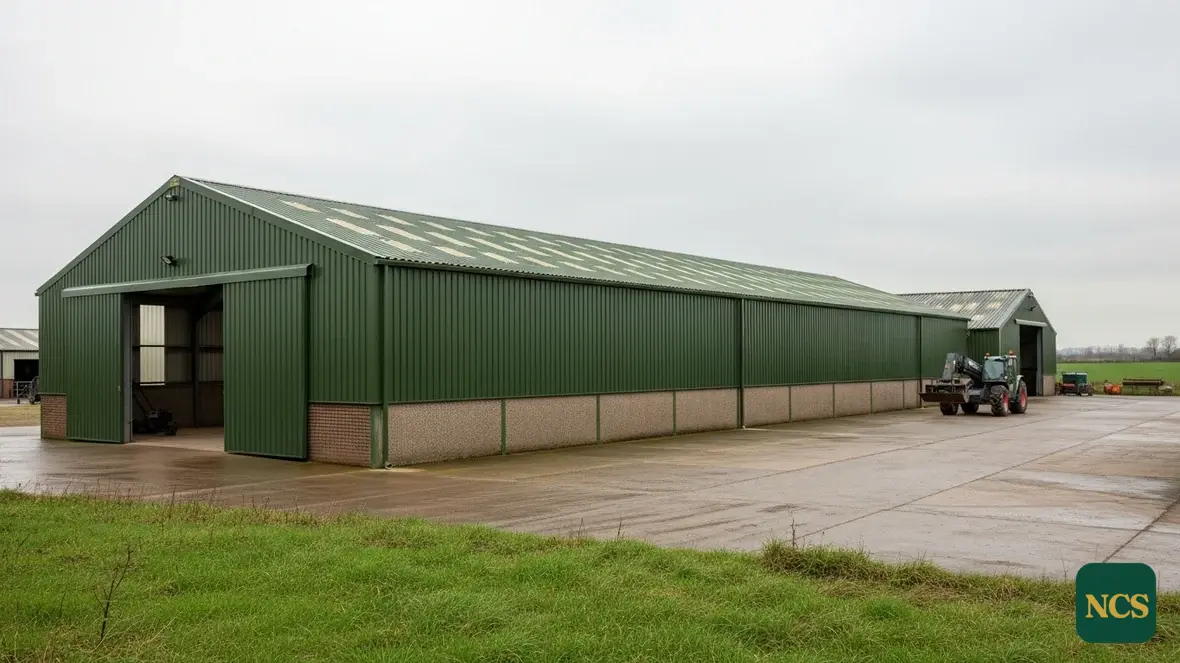
Drive a few minutes out of Ely and the land flattens into open fen: drained black earth, long straight droves, and farm buildings standing exposed with nothing to break the wind. We are exterior coating contractors, working across the UK from a South-East base, and the Fenland holdings around Ely throw up a particular kind of weathering that shapes how we approach agricultural building coatings here.
How Fenland sites weather farm roofs near Ely
The flat, treeless ground south and east of Ely gives the weather a clear run at every roof. Wind-driven rain hits cladding side-on, the long slopes of large grain and vegetable stores take sustained UV and frost, and there is little shelter to slow any of it down. Big arable holdings here run sizeable steel-clad stores alongside older fibre-cement barns, and it is usually the factory finish that goes first: faded plastisol, rust creeping out from cut edges, and weeping fixings staining the sheets below. The good news is that exposure alone does not condemn a roof. Where the frame is sound and the sheet has not corroded through, preparation and the right coating system can keep a store working for many more seasons.
Survey before any figure
We do not price fen roofs from the yard gate. The condition that decides whether a roof is worth coating usually cannot be seen from the ground, so every enquiry around Ely starts with a proper inspection. A typical survey records:
- Sheet condition, including cut-edge corrosion and lap deterioration
- Fixings and washers, and any movement in the sheets
- Gutters, valleys and rooflights, which often fail ahead of the roof
- Internal signs of water ingress on purlins and stored crop
- Access and how the soft fen ground will carry equipment
You get the findings in writing, with photographs, before any cost is discussed. If different slopes need different treatments, the report says so rather than smoothing the problem into one number.
Working with the arable calendar
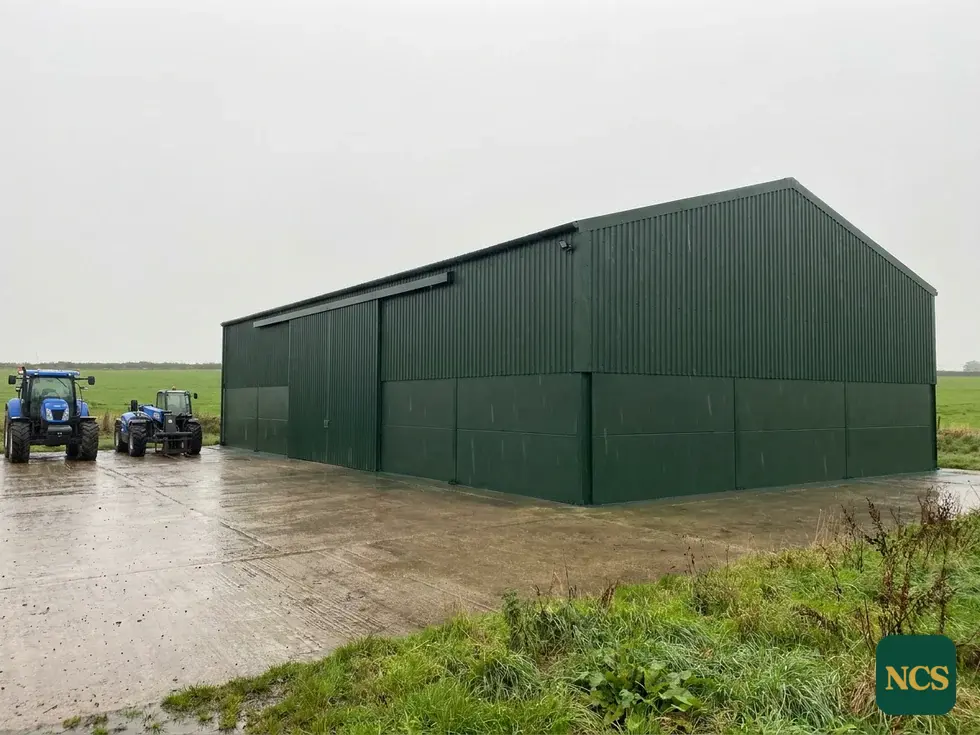
On these holdings the diary is ruled by the grain and vegetable cycle. Stores fill from harvest and stay full through much of the year, so the window for coating a grain store is the gap after it empties and before the next crop comes in. Potato and vegetable stores have their own busy seasons to plan around. We schedule work for the quiet weeks each building actually has, agree vehicle movements with you at the start of the day, and protect any produce, plant or wash-down areas that need it. Coatings also need a dry substrate and sensible temperatures, so a sound programme carries weather contingency rather than promising the fen sky will behave.
A tired barn near Ely rarely needs new cladding. Honest preparation and a sprayed repaint is normally what the survey ends up recommending.
Legacy metal and asbestos-cement roofs
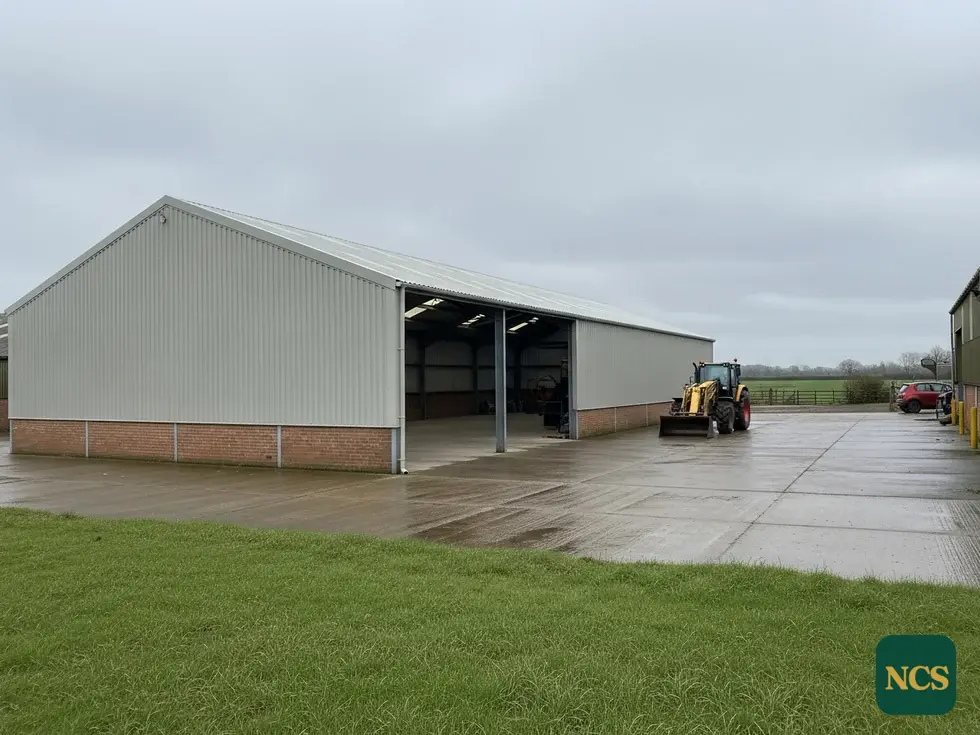
A large share of the roofs we survey near Ely are older metal or asbestos-cement sheet. Weathered but sound asbestos-cement can often be cleaned and encapsulated with a suitable coating, sealing the surface against further breakdown and avoiding the considerable cost of removal. Fragile, cracked or delaminated sheets are a different matter, and we will say plainly when a roof needs a licensed removal contractor rather than a coating. Nobody walks these roofs casually: condition is assessed from proper access equipment before any weight goes on a sheet, because that caution is the difference between a safe job and a dangerous one.
Coat, repair or replace: the honest answer
Coating is not always the right call, and we would rather lose the work than coat a roof that should be replaced. As a guide, localised damage on an otherwise sound surface points to repair, widespread surface breakdown on structurally sound sheets is where coating earns its keep, and sheets that are holed, soft or failing at the fixings are usually telling you the roof is finished. The survey decides which category your building falls into. If the answer is replacement, we tell you, so you can plan the spend on accurate information rather than a sales pitch dressed up as advice.
We carry out agricultural building coatings work in and around Ely. For the full survey-led service and how we assess each building, see our Agricultural Building Coatings service, or request a free site survey.