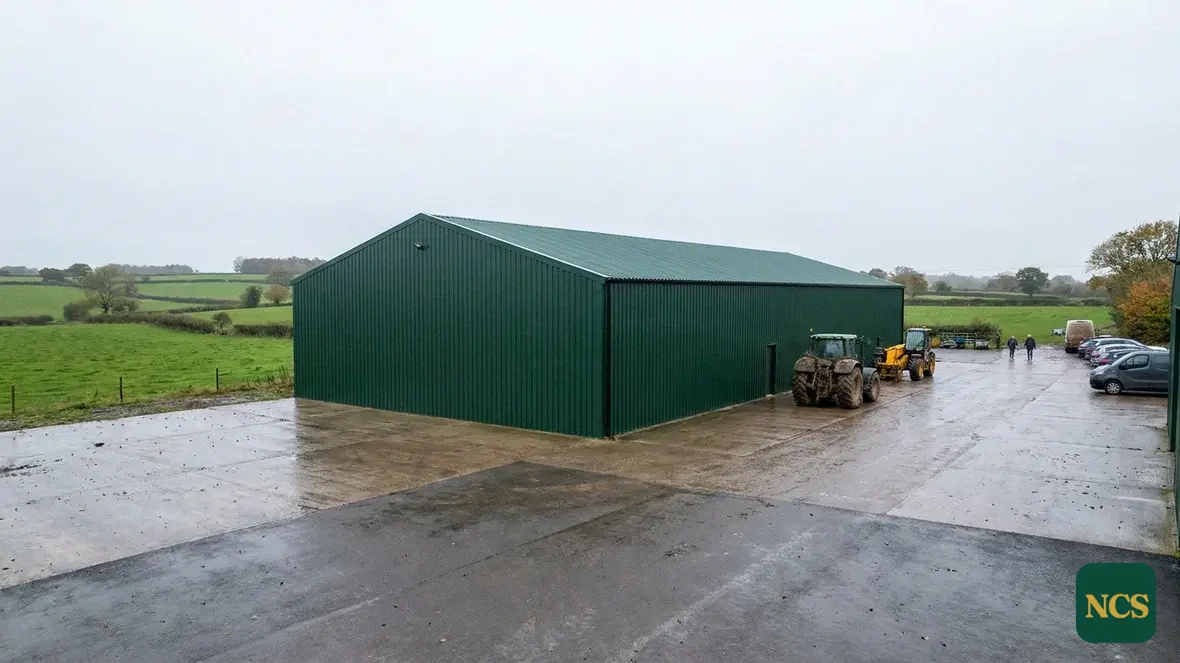
You might not picture it, but London is ringed by a surprising amount of farmland. Beyond the green belt lie the arable fields of Essex and north Kent, the mixed holdings of Surrey and the Chilterns edge, and the grain and livestock farms that still work the land within an easy run of the capital. We’re National Coating Specialists, an exterior coating contractor working across the UK, and being based in the South-East puts these home-county farm buildings squarely on our patch. The pressures on agricultural building coatings here are less about extreme weather and more about ageing building stock and tight working windows.
A patchwork of building eras
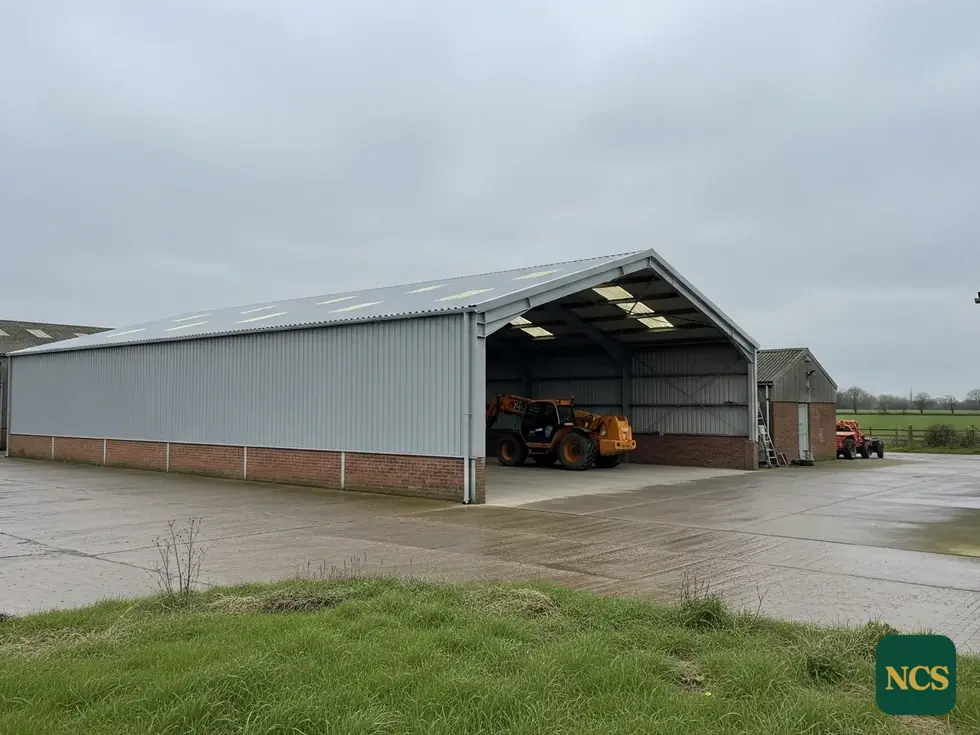
Few farms around London were built in one go. A typical yard carries a brick or blockwork barn from a previous century, a steel portal-frame shed from the seventies or eighties, and perhaps a newer clad grain store alongside. It’s the older steel and fibre-cement roofs that usually need attention first. Factory finishes on galvanised and plastisol sheets break down with age, cut edges corrode before anything else, and rusting fixings stain the slope. The good news is that a tired-looking roof is often still a sound roof underneath. Where the frame is solid and the sheet hasn’t corroded through, a well-prepared coating can add many working seasons before replacement is forced.
What the survey establishes
We don’t price farm roofs by eye from the gate. Every enquiry begins with a survey, because the things that decide whether a roof is worth coating sit out of sight from the yard. A typical inspection on a holding near London covers:
- Sheet condition, with particular attention to cut edges and laps.
- Fixings, washers and any sign of sheet movement.
- Gutters, valleys and rooflights, common early failures.
- Water staining on purlins, frames and stored machinery or feed.
- Access and ground conditions for the equipment the job needs.
You see the findings, backed by photographs, before money is discussed. Where slopes differ, the report treats them separately rather than averaging the problem away.
When we will tell you not to coat
This is the honest part, and it matters most. Coating is the wrong answer on some roofs, and we’d rather say so than take the job. Localised damage on an otherwise good surface points to repair. Broad surface breakdown on structurally sound sheets is exactly where a coating pays for itself. Sheets that are holed, soft, brittle or failing at the fixings are usually past saving, and on those we recommend replacement and explain why. With fibre-cement and asbestos-cement, fragile or delaminated sheets go to a licensed removal contractor, not under a coating. You get a clear verdict either way.
For London farms, repainting the shed is usually a between-seasons job, and we programme it around stock and harvest rather than the other way round.
Fitting the work around a busy calendar
Farms in the capital’s orbit are often run alongside other commitments, with contractors, hauliers and seasonal traffic all sharing the yard. Some now lease shed space for storage or rural enterprise that has to stay usable through the work. We plan coating to the quiet windows: grain and machinery stores before they fill, livestock buildings while they sit empty, and away from drilling and harvest peaks. Access on the day is agreed with you, feed and water areas are protected, and we keep our movements out of yours. The aim is a roof brought back into good order with the least possible disruption to a farm that has plenty else going on.
Why coating beats replacing on a sound building
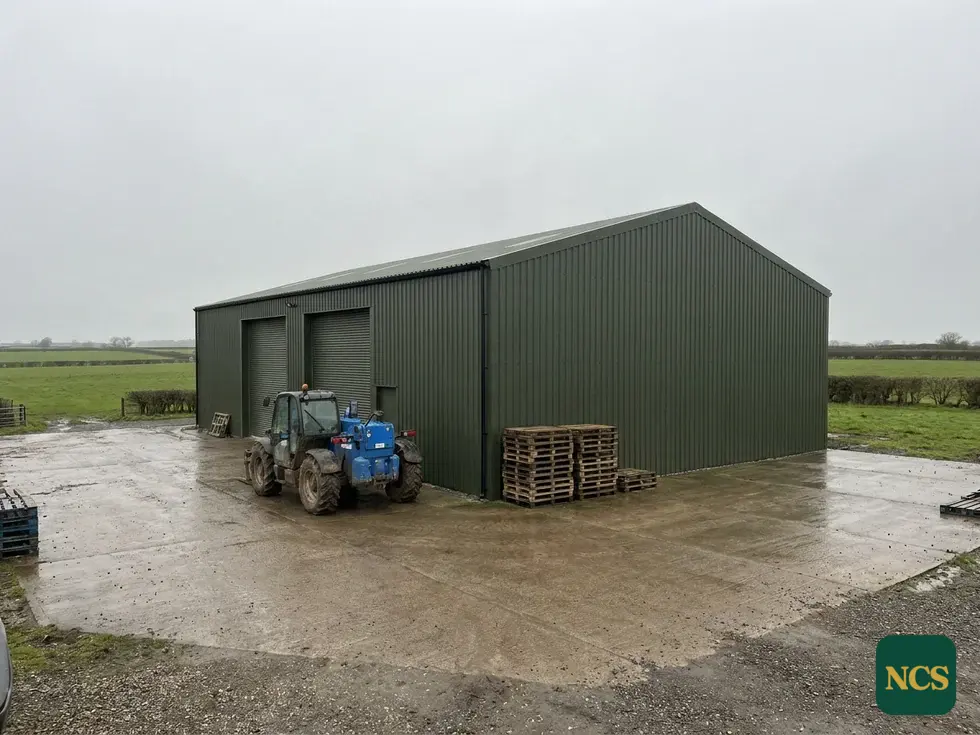
For an arable or mixed holding around London, a full re-roof means scaffolding, a stripped building, disposal of the old sheets and weeks of a store standing out of use. Coating a roof that is still structurally sound avoids most of that. The building stays largely in service, there is far less waste to deal with, and the spend is a fraction of replacement. That only holds where the survey confirms the frame and sheets are genuinely fit to coat, which is exactly why we inspect before we recommend anything. When a roof is past that point we say so, but on the many farm buildings that are simply weathered rather than worn out, a well-prepared coating is the sensible call.
We carry out agricultural building coatings work in and around London. For the full survey-led service and how we assess each building, see our Agricultural Building Coatings service, or request a free site survey.