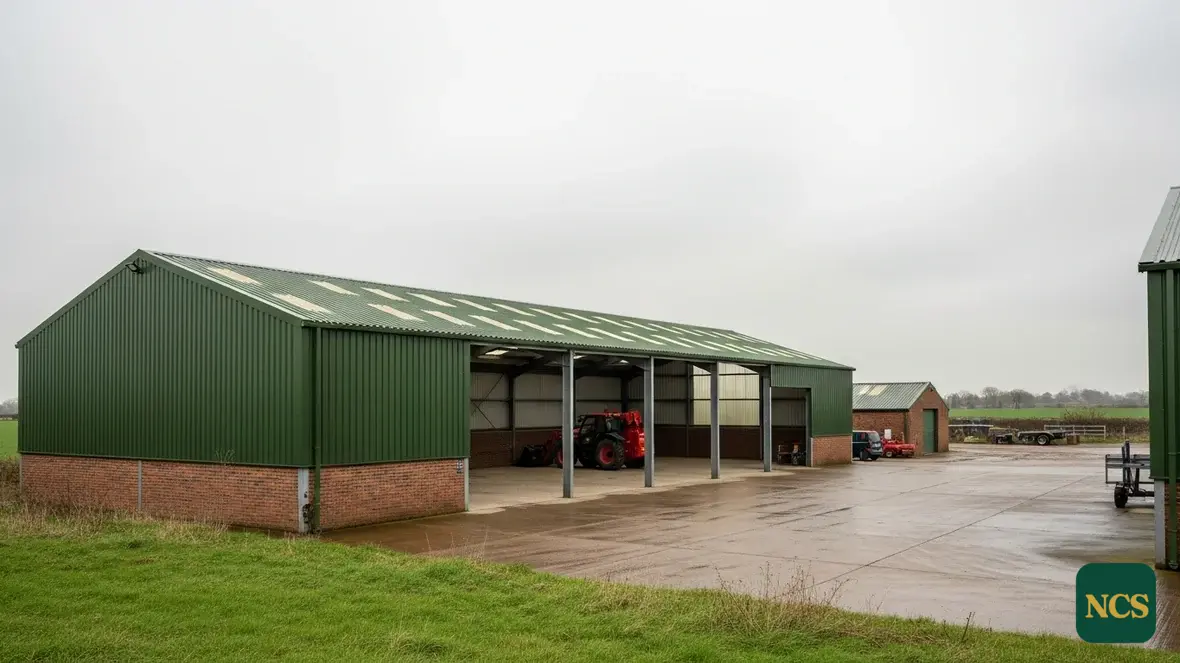
Agricultural building coatings for farms around Norwich
Norfolk’s arable heartland has a lot of working farm buildings: steel portal-frame grain stores, older asbestos-cement roofed barns, machinery sheds and the odd brick-and-pantile yard that’s been adapted a dozen times over the decades. Around Norwich, most of the buildings we look at aren’t failing structurally. They’re just weathered. Fibre-cement roofs have gone porous and mossy, profiled steel cladding has chalked and rusted along cut edges and fixings, and gutters have been quietly leaking onto stored grain or machinery. A properly specified coating system can deal with a lot of that at a fraction of the cost of recladding, but only when the substrate underneath still has life in it. That’s why every job we take on starts with a survey, not a quote over the phone.
Grain stores, barns and machinery sheds: what coating actually does
On profiled steel, a coating system arrests surface corrosion, seals cut edges and fixing points, and restores a uniform finish that sheds water properly. On asbestos-cement roofing, an encapsulating coating binds the surface, stops the gradual erosion of fibres and cuts water absorption, which matters for buildings storing dry crops. On grain stores in particular, condensation control and a watertight envelope aren’t cosmetic concerns. They directly affect what the building can be used for and what it earns. We treat each element on its own merits: roof sheets, rooflights, gutters, flashings and side cladding are surveyed separately, because they rarely fail at the same rate.

Working around the Norfolk farming calendar
Farm buildings near Norwich are rarely empty. Grain stores need to be clear, cleaned and ready well before combines roll, and the window between store emptying in spring and harvest intake is often when roof work has to happen. Sugar beet movements, drilling and spraying traffic all shape when a yard can accommodate access equipment and when it can’t. We plan around that. If the only sensible slot is a six-week window in early summer, we say so at survey stage and programme accordingly, rather than turning up when the yard is at its busiest. Livestock and poultry units add their own constraints around biosecurity and stock movements, and we follow the protocols the farm sets.
When coating is not the right answer
We’ll tell you plainly when a coating would be money wasted. Common cases include:
- Asbestos-cement sheets that are cracked, delaminating or brittle enough that safe access and preparation aren’t realistic.
- Steel sheets corroded through, or with widespread perforation along laps and fixings.
- Purlin or frame problems, where the roof covering is the least of the building’s issues.
- Buildings the farm plans to demolish, extend or convert within a few years.
- Roofs where the cost of preparation and repair approaches the cost of replacement sheeting.
In those situations the honest advice is targeted repair, partial re-sheeting or full replacement, and we’ll say which. A coating over a failed substrate fails with it, and an agricultural budget doesn’t have room for paying twice.
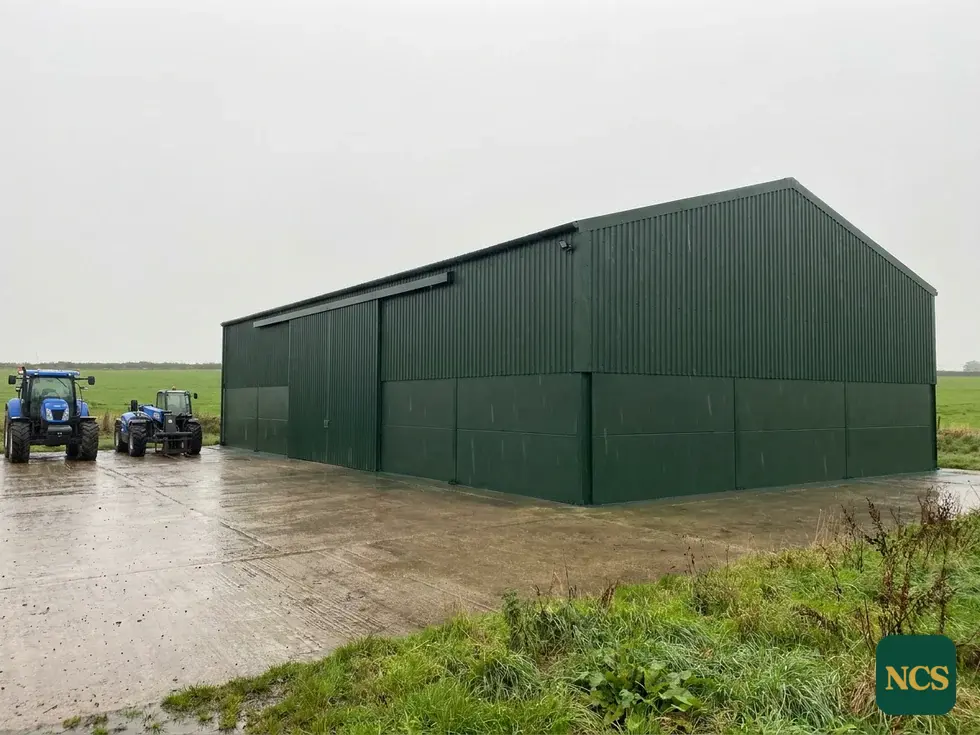
Survey first, then a written specification
We’re a survey-led contractor based in the South East and working across the UK, and Norwich and the surrounding Norfolk farmland are comfortably within our normal range. The survey looks at the substrate condition, fixings, gutters, rooflights, previous repairs and how the building is actually used, then sets out what preparation, repairs and coating system are appropriate, or recommends against coating where that’s the right call. You get the findings in writing so you can weigh repair against coating against replacement on your own figures. If you have a grain store, barn or machinery shed near Norwich that’s starting to let you down, ask us to come and look at it before you commit to anything.