Coating a Norwich industrial roof without closing the unit
Running a busy warehouse or factory in Norwich means the roof itself is rarely the biggest headache. It is what goes on underneath that causes the real problems. Across the trading estates feeding Norfolk’s industries, taking a building out of service for a re-roof isn’t usually an option. That’s where industrial roof coatings earn their keep. We don’t open the building envelope, so the unit stays watertight from start to finish. We’ll sequence the work around your deliveries and shifts. National Coating Specialists surveys and coats industrial roofs across Norwich and Norfolk, working from our South-East base to sites UK-wide.
East Anglian weather and profiled steel
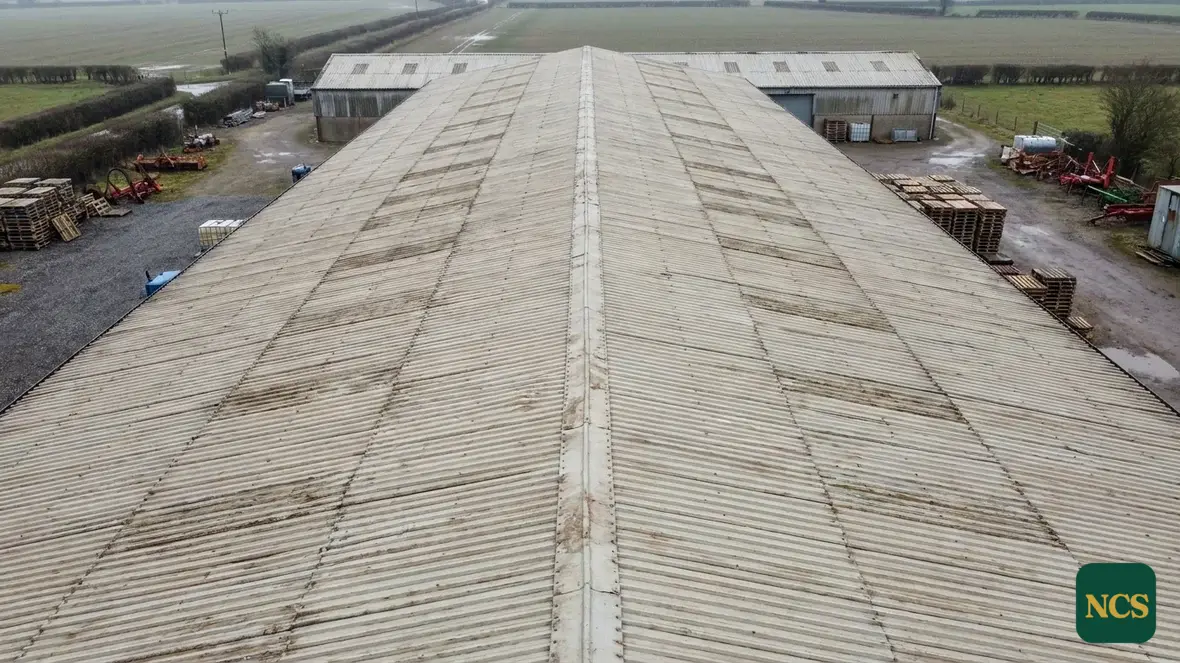
Norfolk might be drier than other parts of England, which gives these roofs a bit of extra time, but they’re not indestructible. Years of UV exposure still chalk and thin the factory finish. Damp air rolling in off the coast and the Broads keeps laps and gutters wet for longer than a quick shower would. You’ll see organic growth taking hold on the shaded parts. The upshot is a roof that can look perfectly fine from the ground, while the finish is quietly wearing down to bare metal at the details. That’s where the real trouble begins. A coating applied while the substrate is still sound replaces that worn finish with one continuous, bonded layer over the whole roof. It seals the laps, fixings and all the details against the weather, rather than you patching them up one by one.
Our industrial roof painters cover Norwich and the surrounding estates, and no system is named until the surveyor has walked the roof.
Cut-edge corrosion: the budget decider
Cut-edge corrosion is the one defect that usually dictates the budget for most industrial roofing jobs. Where the sheets were cut at the eaves, side laps and end laps, the steel edge has no protective layer. Moisture then sits in the overlap, the edge rusts, and that corrosion tracks back under the finish, lifting it as it spreads. If we catch it early, it’s straightforward: prepare, treat and seal those edges before we put the main system on. If it’s left too long, and the lap itself has weakened, then you’re looking at replacing the affected sheets. That’s when the cost conversation changes completely. The difference between those two stages is often only a couple of winters. That’s why we always want to look at a roof sooner rather than later.
What the survey settles before we specify
We don’t quote for a roof from a few aerial photos. Every recommendation we make comes after a proper physical inspection that confirms:
- Whether the sheets, laps and fixings are structurally sound
- How far any cut-edge corrosion has progressed, with photographs to show it
- The condition of the gutters, valleys, rooflights and any penetrations
- Any internal signs of leaks or saturated insulation
- Whether coating is genuinely the right call for your roof
When coating is the wrong answer
Coating extends the life of roofs that still have some life left in them. It’s the wrong answer for a roof with widespread perforations, or corrosion that has compromised the strength of the sheets or the fixings. It won’t help with waterlogged insulation in a built-up roof, or permanent ponding caused by structural deflection. In those cases, we’ll recommend repair or replacement and put it in writing. Yes, that means we talk ourselves out of a contract sometimes. But a truthful condition report is worth more to an estates team than a roof that looks fixed and then fails again in two years. Most of the roofs we survey haven’t crossed that line. For those buildings, a coating is usually the most economical option: a fraction of replacement cost, no strip-off waste, and a unit that keeps trading throughout. If you’ve got a roof on your estate streaking rust at the sheet ends, our survey will tell you exactly where it stands.

Recently — July 2026
A summer survey gives us time to specify and programme the work before the wetter months make access and curing harder.
We continue to survey every building before recommending a route. Whether to coat, repair or replace is decided on the condition of your roof, not a price list.