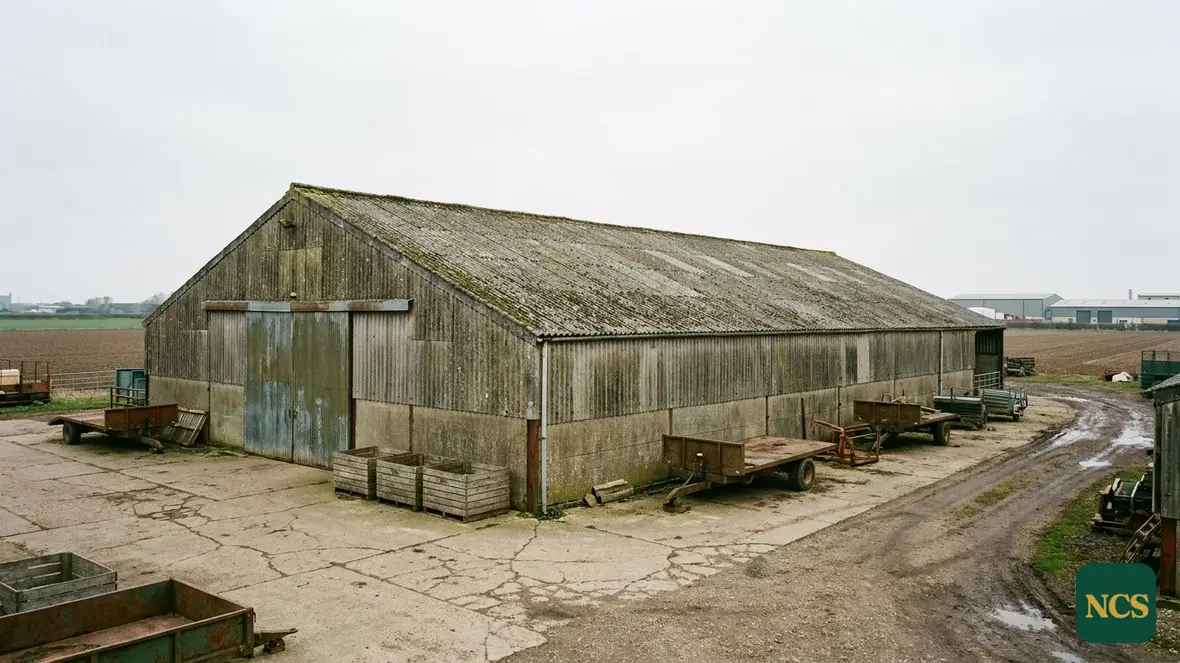
Coating arable farm buildings on the Hampshire downs
The countryside around Winchester is classic chalk downland: large arable estates, big grain stores and long machinery sheds spread across open, well-drained ground. The roofs match the scale, with long runs of profiled steel and older fibre cement that has weathered through many harvests. On open downland the wind gets a clear run at a roof, so the failure pattern tends to show first at the exposed verges, ridges and fixings rather than evenly across the slope.
Our agricultural building coatings programme around Winchester is usually about preserving substantial working buildings that are central to the estate. That’s all the more reason to assess them honestly before committing to a coat. The bigger the roof, the more a wrong call costs, so the survey earns its place by getting the decision right before any product goes on.
The harvest year decides the timing
Arable buildings live by the harvest, and a grain store full from late summer is no place for coating work. The sensible window around Winchester is the empty spring stretch before intake, when the store has been swept out and dried and the roof can be cleaned and treated cleanly. Machinery sheds allow a little more leeway because kit can be shifted, though the drilling and harvest peaks are best left clear of contractors on the roof.
On a large estate with several agricultural buildings, we sequence the programme so each one is treated in its right window across the season, rather than crowding the work into a single visit that clashes with the farm’s busiest weeks. Booking the survey early is what makes that sequencing possible, because it gives everyone time to slot the application into the quiet stretches.
Honest about what a coat can and cannot do
We sort every roof into a clear outcome before quoting. A sound sheet with surface weathering will take a new coating system and hold it for years, and that is the work worth doing. A sheet corroded through at the laps, or a brittle fibre cement roof, is past coating. We will say so and discuss repair or replacement instead. Coating a roof that has already lost its strength only delays the inevitable and wastes the spend, so we would rather be straight about it. Older fibre cement on the estate is a separate matter entirely, since it can contain asbestos. It must be assessed before anyone commits to anything, the work falls under specific regulation, and a coat is never something we take as read. We will not quote a warranty we cannot back, nor coat a roof that should be replaced.
Most farmers around Winchester do not ask for a coating system, they want the barn painted or the shed roof sorted, and that is exactly the work this is.

What the survey checks on exposed downland
Open downland exposure shapes where we look hardest during a survey. On the chalk here a roof gets little shelter from neighbouring buildings or trees, so wind drives rain into joints and lifts edges that would stay sound on a more enclosed site. We inspect with that in mind rather than assuming an even spread of wear across the slope.
- Verges, ridges and windward slopes, where wind damage shows first
- Laps and fixings, the usual starting point for corrosion
- The condition of long steel runs on big grain stores and sheds
- Older fibre cement needing assessment before any decision
Arranging a survey near Winchester
If you farm the downland around Winchester and your grain stores or machinery sheds are due attention, start with a survey rather than a price over the phone. Once we have walked the roofs and understood the estate’s harvest year, we can tell you honestly whether coating is right and plan the work around your calendar. On buildings this size the survey is worth doing properly, because getting the coat-or-replace call right the first time is what saves the estate money. Use the quote form to arrange a visit.
We carry out agricultural building coatings work in and around Winchester. For the full survey-led service and how we assess each building, see our Agricultural Building Coatings service, or request a free site survey.
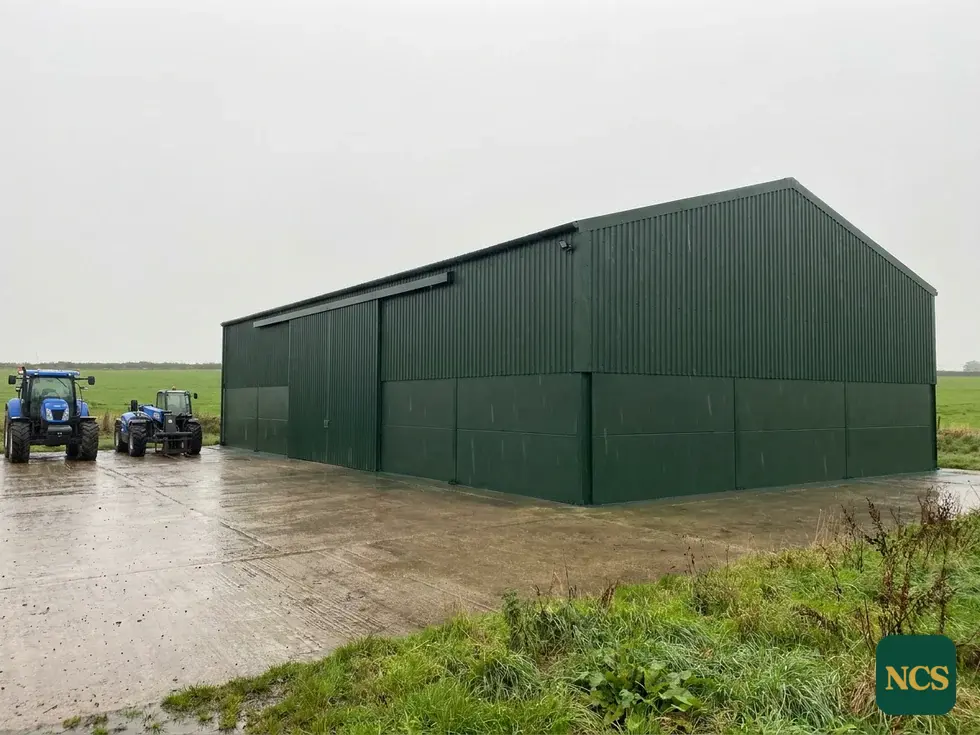
Recently — July 2026
A summer survey gives us time to specify and programme the work before the wetter months make access and curing harder.
Recent work around here has been a mix of profiled metal roofs, cladding and ageing asbestos cement, each assessed on its own condition before anything was specified.