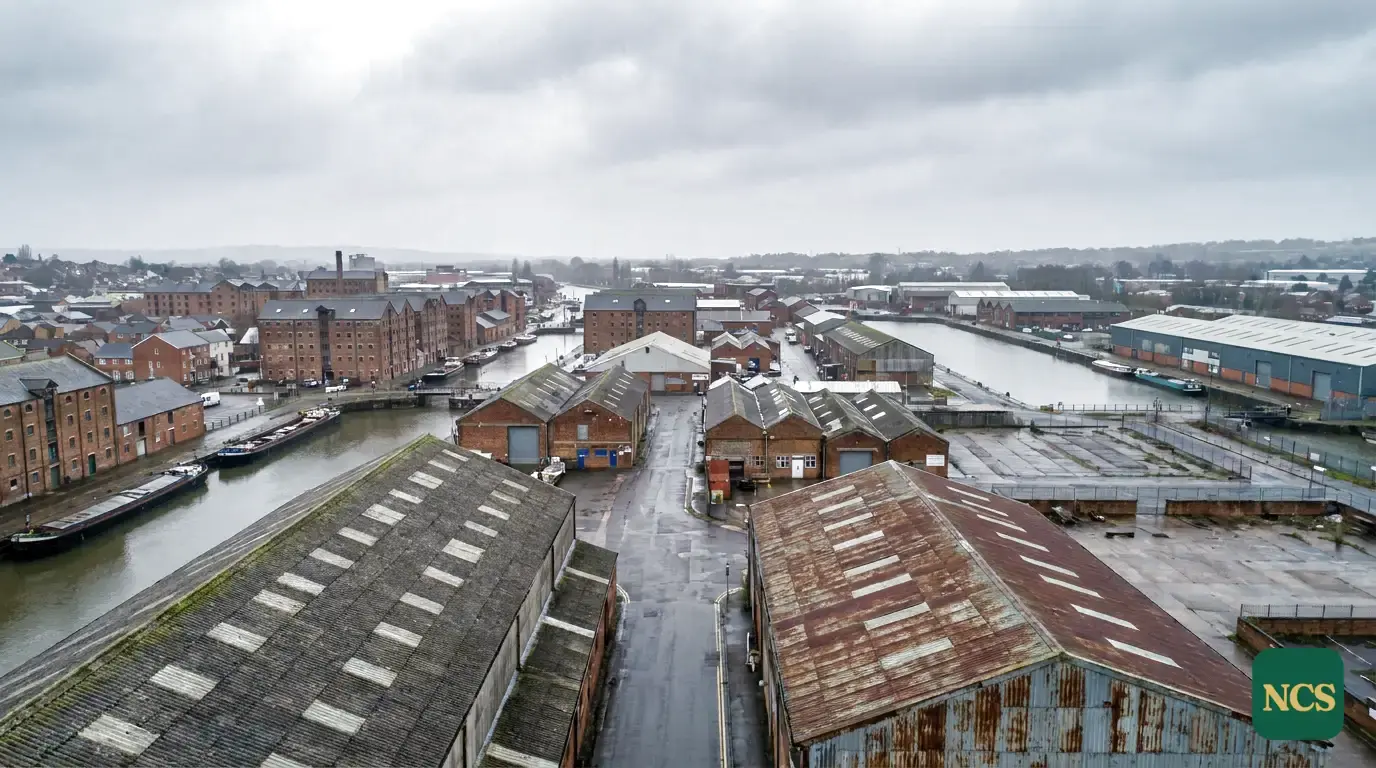
Sooner or later, every owner of an ageing asbestos cement roof in Gloucester faces the same question: encapsulate or remove? Both are legitimate answers under the asbestos regulations. Which one is right for your building depends entirely on the condition of the sheets, which is why we will not answer it from the kerb, and why you should be wary of any contractor who will.
The question, and why condition decides it
The Control of Asbestos Regulations 2012 require dutyholders of non-domestic buildings to identify asbestos materials, record their condition and manage the risk. Sound asbestos cement can lawfully stay in place under a management plan. Failed asbestos cement, though, you cannot rescue. It has to come off. Encapsulation, meaning a cleaned, repaired and fully sealed roof, is the lower-cost route. But it is only available to roofs that have not yet crossed the line. The whole decision therefore rests on an accurate condition survey.
Gloucester’s mid-century working stock
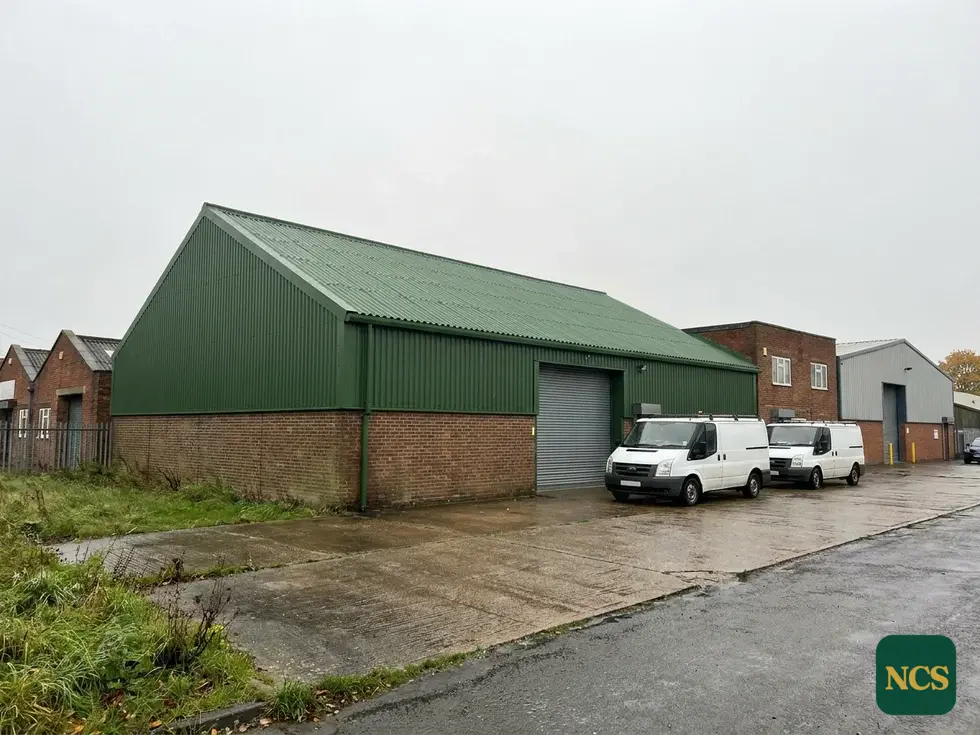
Gloucester’s industrial history left plenty of candidates. We have seen workshops, depots and engineering sheds from the post-war decades, units on the trading estates that grew through the 1960s and 70s, garage blocks behind older commercial property, and farm buildings across the surrounding Severn Vale. Corrugated asbestos cement was the roofing default for most of them. Sheets of that vintage in Gloucester have had fifty or more years of weather. Their condition now varies enormously from building to building, sometimes from bay to bay.
Painting an asbestos roof in Gloucester is legal and sensible when the sheets are sound and the system is specified for asbestos cement. The survey establishes both.
What encapsulation involves when the roof qualifies
Where the survey confirms sound sheets, the works follow a controlled sequence. We clean the roof without dry abrasion or uncontrolled jet washing. Then we repair fixings, laps and flashings, making good minor damage. Finally, we apply a flexible coating system across the whole roof, with rooflights and gutter details addressed properly. The result is a watertight roof with its fibres sealed in and its weathering stopped. We achieve this at significantly lower cost and disruption than removal, with the building in use throughout.
Three situations where we will say no
First, failed sheets. Brittle, delaminating or extensively cracked asbestos cement cannot be stabilised by a coating. We will recommend removal and replacement instead, in writing. Second, the wrong material. If inspection suggests asbestos insulation board or sprayed coatings rather than asbestos cement, the work normally requires an HSE-licensed removal contractor. We will tell you so rather than touch it. Third, buildings without a future. If the structure is failing or the building is due for redevelopment, money spent sealing its roof is money wasted. We would rather say that than take it.

Choosing your contractor carefully
Whoever you invite to quote, in Gloucester or anywhere else, ask the same questions:
- Will they survey the roof properly before pricing it?
- Will they confirm the material is actually asbestos cement?
- How will the sheets be cleaned, and with what controls?
- Will they tell you plainly if removal is the better answer?
- What written documentation will you get for your asbestos register?
Our own answer to all five is the same survey-led process we apply everywhere. We inspect first, report in writing, recommend honestly, and only then coat the roofs that genuinely qualify. The asbestos remains on your register afterwards and the duty to manage continues, but the roof itself stops deteriorating and starts being managed on your terms.