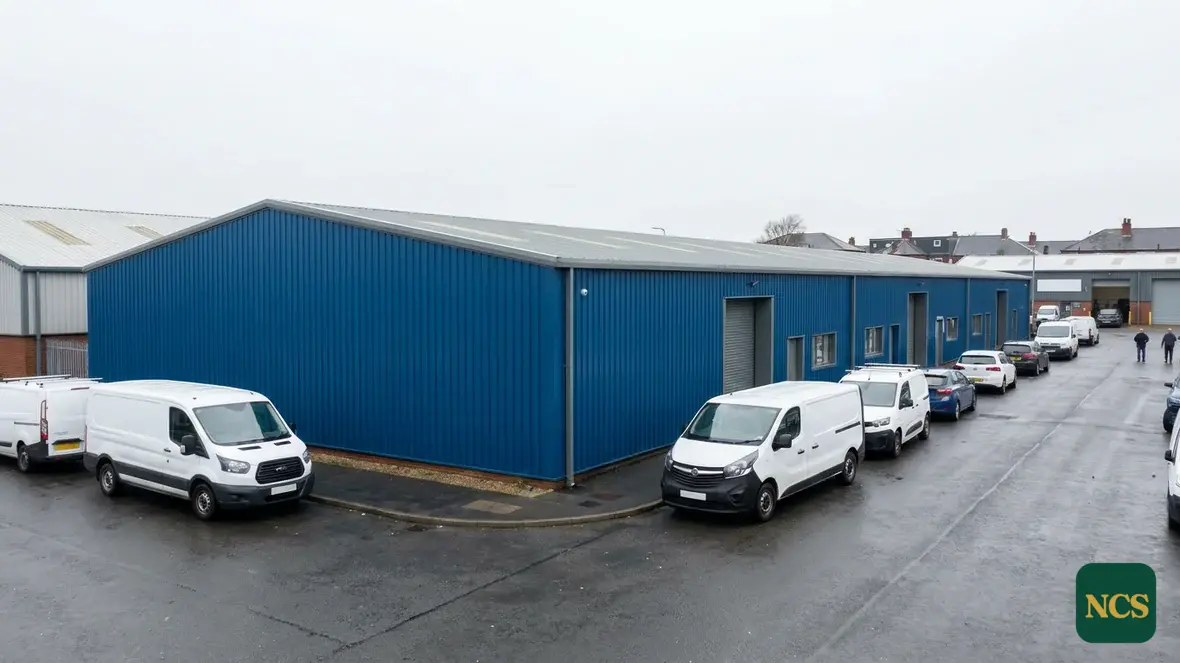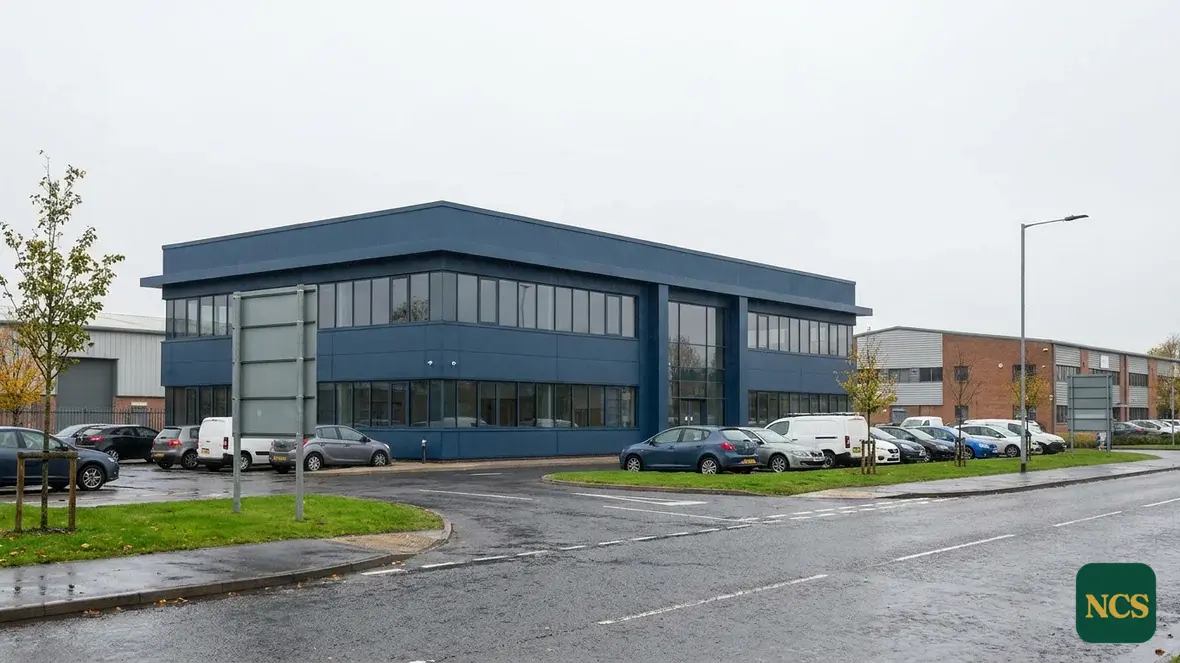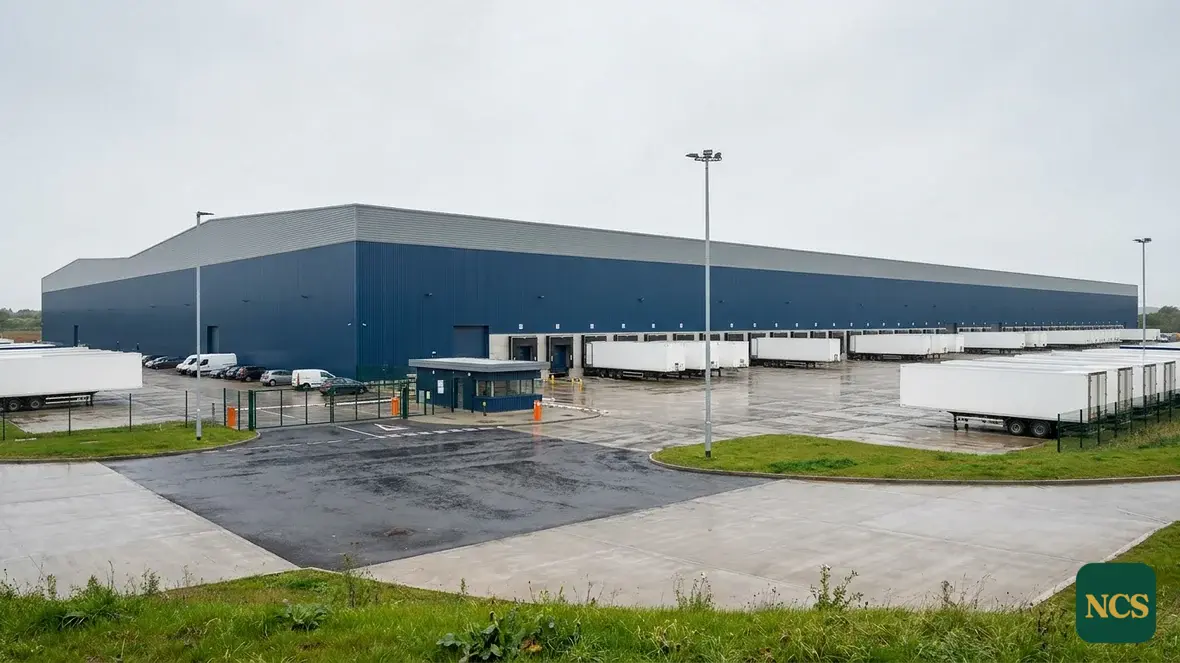
Carlisle is a city that knows weather. We see the driving rain off the Solway, the proper freeze-thaw winters, and the long wet spells really test exterior finishes. Coated steel cladding shows it sooner than panels further south: fading, chalking, and rust tracking along cut edges. Often, buildings here are operating while we work, whether for food production or border distribution. That’s why we focus on bringing existing cladding back to life, keeping your business running and making sound sheets serve on, rather than forcing a full, disruptive replacement.
Surveying your building’s exterior in Carlisle
We start every project with a detailed inspection, mapping the condition of your cladding and any corrosion. Our survey also considers access and how our work will fit around your daily operations. You’ll then receive a written specification and a fixed price based on our findings. On site, our sequence of work is always consistent:
- Full wash-down and degrease of every surface to be coated
- Mechanical treatment of corrosion and priming of bare steel
- Careful masking of glazing, signage and surrounding areas
- Spray application of the specified coats in suitable weather windows
- Joint inspection of each elevation before access is struck
We apply this same thorough process across Penrith, Workington, Dumfries and Hexham. This means that if you have multiple sites across the border counties, we can survey and program them all as one comprehensive job. We also sort out access during the survey, using powered platforms where your yard allows or scaffolding where it doesn’t, always building our programme around realistic drying and curing times.
Commercial cladding spraying in Carlisle
Carlisle weather defines building ownership up here. We see the driving rain off the Solway, the proper freeze-thaw winters and the long wet spells really test exterior finishes. Coated steel cladding shows it too: we see fading, chalking and rust tracking along cut edges sooner than the same panels would further south. Cladding spraying in Carlisle is about getting ahead of that cycle. We restore the protective film on the panels you already own before corrosion forces a much bigger conversation about replacement.
Because exposure varies so much from one wall to another, we survey every building before quoting. A north-facing elevation that never properly dries and a sheltered yard wall are not the same job, even on the same shed. We see that all the time.
For Carlisle landlords, a cladding respray is the difference between a unit that shows its age and one that lets.
Keeping your operations running in Cumbria
For many businesses in Carlisle and across Cumbria, staying operational is key. Replacing entire sections of cladding or re-sheeting a whole building means significant disruption, often requiring closure or major logistical changes. Our approach to coating the existing structure means far less impact. We work around your schedule and keep your building in use, tackling defects like cut-edge corrosion or chalking without you needing to halt production or distribution. We focus on making the sound panels you already have serve efficiently for years to come, offering a pragmatic alternative to the upheaval of full replacement.
When a building’s exterior cannot be coated
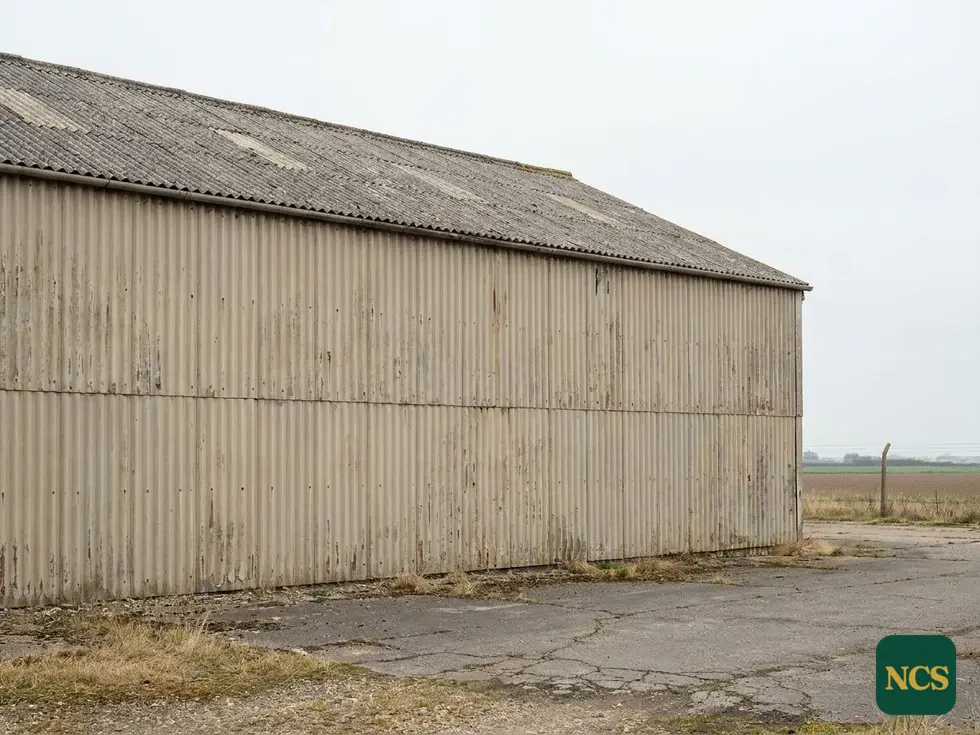
If panels are rusted through, if composite cores are wet or separating, or if the cladding system has simply reached the end of its life, we won’t coat over it. A sprayed finish on failed cladding is decoration on a problem, and in Cumbrian weather the problem wins quickly. Where that’s the finding, the survey report says so plainly, with photographs, and sets out what the building actually needs, even when that work isn’t ours to do. An honest no from the survey costs you nothing. A coating that should never have been applied costs you twice.
Recent project near Carlisle
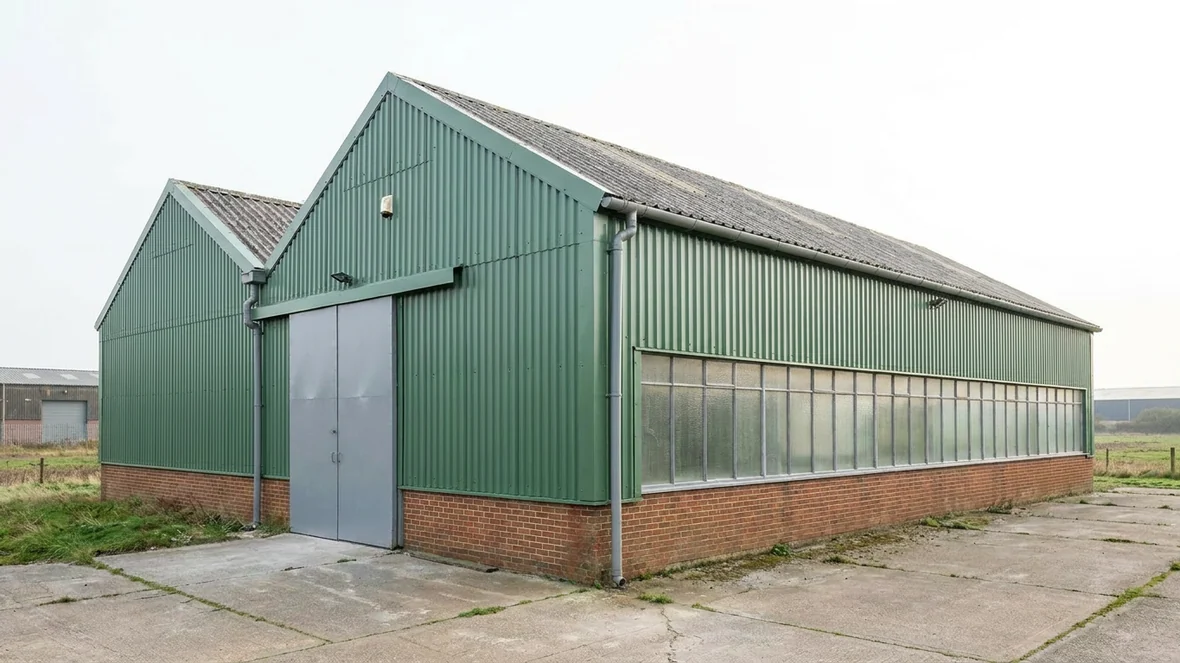
A twin-bay Carlisle factory resprayed in Juniper Green BS 12B29 with the failed valley box gutter relined in the same programme. Read the full case study.
Understanding the cladding and render that needs attention
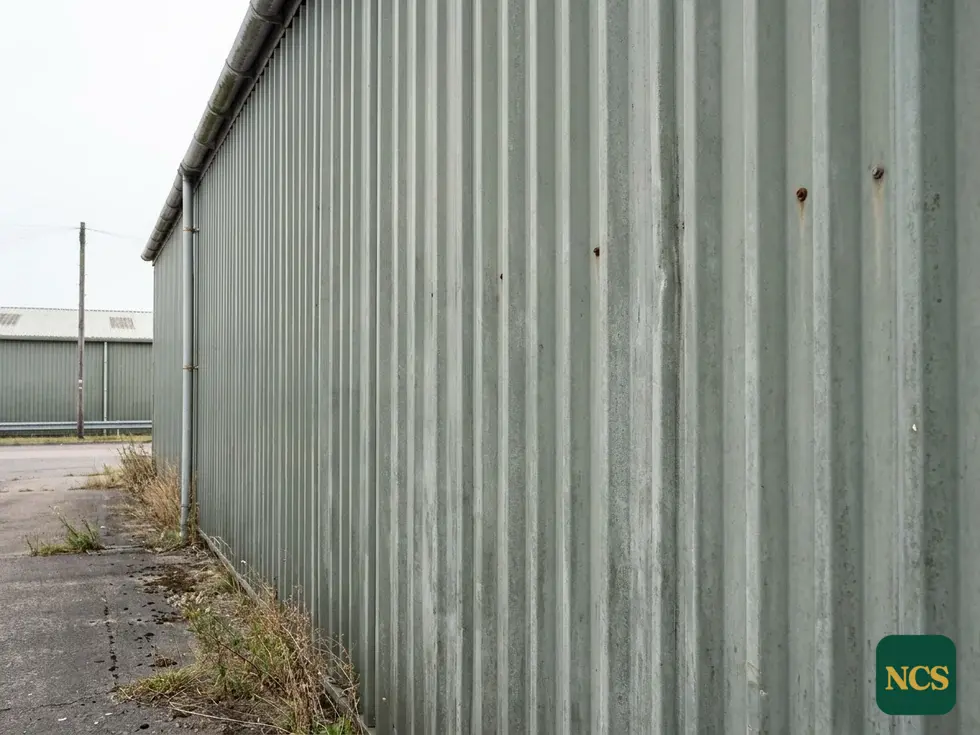
Around Carlisle, that usually means profiled steel and composite cladding on distribution and industrial units along the M6 corridor. We also see it on food production and storage buildings, trade parks and retail sheds, plus curtain walling and panel systems on offices. Plastisol coatings in exposed positions lose gloss and colour first, then begin to chalk. Cut-edge corrosion follows at laps, sills and gutter lines. Caught at that stage, spray refurbishment is straightforward and the panels carry on for years. Left alone, the options narrow season by season until replacement is the only one left. Hauliers, trade counters and rural-facing businesses run the same panels on a smaller scale, and the same assessment applies to all of them.
Why a site visit is essential before quoting
Up here, preparation is the project. The spraying itself is the quick part. The real value sits in how honestly the corrosion was treated and how thoroughly the surface was cleaned before anything went near it. A survey-led contractor commits those stages to paper before naming a figure. That means the quote can’t quietly assume a building in better condition than yours. It also means realistic programming. Cumbria doesn’t hand out long dry windows, so a contractor who has measured the job properly plans around the weather instead of being caught out by it.