Cladding spraying in Preston
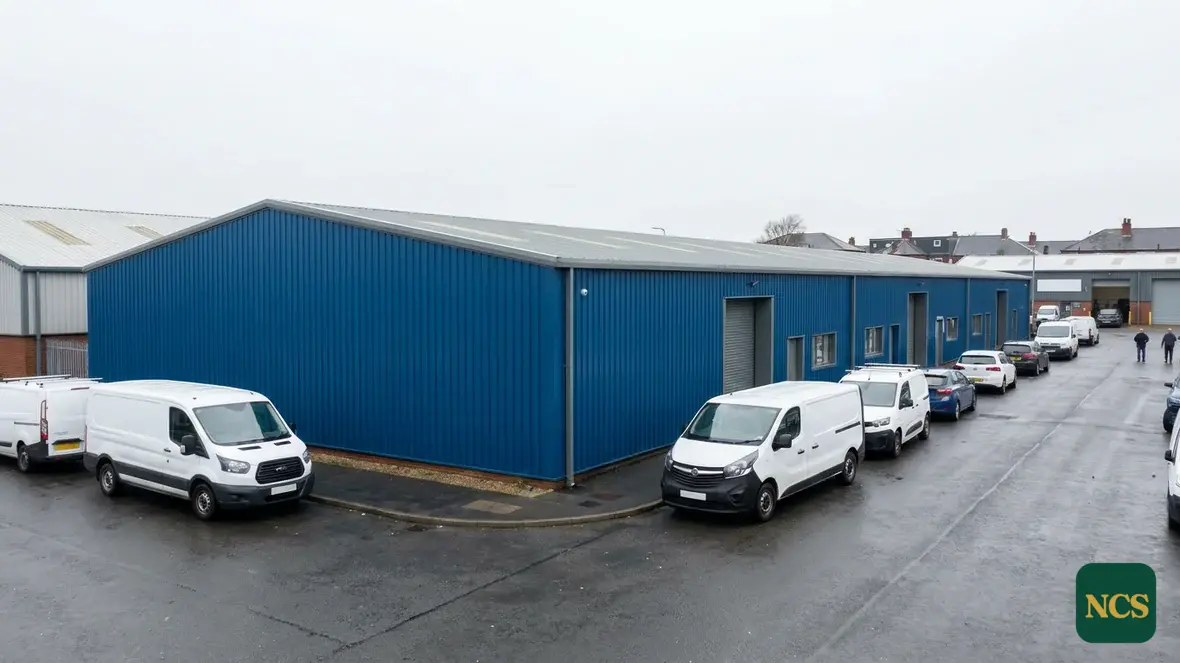
Preston sits at one of the busiest motorway interchanges in the north-west. The warehouses, depots and industrial units clustered around it take their weather mostly sideways. Cladding spraying renews the finish on those buildings in place: we prepare and repair faded profiled steel and composite panels, then respray them on site. It costs far less, and causes less disruption, than new cladding.
We work survey-first. Every quote follows an inspection of the actual panels because on weather-exposed buildings, the gap between how cladding looks and what it needs can be wide. Colour change is part of the same service: depot operators bringing acquired sites into house colours, and landlords moving a unit away from a previous occupier’s branding, both get an exact match agreed before we order any material.
The buildings this covers across Lancashire
On-site spraying isn’t limited to one type of premises. Around Preston, and across to Blackpool, Chorley, Leyland and Blackburn, the work typically involves:
- Distribution and logistics warehouses near the motorway network
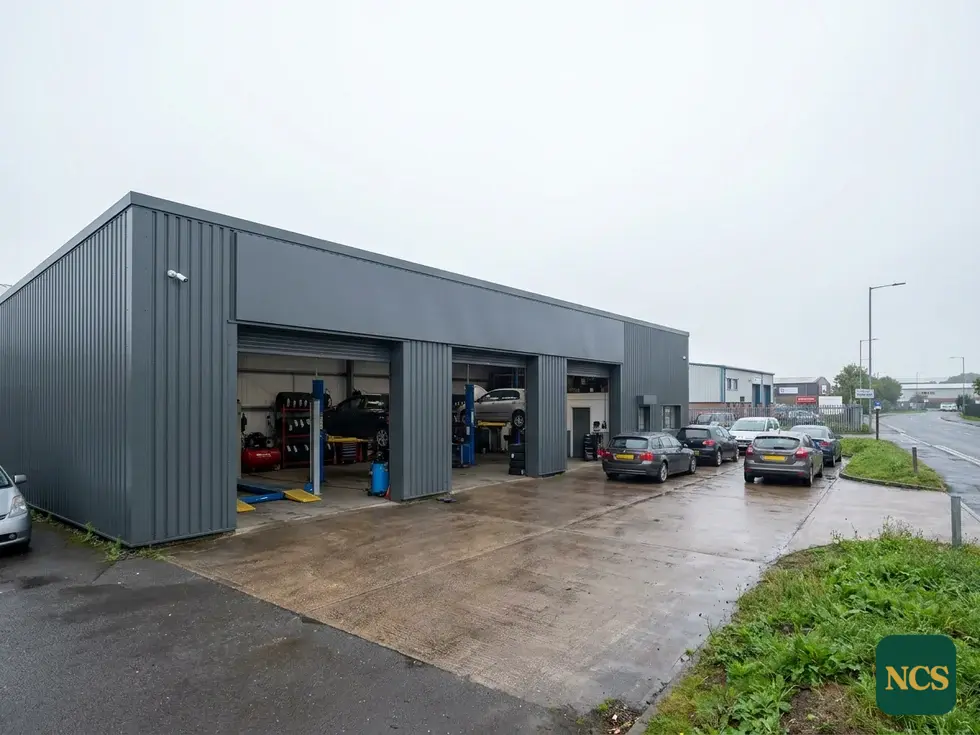
- Factory and workshop units on the established industrial estates
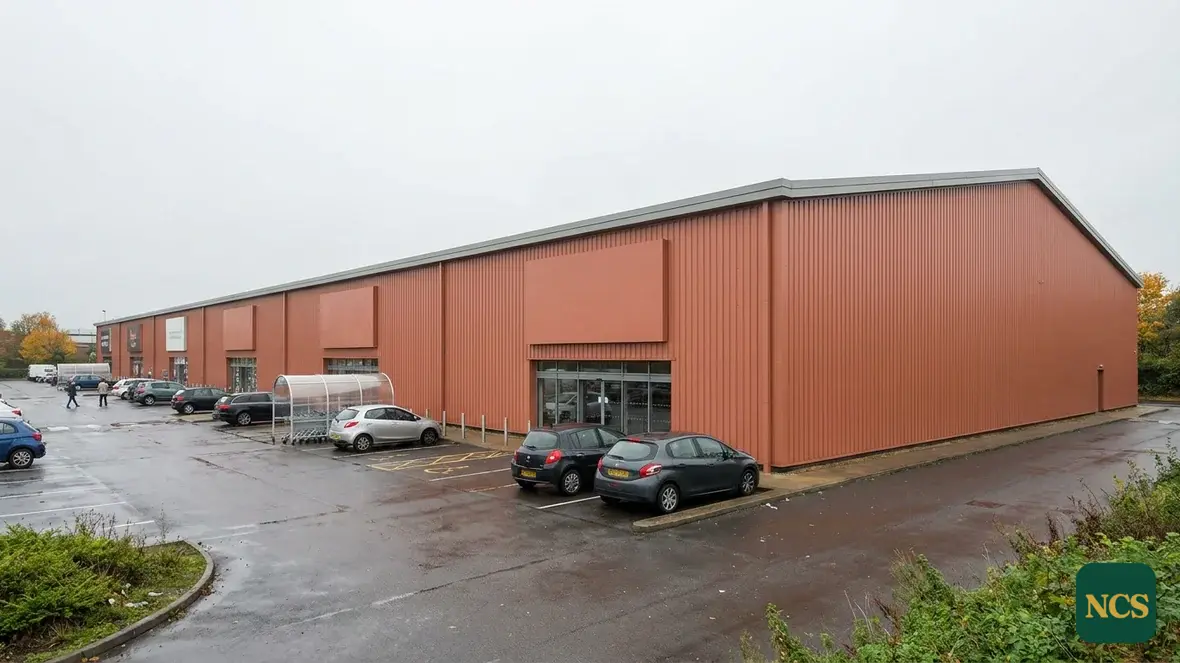
- Trade counters, showrooms and retail warehouse units
- Agricultural and rural commercial buildings in steel cladding
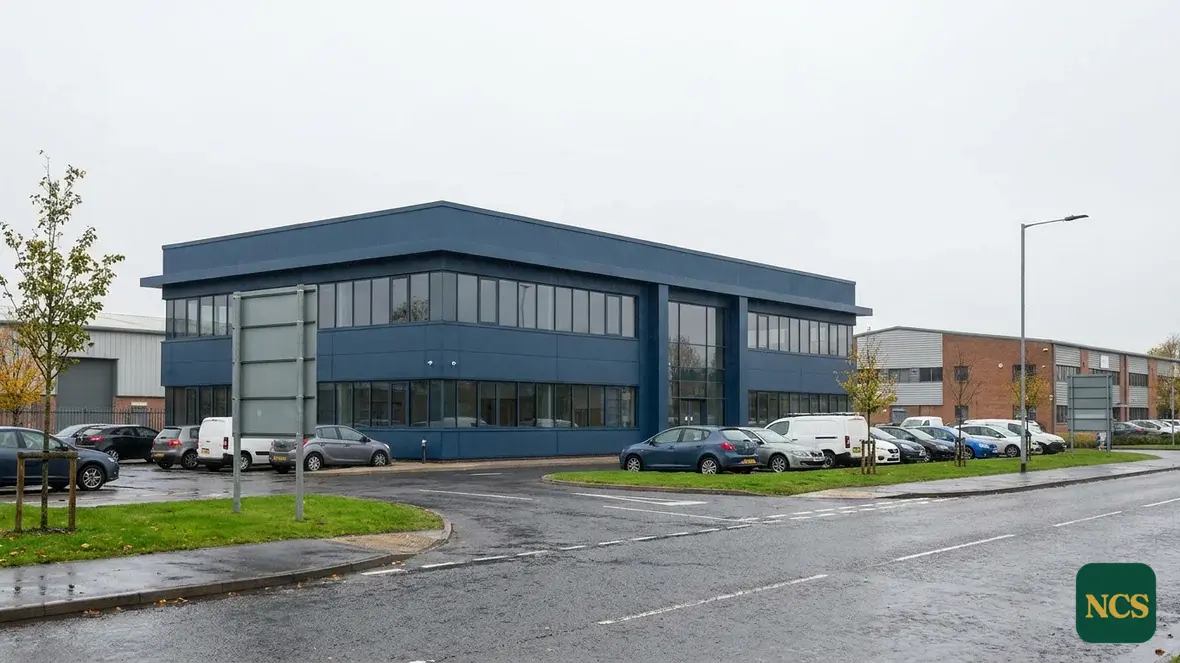
- Office buildings with curtain walling or panel facades
We usually spray roller shutters, personnel doors, fascias and flashings within the same visit. That way, the whole elevation finishes as one, rather than as a patchwork of new and old. We can often include roof sheets in the same exercise. That matters because on many of these buildings the roof is weathering faster than the walls, and gets noticed last.
Wind-driven rain and what it leaves behind
Lancashire’s prevailing weather pushes moisture into every lap, joint and cut edge on a west-facing elevation. Over the years that shows up as rust staining running from sheet ends, corrosion creeping back from cut edges, and a finish that has faded harder on one face of the building than the others.
These are surface battles, and they are winnable. We mechanically prepare and seal edges, remove unsound coating, and spray a new system across cleaned, primed panels. The point of the survey is to confirm the battle is still at the surface. Once moisture is inside a composite core, the rules change.
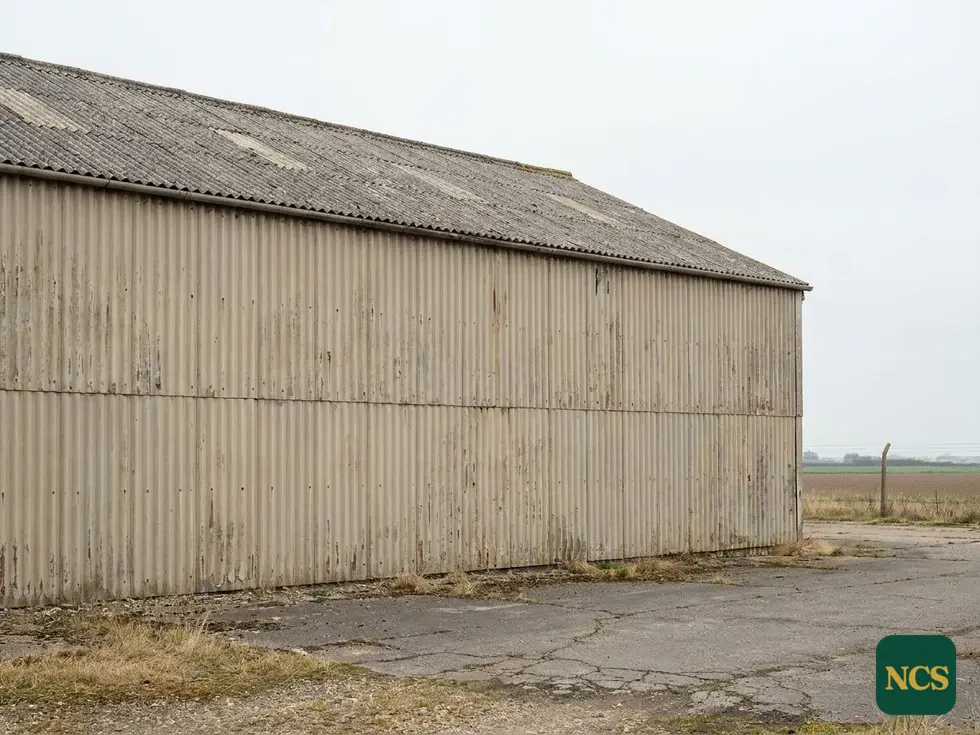
Faded plastisol on a Preston estate does not need new panels, it needs honest preparation and a sprayed repaint, and the survey confirms which.
An honest line on what coating cannot do
What a respray cannot fix is cladding that has already failed. Holes through the sheet, composite panels coming apart, insulation that holds water, fixings letting go across a wall: these need replacement. Our survey reports say so when we find them. Often the practical answer is mixed: we install a number of new panels, and then spray the full elevation to match. That still comes in well under recladding. You will get that recommendation in writing with the reasoning attached, not buried in a quote you cannot unpick.
Why the survey comes first
A price set after inspection is a price that survives contact with the job. The scope lists what each elevation needs, the coating system is matched to the substrate, and the programme is planned around your loading doors and shift patterns rather than against them.
A respray is also the start of a longer life for the cladding, not the end of the story. A simple wash-down once a year keeps salts, traffic film and algae from sitting on the new finish. It also gives you a natural moment to spot any knock or scrape before it grows. If your building near Preston is fading faster than the rest of the estate, the survey is the sensible first move. It commits you to nothing beyond hearing what we found.