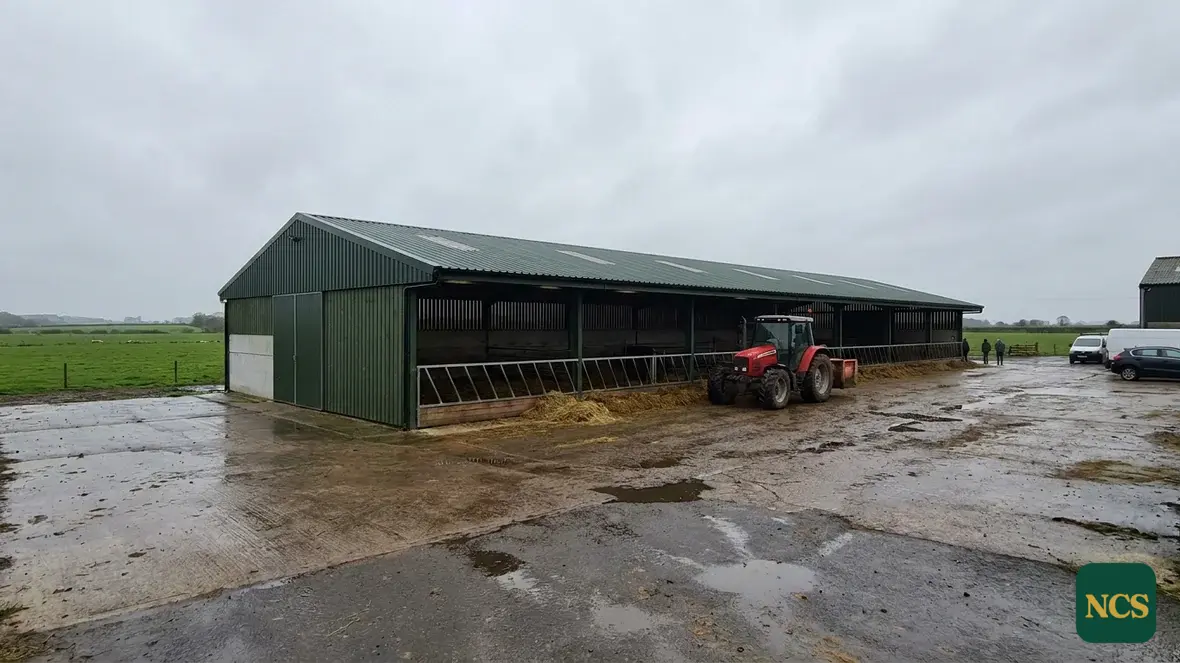
The farmland around Lancaster is wet country. Rain off the Irish Sea and the Bowland fells keeps the Lune valley pasture green and the farm roofs damp for long stretches of the year. We are National Coating Specialists, an exterior coating contractor working across the UK from a South-East base. The high rainfall and livestock-led farming around Lancaster set the terms for how we plan agricultural building coatings here.
Why wet uplands age farm roofs near Lancaster
Persistent rain and damp do most of the damage in this corner of the North West. Roofs barely get a chance to dry out, so moss takes hold quickly on shaded slopes, fibre-cement sheets stay saturated for weeks at a time, and freeze-thaw on the higher ground opens hairline cracks a little wider each winter. Livestock and dairy buildings add condensation from below, corroding steel sheets and fixings from the underside while the weather works on them from above. Most of these are sound buildings that simply need protecting before damp surface weathering becomes water ingress. A coating deals with the outside; the survey also flags the internal condensation that no external coating alone will cure.

Survey first, quote second
We do not price farm roofs from the yard gate. The condition that decides whether a roof is worth coating is usually invisible from the ground, and on wet upland roofs the moss layer itself can hide both sound sheet and rotten sheet until someone gets up close. So every enquiry begins with an inspection. A typical survey records:
- Sheet condition, including moss-related deterioration and cut-edge corrosion
- Fixings, washers and any movement in the sheets
- Gutters, valleys and rooflights, which often fail before the roof itself
- Internal staining on purlins and stanchions that points to water getting in
- Access and how soft, wet ground will carry working equipment
You get the findings in writing, with photographs, before any cost is discussed. If different slopes need different treatments, the report says so rather than averaging the problem into one figure.
Working with the livestock calendar
Around Lancaster the diary is set by stock. Cattle housed through the long wet winter make sheds hard to clear, spring brings turnout, and silage traffic fills the summer. We plan coating work for the windows that suit the farm: livestock housing in the gap while animals are out at grass, with curing time allowed before they return; feed and machinery stores when they are quiet. On a working dairy, containment matters, so parlours, troughs and feed areas are protected, wash-down routines are worked around, and vehicle movements are agreed with you at the start of each day rather than improvised around your routine. Programmes also carry weather contingency, which counts for a great deal in a climate this wet.
Barn painting around Lancaster is survey-led like everything else we do: wash back, treat the rust, repair what needs it, then spray a system built for farmyard life.
Coat, repair or replace: the honest answer
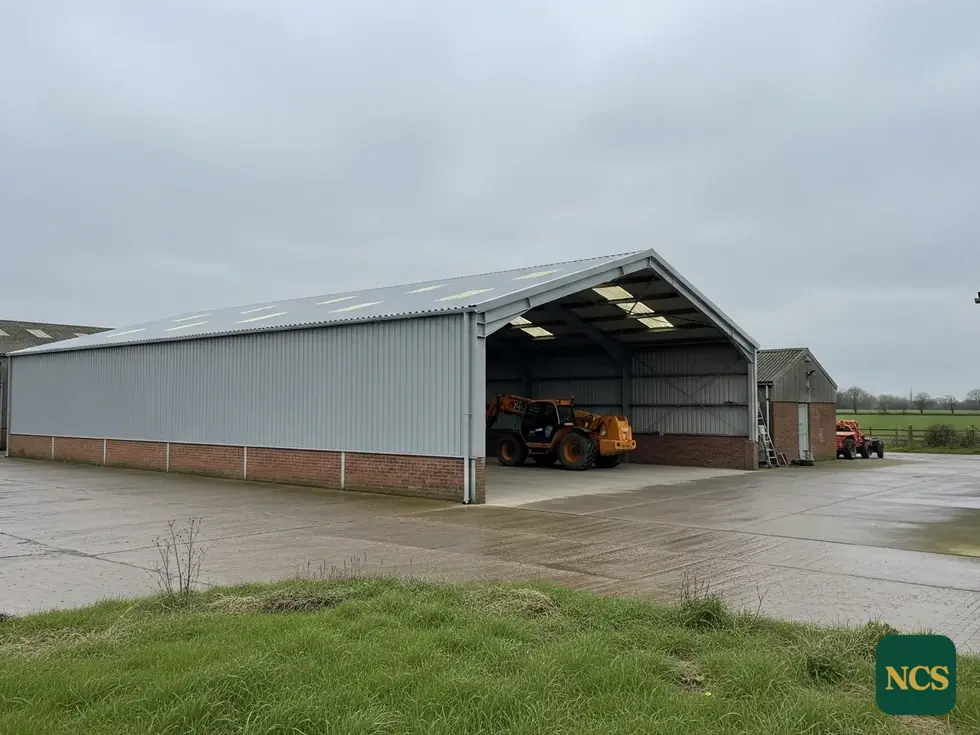
Coating is not always the right call, and we would rather lose the work than coat a roof that should be replaced. Localised damage on an otherwise sound surface usually means repair, widespread surface breakdown on structurally sound sheets is where coating earns its keep, and sheets that are holed, soft or failing at the fixings are usually telling you the roof is done. Asbestos-cement adds its own rule: weathered but sound sheets can often be cleaned and encapsulated, sealing a porous surface and avoiding the considerable cost of removal, but fragile, cracked or delaminated sheets need a licensed removal contractor, not a coating, and we will say so plainly. The survey settles which category your building falls into, and if the answer is replacement we tell you, so you can plan the spend on honest information.
We carry out agricultural building coatings work in and around Lancaster. For the full survey-led service and how we assess each building, see our Agricultural Building Coatings service, or request a free site survey.