Encapsulation or removal? The question facing Lancaster building owners
If you own an older commercial or agricultural building near Lancaster, you’ll eventually face a common decision: what to do about an ageing asbestos cement roof. Stripping it out is expensive and disruptive, and it creates a load of hazardous waste. Doing nothing leaves you exposed under the Control of Asbestos Regulations 2012. The third option, encapsulation, sits between the two. If the sheets are sound, a specialist coating seals the roof, manages the risk and extends its life. It usually costs a lot less than ripping it all off and re-sheeting.
That qualifier matters. Encapsulation is only the right call if the sheets are sound. That’s why, when we work in Lancaster, we start with a survey, not a quote.
The difference between asbestos roof painting and proper encapsulation is the specification and the controls. Around Lancaster we only do it the second way.
Where asbestos cement turns up in north Lancashire
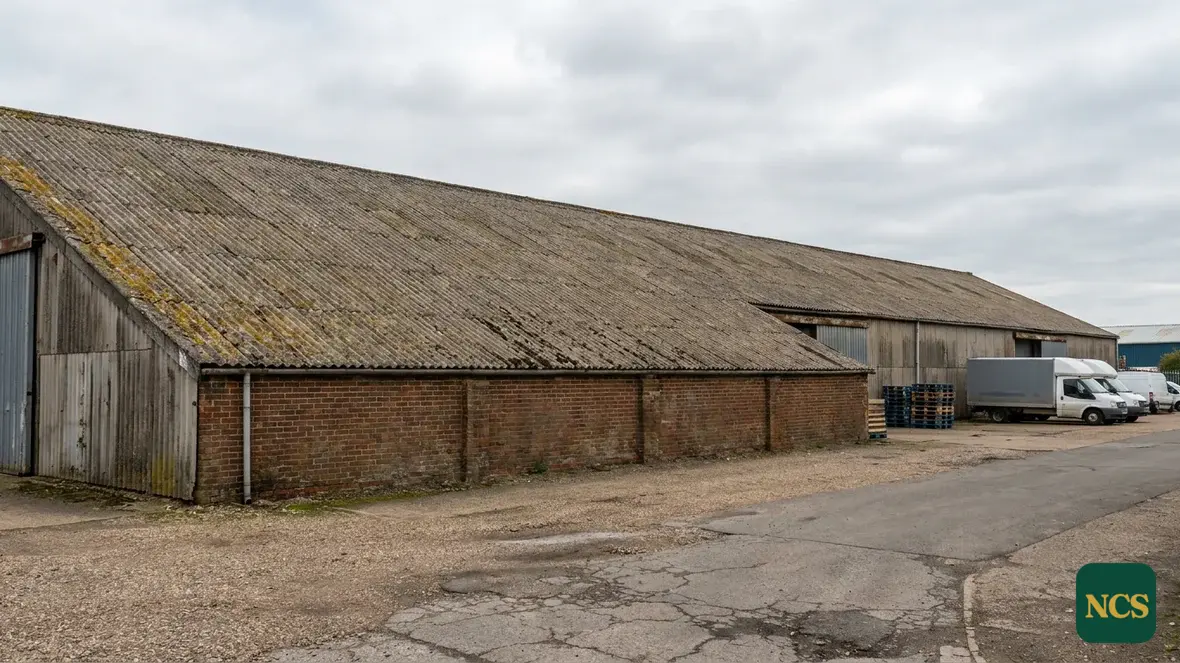
Asbestos cement was everywhere in the post-war decades. Around Lancaster, we typically see it on the workshop and storage units of trading estates on the edge of town, on extensions and outbuildings attached to older industrial premises, and on barns and agricultural sheds across the surrounding countryside. If you’ve got a profiled grey sheet roof on a building from before 1999, you should treat it as suspect until you know for sure. The ban on asbestos only came in that year. Identification is important because not every grey corrugated sheet contains asbestos. Some later roofs use non-asbestos fibre cement. Testing settles the question quickly, but until it does, the safe and legally correct position is to presume asbestos is present.
Your legal position under CAR 2012
Regulation 4 of CAR 2012 puts the duty to manage on whoever controls non-domestic premises. You need to identify asbestos-containing materials, assess their condition, keep a written management plan, and act on what you find. The regulations don’t force removal. HSE guidance accepts, and often prefers, that material in good condition is managed safely in place. The plan doesn’t need to be fancy, but it does need to exist, be kept up to date, and actually reflect the decisions you’ve made about the roof, not just intentions you never got round to. An encapsulated roof, properly surveyed before and documented after, is strong evidence you’re doing exactly that.
What an honest survey looks for
Before we recommend encapsulation, we get up on the roof and inspect it in detail. We report on:
- Cracking, holes and impact damage across the sheet area.
- Whether the cement surface is firm, or if it’s softening with age.
- Fixings, laps, ridges, flashings and roof lights.
- Moss growth and surface erosion.
- Gutters and drainage, which often need work before any coating goes on.
If the roof passes, we’ll specify a controlled clean, the necessary repairs, and an elastomeric encapsulant coating built up to a specific thickness. The sheets stay put, the fibres stay sealed, and your building stays in use throughout the job.
When removal is the only honest recommendation
Some roofs are just past saving. We’ll tell you if yours is one of them. Sheets that are extensively cracked or crumbling, roofs damaged by storm or fire, asbestos insulation board that’s been mistaken for cement, and structures too fragile for safe access all rule out encapsulation. So does a building you’ve earmarked for demolition; coating it would just waste your money. In these cases, the correct route is removal, by a licensed asbestos contractor if the material requires it, and our survey report will say exactly that. National Coating Specialists is based in the South East and we work UK-wide, Lancaster included. The recommendation you get from us is based on the roof in front of us, not on what’s easiest to sell.