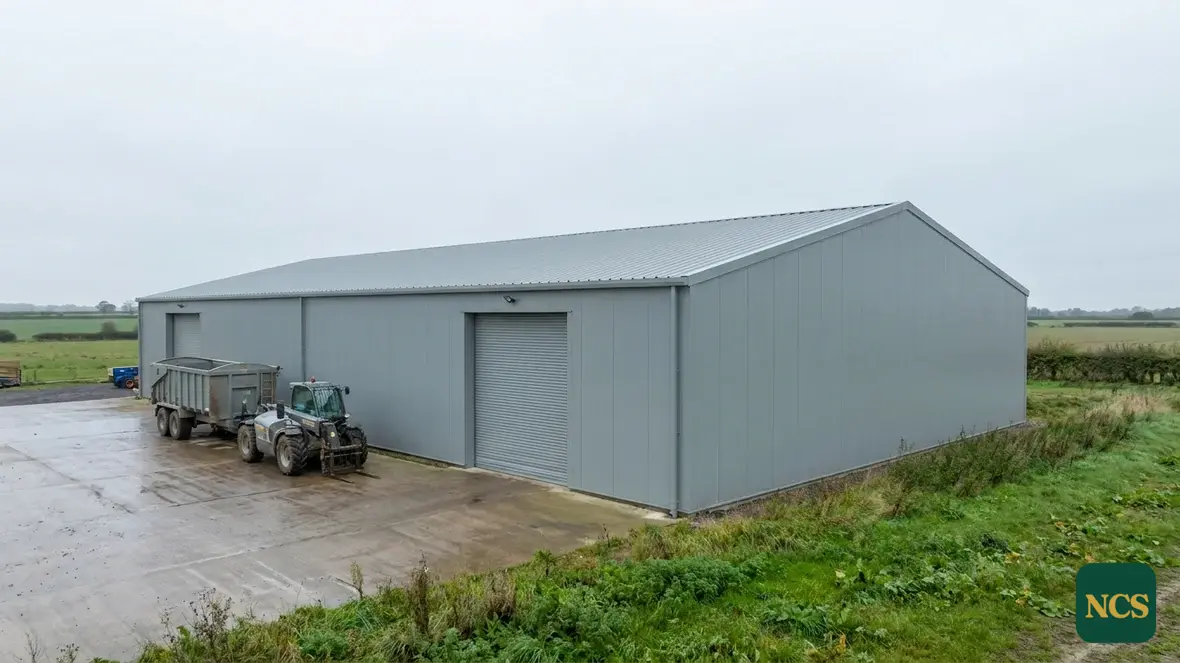
Agricultural building coatings around Wolverhampton
Drive twenty minutes out of Wolverhampton in almost any direction except east and you are into working farmland. The mixed dairy and arable holdings of south Staffordshire, the parishes out towards Brewood and Albrighton, and the Shropshire border country share a familiar building stock: steel portal frame sheds put up in the 1970s and 1980s, older brick and timber ranges, and a large amount of asbestos cement roofing that has now sat in the weather for half a century.
National Coating Specialists provides survey-led exterior coating programmes for exactly these buildings: barns, grain stores, livestock housing and machinery sheds that remain structurally sound but are losing their fight with the weather. We are based in the South East and carry out work across the UK, so projects in the Wolverhampton area are organised as concentrated programmes, surveyed first and then delivered in a planned block of work.
From a single barn repaint to a whole yard near Wolverhampton, the survey comes first and the specification follows the buildings.
Legacy roofs: asbestos cement and ageing profiled steel
Asbestos cement sheeting was the default farm roof for decades, and much of it is still doing its job. The problem is that the cement matrix becomes porous with age. Sheets soak up water, grow moss, turn brittle and start to shed surface fibres. In most cases the sensible response is encapsulation: clean the roof under controlled conditions, treat the surface and apply a coating system that seals the sheet and keeps the weather out, all without the cost and disruption of removal.
Profiled steel has its own pattern of failure. Plastisol and similar factory finishes peel back from cut edges, corrosion creeps in at laps and fixings, and rust staining tells you where the protection has gone. Caught early, edge treatment and a full recoat can hold a steel roof for many more years. Caught late, sections may need replacing first, and a survey is how you find out which situation you have.

Fitting the work around the farming year
Farm buildings are rarely empty, so the calendar matters as much as the specification. Cattle housing is best tackled in summer when stock is out at grass. Grain stores have a natural window after the previous crop has moved and before harvest fills the floor again. Lambing sheds need to be finished, cured and aired well before ewes come in. We plan Wolverhampton-area programmes around those realities rather than asking the farm to work around us, and we build in weather contingency because coatings need dry surfaces and sensible temperatures to cure properly.
When we will tell you not to coat
A coating is a protective skin, not a structural repair. If sheets are cracked through, fixings have failed wholesale, purlins are rotten or a roof has been patched so many times that the substrate is no longer continuous, coating over the top wastes money. There are also buildings where the honest arithmetic favours replacement: if a shed needs so much preparatory repair that the combined cost approaches new sheeting, we will say so in the report and you can make the decision with real numbers in front of you. Most ageing farm roofs do sit in the band where coating is the most economical option, but we would rather lose a job than coat a roof that should have been replaced.
What the survey covers
Every programme starts with a proper inspection, not a quote written from the road gate. For a typical holding around Wolverhampton the survey records:
- Roof and cladding substrate type, age and overall condition, sheet by sheet where needed
- Cracked, slipped or delaminating sheets and any areas needing repair or replacement before coating
- Fixings, laps, ridges, rooflights and flashings, the points where most leaks actually start
- Gutters, valley gutters and downpipes, which often fail before the roof itself
- Access, water, power and livestock or storage constraints that shape the programme
You receive a written report setting out what we found, what we recommend, and the order we would do it in. If part of a building is not worth coating, the report says that too. From there we can price the work and agree dates that suit the farm, whether that is one shed or the whole yard.
We carry out agricultural building coatings work in and around Wolverhampton. For the full survey-led service and how we assess each building, see our Agricultural Building Coatings service, or request a free site survey.