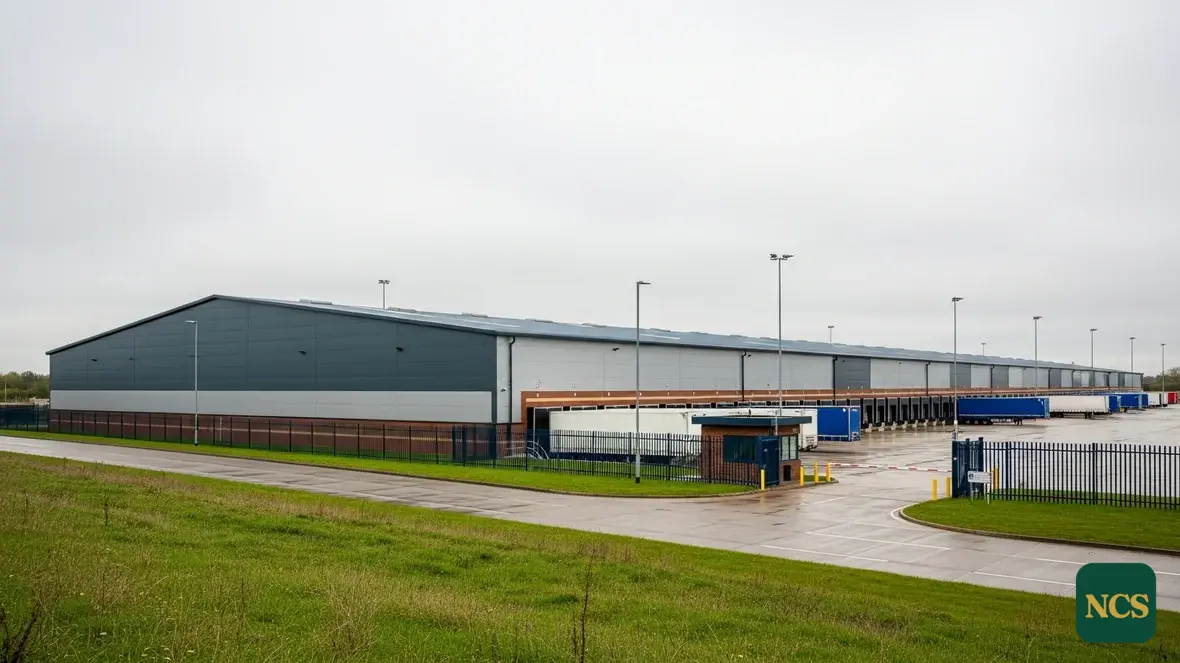
Peterborough has really taken off as a logistics hub in the East of England, and the big profiled steel roofs that come with that often show the same weak spot: the cut edge of the sheet. See a rust band along your gutter line, or the coating peeling back from the overlaps? That’s cut edge corrosion getting started. The good news is, catching it early means it’s cheap to sort out. The bad news is, it won’t wait for your convenience.
Where the protection runs out
A steel sheet gets a factory coating on both sides. But the second that sheet is cut to length, you’ve got a strip of bare steel left exposed. On the roof, those edges are at the sheet ends, the side laps, and the gutters. That’s exactly where rainwater collects and hangs around. The exposed steel rusts, then that rust pushes back under the coating and lifts it. We see it across Peterborough’s mix of big, modern sheds and older industrial units: roofs that look fine for years, then suddenly you’ve got corrosion along most of the sheet ends, all at once.
The spread is what costs you
Once moisture gets drawn into the lap by capillary action, it’s trapped. It can’t dry out, so that corrosion just keeps creeping inwards. The coating delaminates ahead of it, the steel gets thinner, and eventually the ends perforate. Then water gets in. The flat, exposed Fenland landscape around Peterborough doesn’t help either. You get wind-driven rain and shallow-pitch roofs that hold water right where the steel is most vulnerable. What started as a thin orange line turns into a leak across an entire bay.
Treat-early economics
When you deal with it at the staining stage, cut edge treatment is precise and clean. We clean the corroded edges right back to sound steel, prime them with a corrosion inhibitor, then seal the laps and gutter lines with a flexible coating that moves with the roof. Your building stays operational, your sheets stay in service. Leave it too late, and that same roof needs sections of sheet replaced. That’s slower, more expensive, and a lot more disruptive for a working warehouse. Things worth checking before the next downpour:
- Orange or brown staining along the gutter edges and sheet ends
- Coating lifting, bubbling or peeling at the sheet overlaps
- Gutters holding water or carrying rust flakes and grit
- Damp staining inside that follows the fixing lines
- Light or wet patches showing at the sheet ends from below
If a Peterborough roof has been painted once already and the rust is back through, the edges were never treated. That is the part we repair first.
The honest limit of edge treatment
Not every roof should be coated. We’ll tell you straight. If the sheets have already perforated, if corrosion has gone deep into the laps over big areas, or if the coating is failing across the whole sheet face, then treating the edges is just throwing money at steel that’s beyond saving. For those Peterborough buildings, the right answer is replacement or over-roofing. You’ll hear that from us after the survey, not after the work has failed.

One visit, edges and roof together
We always start with a full survey: laps, edges, gutters, fixings, and the coating itself. We photograph it all and report back, so the scope of work is always based on hard evidence. If the factory finish is tired across the whole roof, it often makes more sense to combine the cut edge treatment with a full roof coating. One visit, one set of access costs, one finished roof. We’re a South East based contractor, but we work across the UK. Peterborough and the wider Cambridgeshire area are well within our normal range. Send us the building details, and we’ll sort out the survey.
Recently — July 2026
We do not price a roof we have not stood on, so every job here starts with a proper look at the building.
With surfaces staying dry for longer, summer lets us prepare and coat a roof in a single planned visit rather than working around showers.