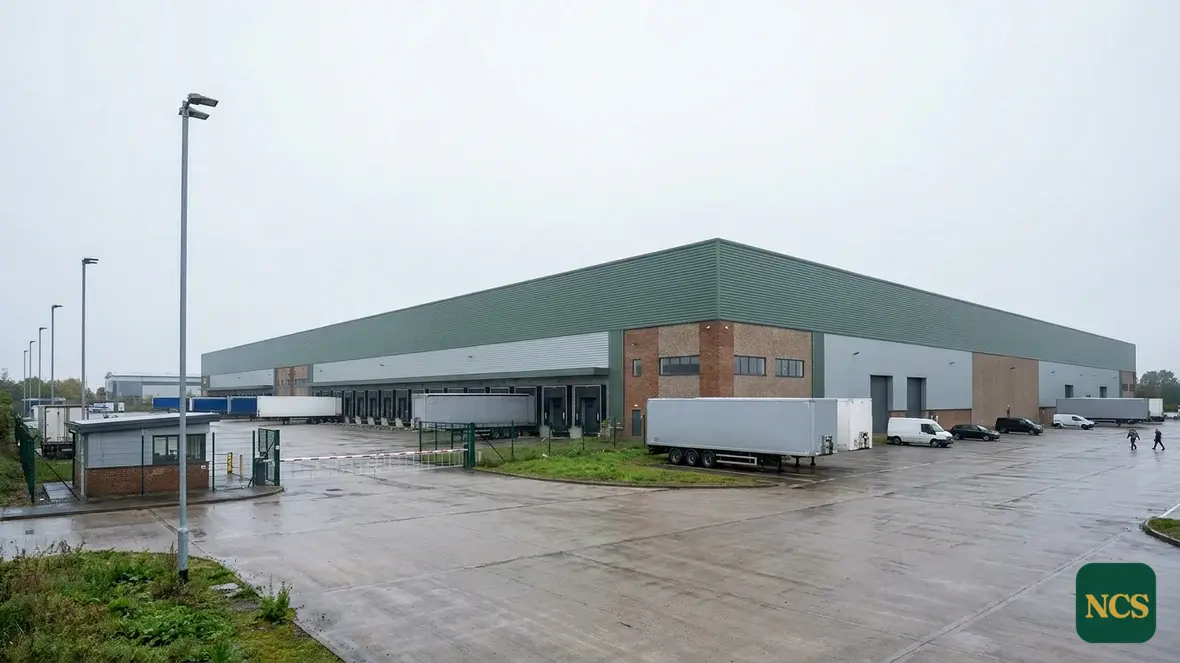
Peterborough has built its modern economy on distribution. The city’s position on the A1 and the East Coast Main Line, with the A47 running east to west, has filled the surrounding land with large logistics sheds, food-storage units and manufacturing space, almost all of it under wide spans of profiled metal. For the estates and facilities teams looking after that stock, the roof is often the single largest maintenance liability on the books. We think the choice between industrial roof coatings and replacement is worth getting right. Our surveys exist to answer that question with evidence rather than guesswork.
Big roofs, flat land, plenty of weather
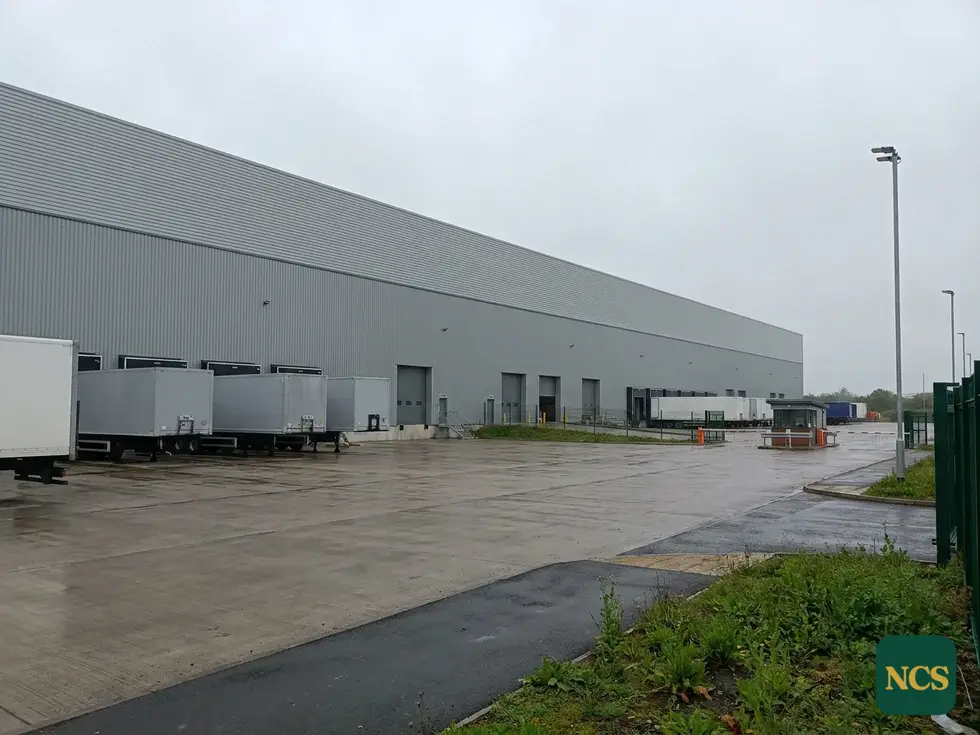
The scale of the roofs around Peterborough is part of the issue. A large distribution shed presents an enormous area of factory finish to the weather. On the low-lying Fenland ground there is little shelter from wind-driven rain. The finish chalks and thins evenly across that area. Fixings work loose under thermal movement. Gutters carry a great deal of water off a great deal of roof. By the time staff are reporting drips inside, the surface coating has usually been failing quietly for some time. A full coating system replaces that worn finish with a continuous bonded layer across the whole roof. On a span this size, it’s far less disruptive than opening it up.
Where a Peterborough factory roof mixes sound sheets with corroded runs, the survey maps repairs first and painting second.
Cut-edge corrosion on a large roof
On big profiled roofs, cut-edge corrosion is both the most common defect and the easiest to underestimate. There is just so much lapped edge up there. Each cut end and side lap is a length of unprotected steel where moisture collects and rust begins, tracking back under the finish and lifting it. The good news is that early-stage cut-edge work scales well within a coating programme: edges are prepared, treated and sealed before the main coat. The bad news is that ignored over a few winters, it perforates sheets across a wide area. On a roof this size the replacement bill is considerable. The earlier we survey, the larger the share of the roof we can save rather than swap.

Working around a live distribution operation
Few Peterborough logistics sites can pause. Coating suits that reality because it works from above without opening the building. There is no strip-off, no loss of weathertightness, and no waste sheeting moving through a yard full of HGVs. We phase programmes around loading schedules and split them into zones. One part of a large roof is worked while the rest carries on protecting the operation below. The survey feeds straight into that planning:
- The condition of sheets, laps and fixings across each roof zone.
- How far cut-edge corrosion has spread, mapped with photographs.
- Gutter, outlet and rooflight condition, often the worst-affected details.
- Internal checks for leaks or saturated insulation.
- A phasing plan that fits the site’s loading and shift patterns.
Where coating is not the answer
We will not coat a roof that needs replacing. If sheets are perforated across large areas, if corrosion has reached the purlins and fixings throughout, or if insulation in a built-up roof is saturated, a coating only masks the failure and burns the budget. We put that finding in writing, with photographs, because an estates team needs the truth more than it needs a roof that looks sorted. The survey is what separates a roof that coating will genuinely extend from one that has already gone past it. Most of the roofs we see still fall on the right side of that line. For those, a coating is comfortably the cheaper route: a fraction of replacement cost, no waste sheeting, and a distribution operation that never has to stop to let us work. The earlier the roof comes onto the maintenance plan, the more of it the coating can save.
Recently — July 2026
A survey gives you a written read on the actual condition of the roof or walls and the route we would take, with no obligation to go ahead.
A summer survey gives us time to specify and programme the work before the wetter months make access and curing harder.



