Stoke-on-Trent has a real mix of buildings: the old works and warehouses from its manufacturing days, spread across those six towns, alongside some of the country’s biggest modern distribution sheds. Different eras, but the same roofing detail. We see profiled coated steel, cut to length, lapped and screwed down, with bare metal showing at every cut edge. That’s the detail that usually starts the roof failing.
The weak point built into every coated sheet
The protective finish on a steel roof sheet goes on the coil at the factory, before they cut it. Slice that sheet to length and you’ve got raw steel exposed at both ends and along the laps. Rain gets drawn into those overlaps, sits right against that raw edge, and rust starts to take hold. Then it does the real damage: it creeps underneath the factory coating, lifting it off the metal a little more each season. From the ground, you’ll see it as a brown tidemark at the gutter line. Inside the lap, the coating could already be detached over a much wider band. Eventually, the steel perforates and the first you hear about it is water on the floor.
Small now or large later: the cost logic
Cut edge corrosion is one of those few roofing defects where tackling it early changes the bill by a huge amount, not just a bit. If you treat it when it’s just staining, it’s a clean-back, stabilise and seal job on the affected edges. Ignore it, and you’re looking at sheet replacement, internal repairs and disruption to whatever your building does. Acting early avoids:
- Replacing sheets that are already holed or delaminating.
- Water damage to your stock, plant, and ceilings.
- Emergency call-outs when you least need them.
- Paying for roof access twice within a few years.
- Disputes with insurers over a known, ignored defect.

What a survey tells you that a quote cannot
Anyone can give you a price for a roof from a photo, but that number won’t hold up once you get into the laps. We always work survey-first. That means we get up on the roof, open up some representative overlaps, check the sheet ends, fixings, and gutters. We photograph what’s actually there. On the older industrial buildings around Stoke-on-Trent, roofs have often been patched up over decades, so the condition can swing wildly from one slope to the next. Our survey maps that variation. The recommendation follows the evidence, and sometimes that means less work than you thought, sometimes more.
When we would tell you not to spend the money
Edge treatment has its limits. Pretending otherwise just leads to expensive coatings over steel that’s already failing. If your sheets are already holed, if the coating is coming off across the body of the sheets, not just the edges, or if corrosion has eaten into the metal’s thickness, treatment won’t give you a result worth paying for. Our survey will tell you that straight. We’ll recommend replacing the affected areas instead, even though we don’t do that work ourselves. Often, the honest truth is somewhere in the middle: most of a roof is treatable, but a strip or a whole slope is beyond saving. We scope to that reality, not to an easier, tidier story.
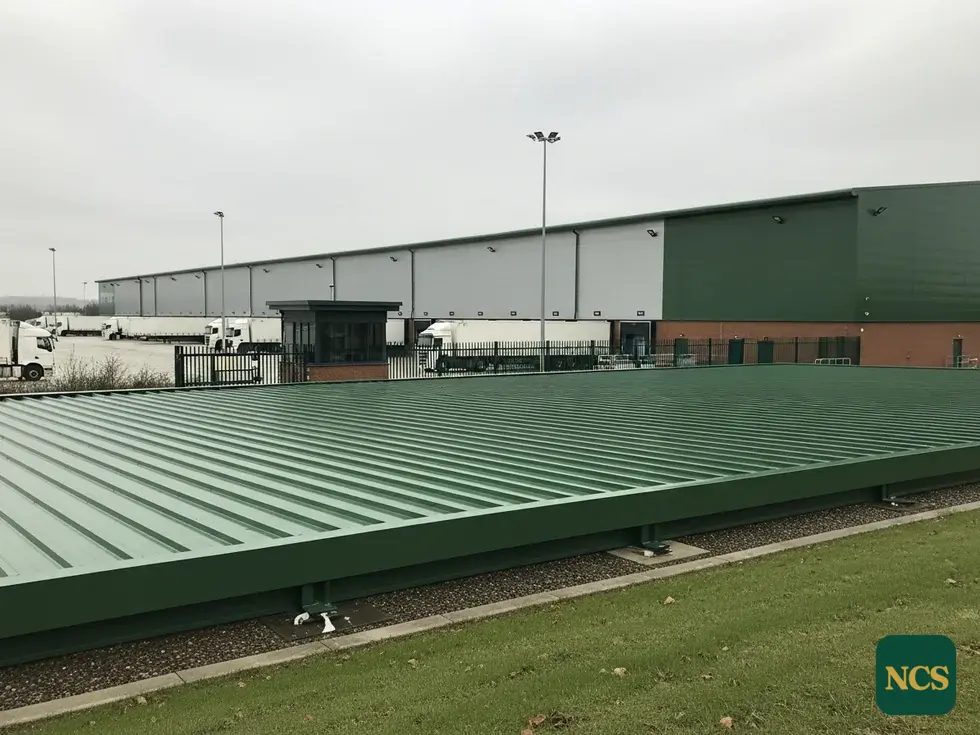
The natural next step: coating the whole roof
If your roof is old enough to have corroding cut edges, it’s usually old enough for the rest of the finish to be tired too. It’ll be faded and chalking, even where the steel is sound. Pair edge treatment with a full roof coating, and you turn two future projects into one. You get a single, consistent system across the whole roof, and you only pay for access once. We’re based in the South East but we carry out edge treatment and full roof coating across the UK. Stoke-on-Trent is definitely within our working range. If your sheet ends are showing signs of staining, or a leak has already popped up, ask for the survey before the weather decides for you.