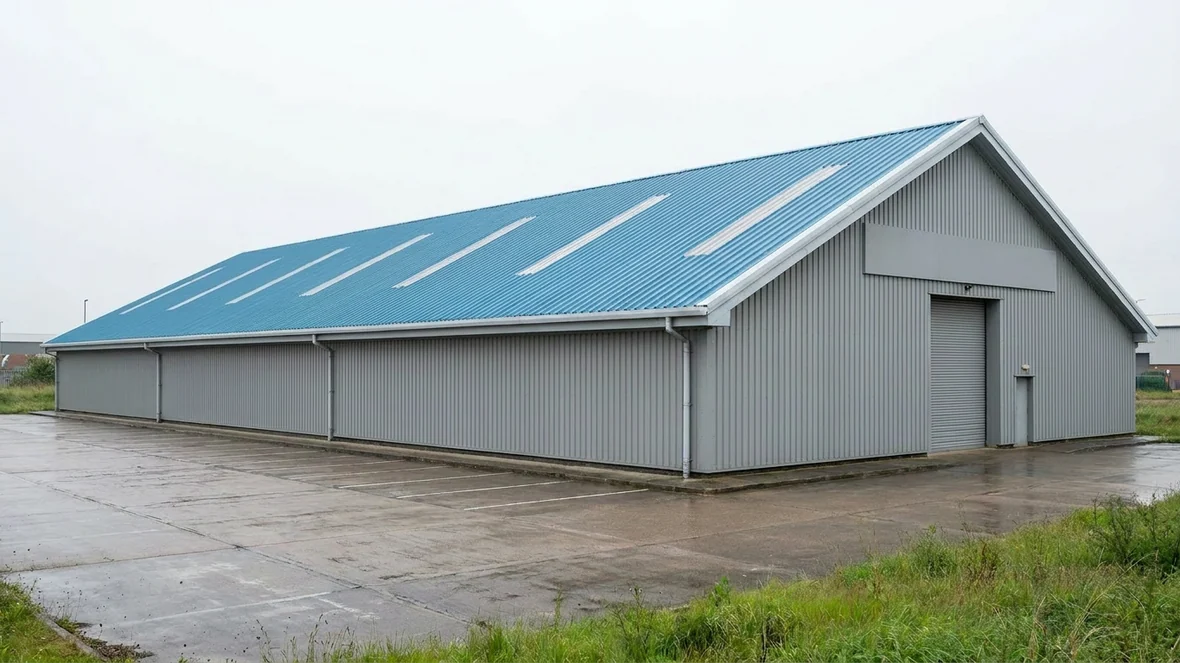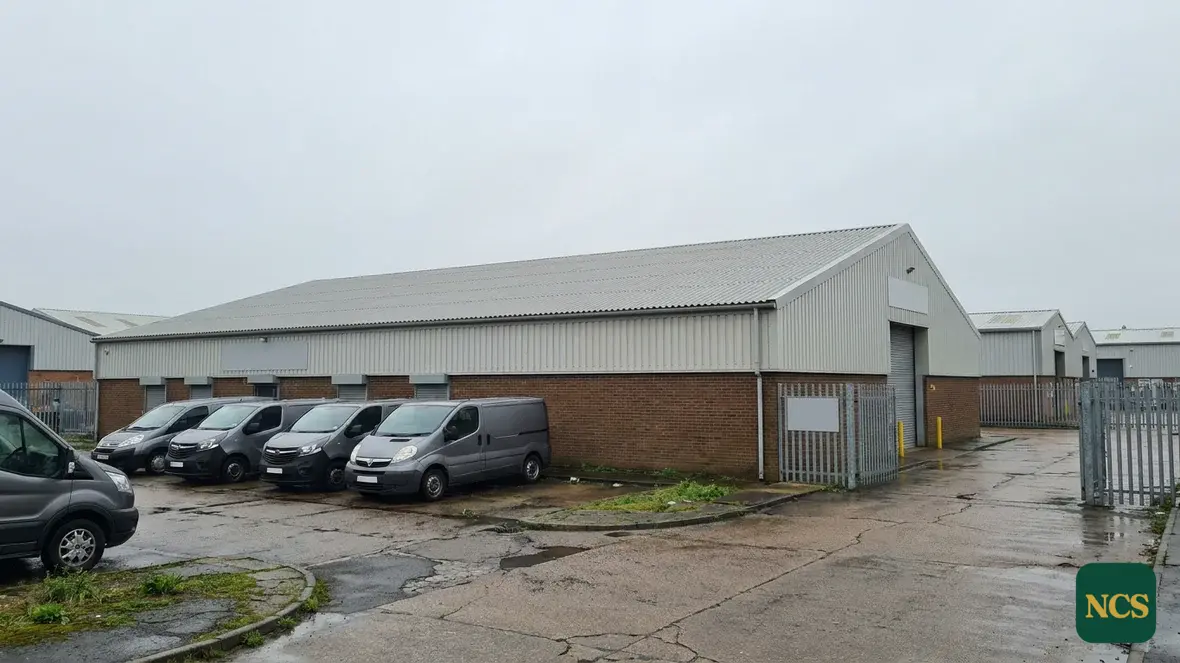




You’ve got a commercial, industrial or agricultural building in Stoke-on-Trent, probably with an asbestos cement roof. It’s likely seen decades of weather, maybe it’s leaking, or showing its age with chalking and corrosion. We see it daily. Our job is to give you an honest appraisal of that roof, focusing on repair and planned maintenance.
We’re not about ripping out a perfectly sound roof just because it’s old; we’re about catching those small problems, failed fixings, cut-edge corrosion, coating breakdown, before they become major headaches, giving you planned upkeep instead of emergency call-outs. We work on buildings across Staffordshire, near the A50, A500 and M6, right into the heart of the city’s working heritage.
Choosing encapsulation: the less disruptive method
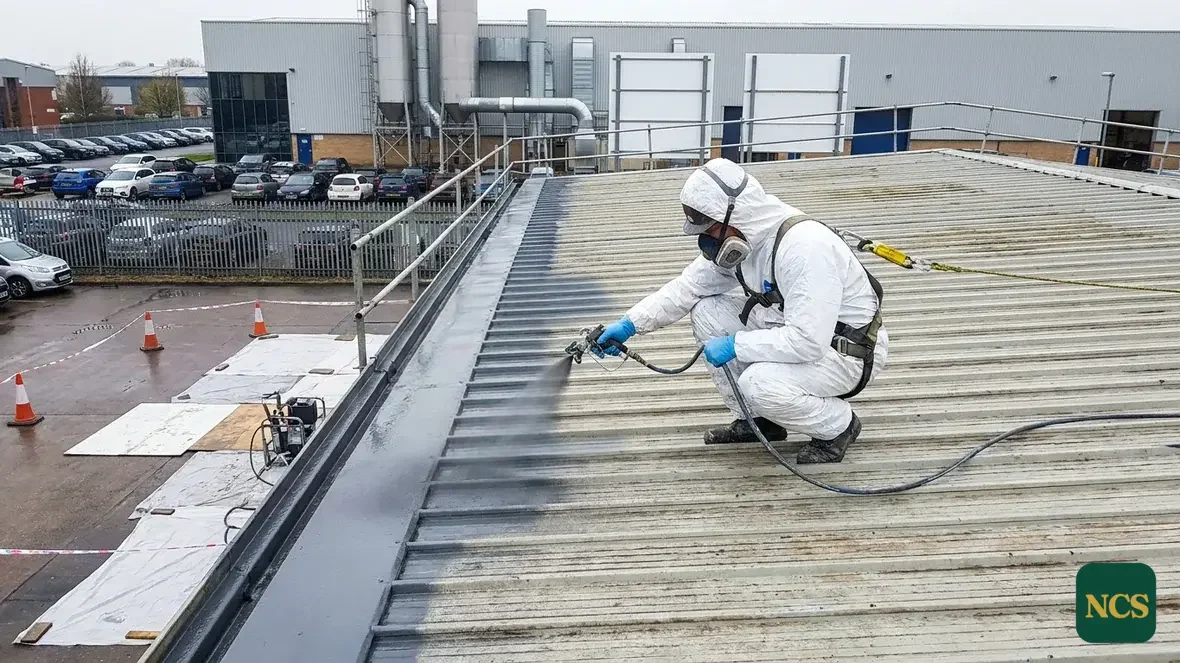
If our survey confirms the sheets are sound, encapsulation keeps the roof and removes the risk pathway. It’s often the sensible choice for busy premises. Here’s how we do it:
- Controlled cleaning of the sheets. Never uncontrolled jet washing or dry abrasion.
- Repairs to fixings, laps and flashings, with isolated sheet replacement where it makes sense.
- A coating system specified for asbestos cement, sealing fibres in and weather out.
- Full attention to rooflights and gutters. That’s where most of these roofs leak.
- Completion records for your asbestos register and management plan.
The comparison with full removal is simple: no strip-out, no full-roof asbestos disposal, and the building stays in use throughout. For a working unit or an active farm building around Stoke-on-Trent, avoiding weeks of disruption is often valuable in itself.
Industrial and farm roofs across Stoke-on-Trent
Asbestos roof encapsulation duty holders ask us about almost always comes down to one question: is the sheet sound enough to seal. Look around Stoke-on-Trent and you see the city’s working history in its buildings: factories, works, post-war industrial units and trading-estate sheds across the city, plus plenty of farm buildings out in the Staffordshire countryside. Asbestos cement sheeting was the default roofing for most of this stock. A lot of it is still in place, fifty or more winters on, and that means a practical question for owners and duty holders. We look at the whole roof for signs of wear and tear, not just obvious leaks.
How we manage asbestos roof encapsulation in Stoke-on-Trent
Asbestos cement stays safest sealed where it sits, rather than broken out and carried down a ladder. Our teams plan every job around the HSE’s guidance on working with asbestos, and we hold CHAS accreditation so the health and safety paperwork a duty holder or facilities team asks for is ready before the first van arrives. This means a planned approach, not just a quick fix.
Your duty to manage and required records
For non-domestic buildings, the Control of Asbestos Regulations 2012 mean the duty holder has to identify asbestos, record and review its condition, assess the risk and keep a written management plan. A surveyed and encapsulated roof supports every bit of that: the material’s condition is documented, improved and easier to monitor, and all the paperwork from the works slots straight into your asbestos register. We’re based in the South East and work across the UK. Stoke-on-Trent and Staffordshire are comfortably within range. If your roof dates from the asbestos cement era, book the survey and let the evidence set the plan for long-term maintenance.
When full roof removal is the only correct advice
Encapsulation has its limits. Pretending otherwise would be misleading. Sheets that are friable, soft, delaminating or broken across wide areas can’t be made safe with a coating. Sealing them would just cover a failing material while it keeps degrading underneath. Roofs in that condition need removal by a licensed asbestos contractor and replacement. If that’s what we find, that’s what we’ll tell you, in writing, even though it’s not the work we’d be doing. We’d rather give you the right answer than the convenient one, because honest advice now prevents bigger problems later.
Asbestos roof encapsulation: recent jobs of this type
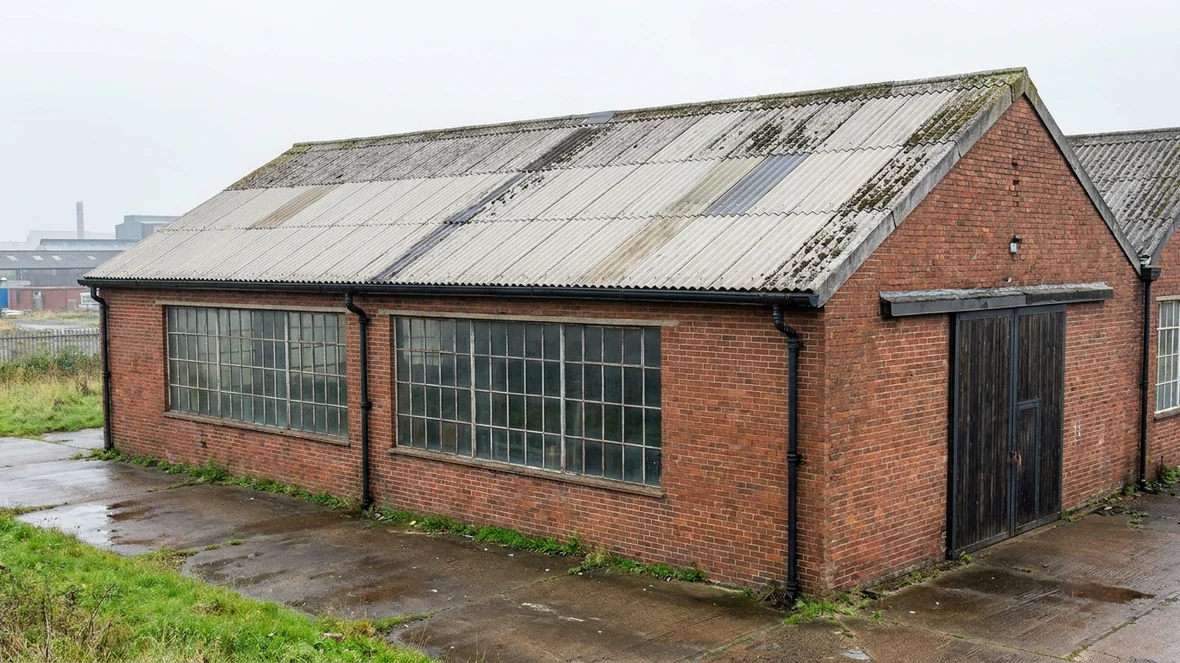
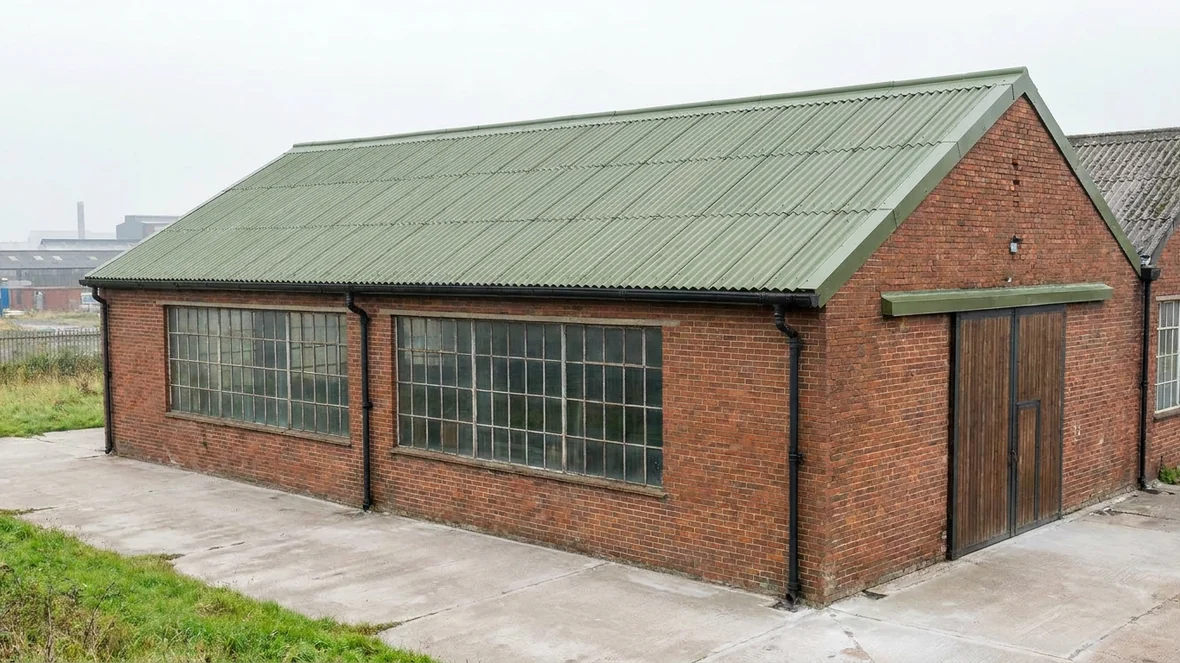
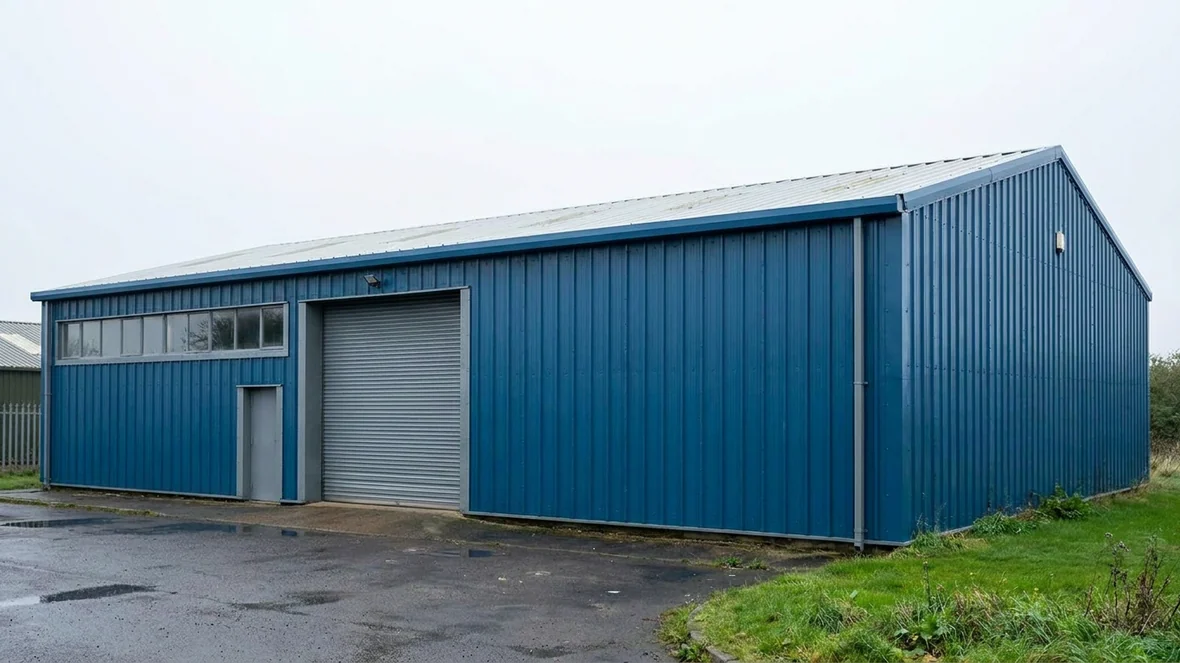
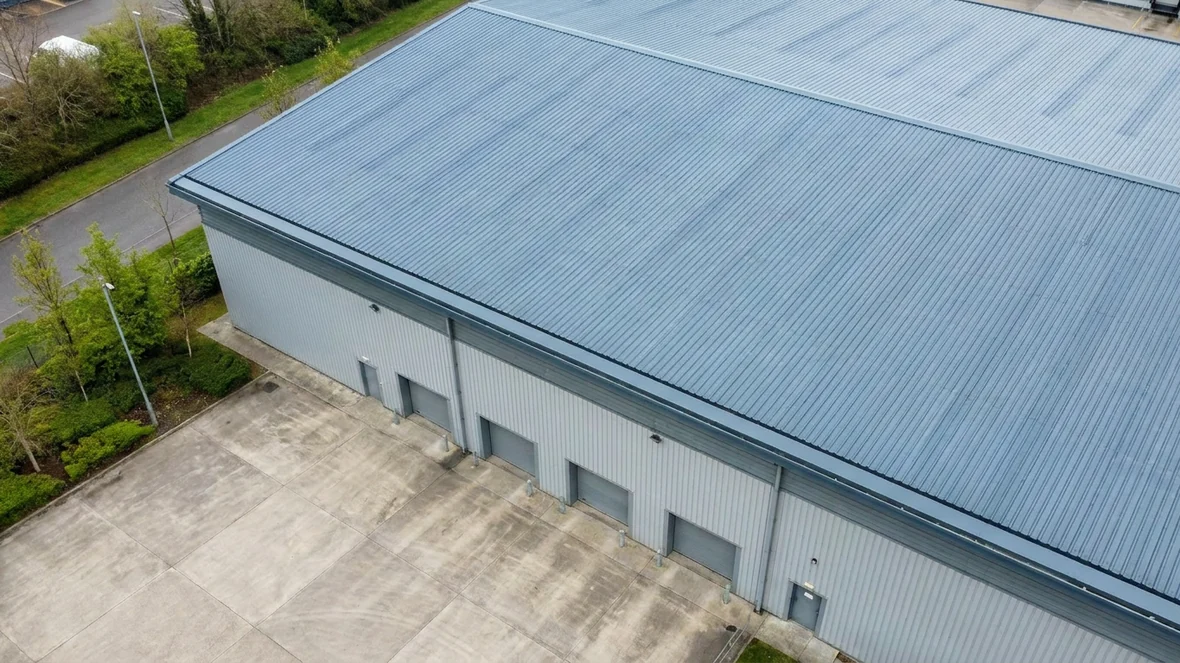
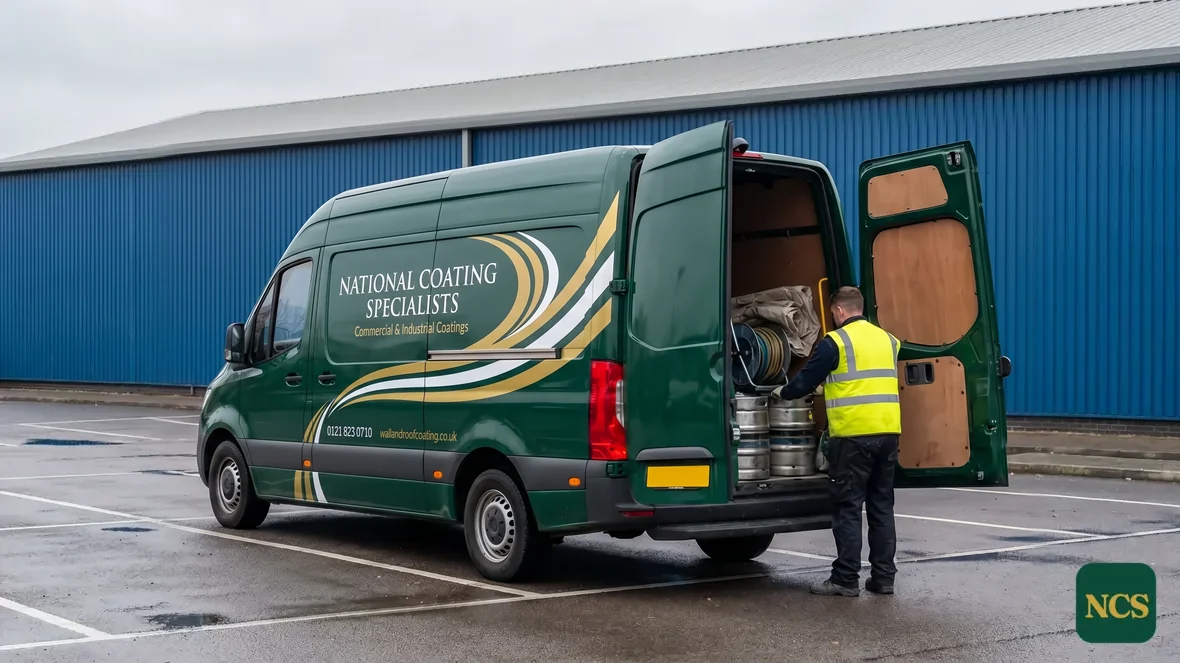
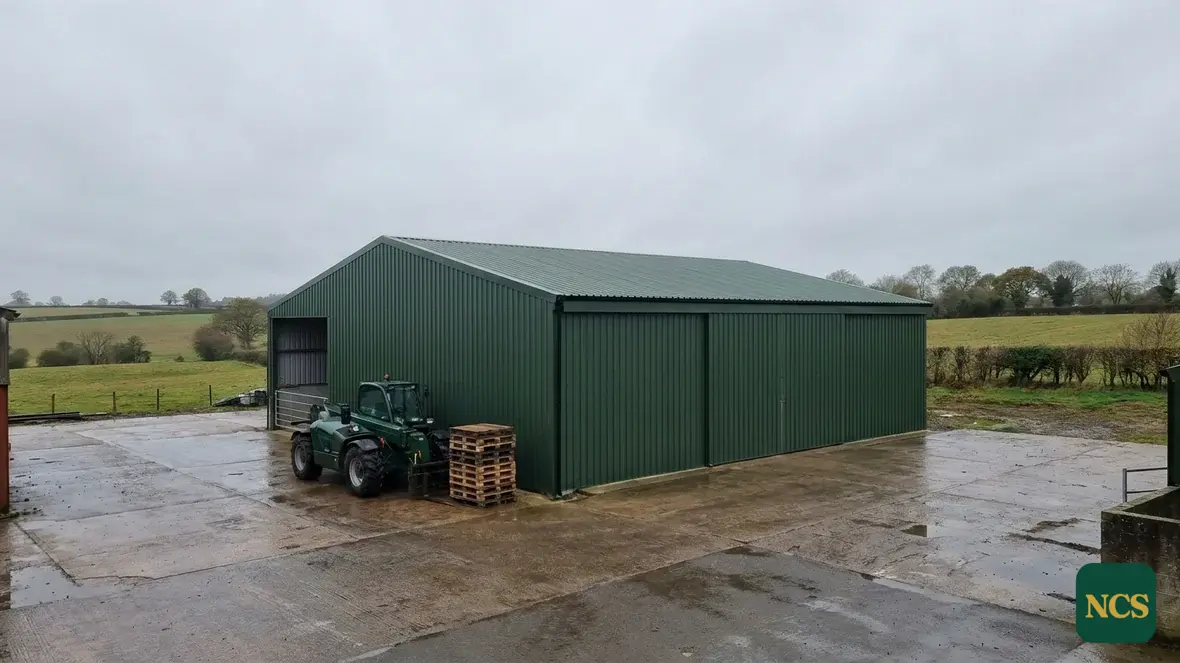
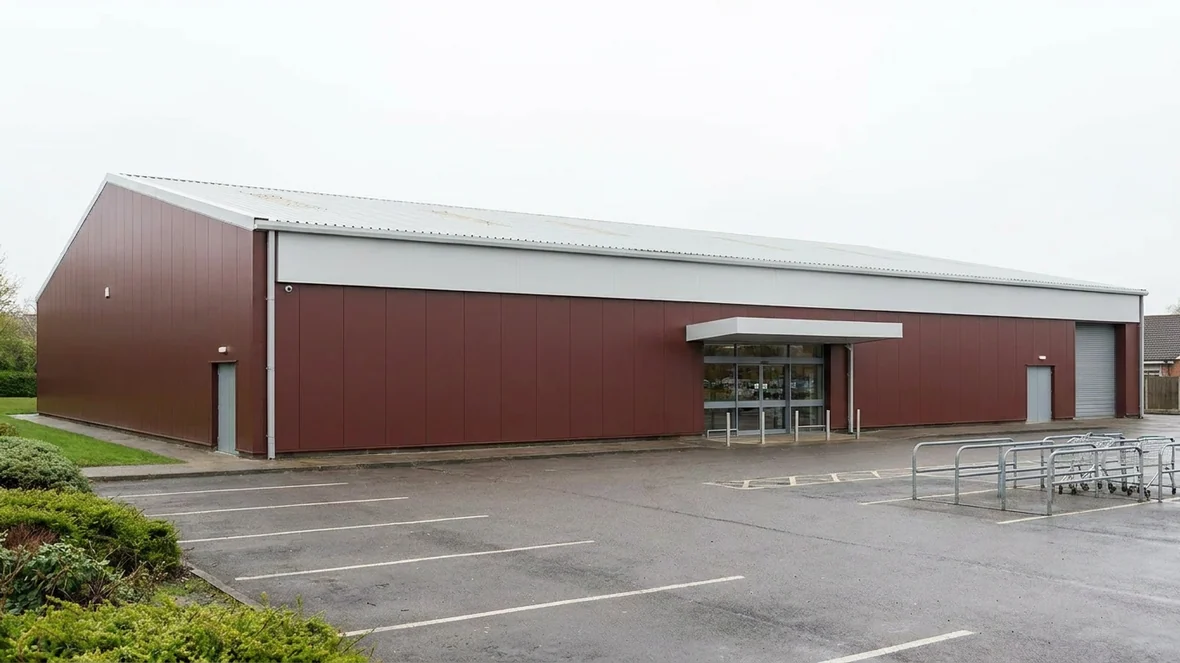
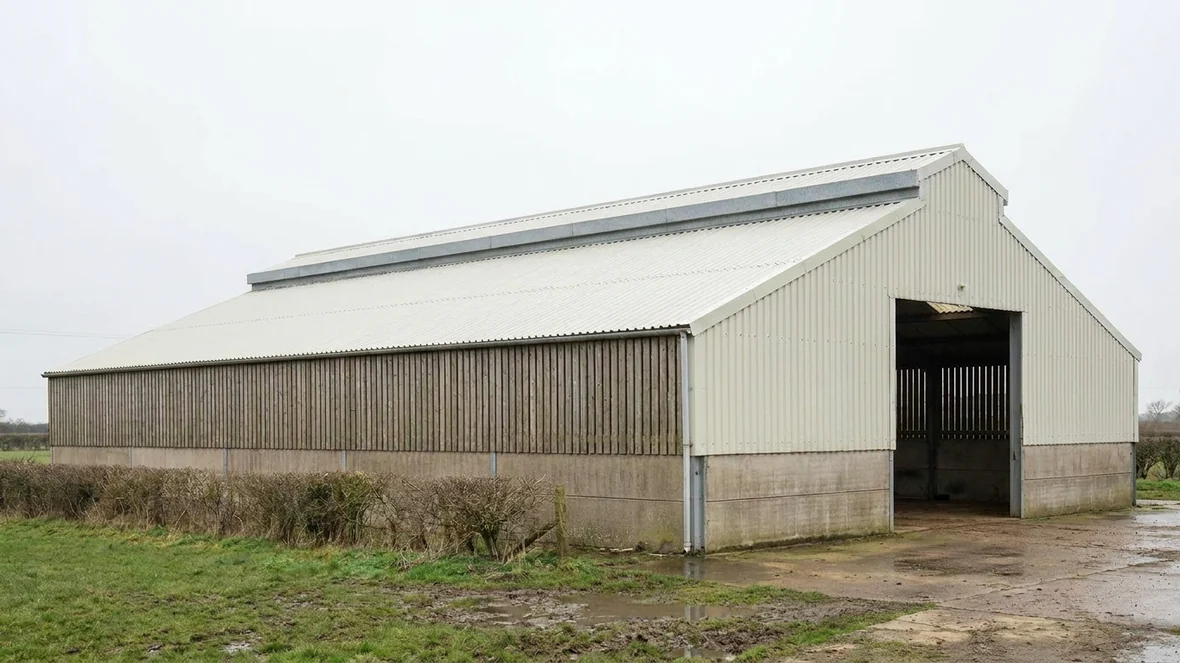
These are our own photographs from jobs of the same type. They are not stock images, and none of them is dressed up as something it is not. The caption tells you where each one was taken.
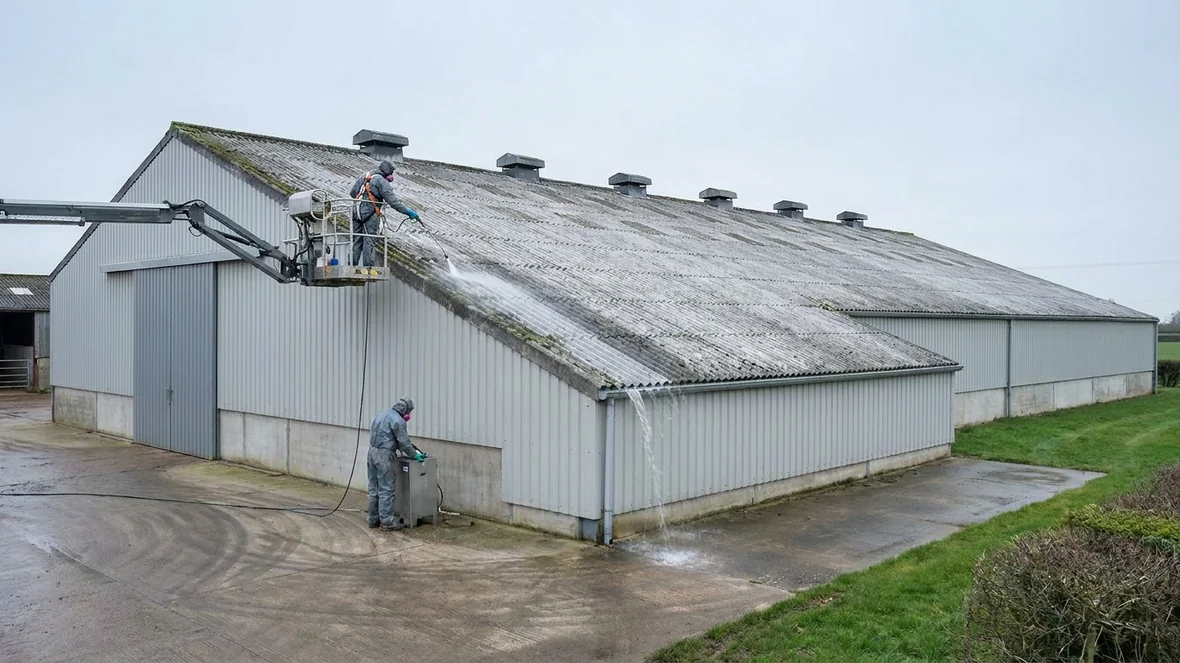
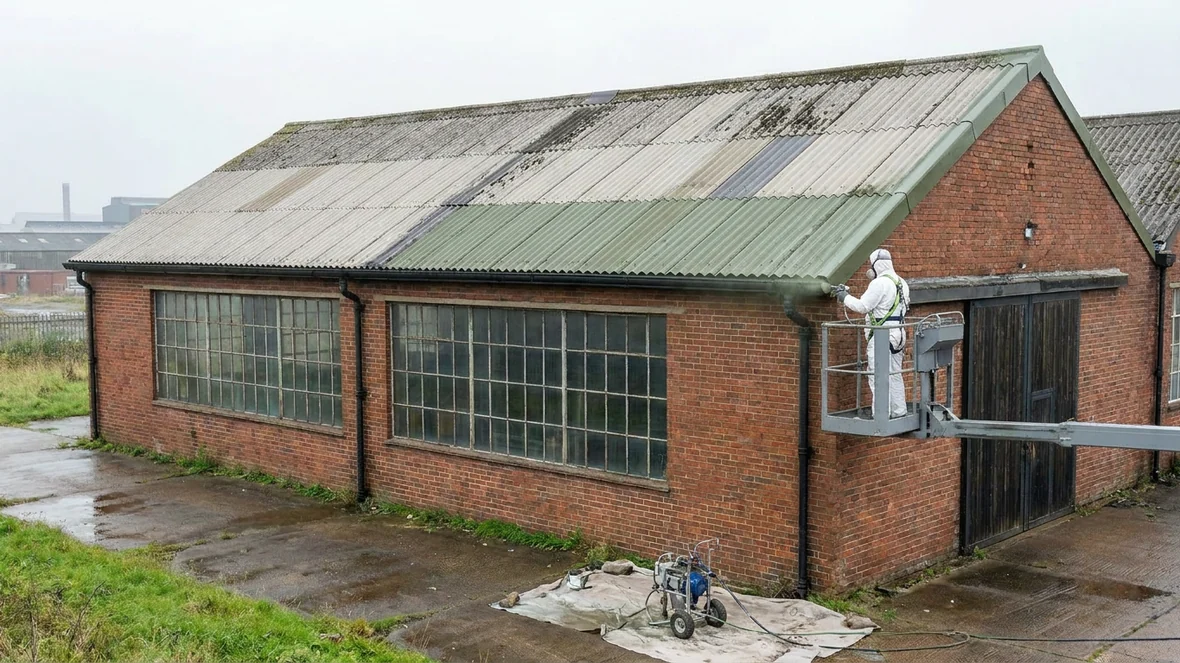
You can see this same encapsulation approach photographed from start to finish in our grain store asbestos encapsulation case study.
Why the roof’s present condition dictates everything
Asbestos cement is a bound material. As long as the sheets stay intact, the fibres stay locked in the cement. That’s why regulators say sound asbestos cement needs managing, not automatically ripping out. The risk appears when sheets break, get drilled, or weather so much the surface erodes and softens. So the first job on any roof near Stoke-on-Trent is a thorough survey of the sheets, laps, fixings and rooflights. Everything else flows from what we find, and will inform our recommendations for repair and maintenance.
Common questions about asbestos roof encapsulation Stoke-on-Trent
Can an asbestos cement roof be safely encapsulated?
Yes, provided the sheets remain sufficiently sound to accept a coating system. We begin with a condition survey, looking for extensive cracking, delamination, movement, failed fixings and signs that the supporting structure may be compromised. Encapsulation is not appropriate where the roof has deteriorated beyond a maintainable condition.
The work must also be planned around the risks associated with fragile asbestos cement. Access, edge protection, fall prevention and the control of fibre release all need to be addressed before preparation begins.
Will encapsulation stop an asbestos roof from leaking?
Encapsulation can help weatherproof a roof, but coating alone will not correct every source of water ingress. Leaks commonly arise at laps, fixings, ridge details, rooflights, gutters, penetrations and cracked sheets. We identify and treat these defects as part of the preparation rather than expecting the finish coat to bridge unresolved faults.
If water is entering through defective flashings, blocked drainage or movement in the structure, those issues require separate remedial work.
Can the building remain in use during the work?
Often it can, although this depends on the building, its occupants and the proposed method of access and preparation. We consider activities below the roof, ventilation openings, sensitive equipment, vehicle movements and the possibility of debris entering the premises.
Some areas may need to be isolated while work is carried out overhead. Where uninterrupted occupation is essential, we plan the sequence with the building owner before work starts.
How long does asbestos roof encapsulation take?
The programme depends on roof area, access, condition, detailing and weather. Preparation and local repairs frequently take longer than the visible coating application. Damp, low temperatures and strong winds can also restrict when coatings may be applied.
We set the sequence after survey rather than offering a standard duration that may not reflect the roof in front of us.
Does an encapsulated asbestos roof still need to be managed?
Yes. Encapsulation does not remove asbestos from the building. The roof should remain recorded in the property’s asbestos management information, and anyone arranging later work must be told what material is present.
Periodic inspection is sensible, particularly after severe weather or work by other trades. Damage to the coating, sheets or details should be addressed before water and movement enlarge the defect.
Asbestos roof coating or replacement: which is the better option?
For a weathered but serviceable asbestos cement roof, encapsulation can be the more proportionate approach. It limits disturbance to the sheets, retains the existing roof covering and can address surface weathering and local water ingress without a full strip-off. It may also reduce disruption inside an occupied industrial or commercial building.
That does not make coating the right answer for every roof. Replacement wins when the sheets are extensively cracked, badly delaminated, unstable or no longer capable of supporting the preparation and coating process. It is also the clearer choice where the supporting structure requires major work, the roof layout needs substantial alteration, or the owner wants a fundamentally different insulated roof construction.
Encapsulation is generally better suited where:
- the asbestos cement sheets remain coherent and securely fixed;
- defects are localised and can be repaired without widespread disturbance;
- the supporting structure is in serviceable condition;
- the existing roof design remains suitable for the building; and
- avoiding a full removal programme would reduce operational disruption.
Replacement is generally better suited where:
- deterioration is widespread rather than confined to isolated areas;
- numerous sheets are fractured, displaced or structurally unreliable;
- corrosion or movement within the supporting structure requires extensive intervention;
- persistent condensation or thermal performance calls for a redesigned roof build-up; or
- planned alterations would make retaining the asbestos covering impractical.
Replacement removes the asbestos roof covering from the building, but it also introduces a more involved programme of controlled removal, handling and disposal. Encapsulation is less invasive, yet leaves the asbestos in place and creates an ongoing inspection responsibility. We assess both routes on condition and intended building use rather than presenting coating as an automatic substitute for renewal.
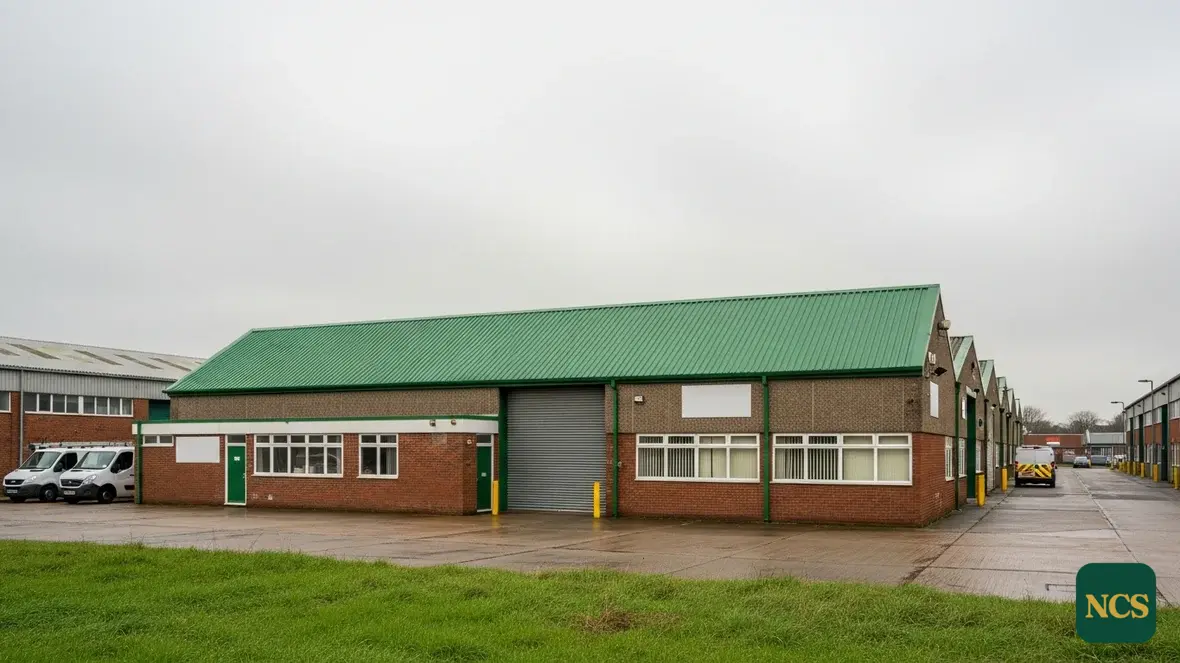
How we prepare and detail an asbestos cement roof for encapsulation
Surveying the sheets and supporting details
Effective asbestos roof encapsulation in Stoke-on-Trent starts with the substrate, not the coating. We inspect the sheets from planned access positions and review fixings, laps, ridges, eaves, gutters, rooflights and penetrations. Internally visible staining can help trace defects, although the point where water appears is not always the point where it entered.
We also consider previous repairs. Incompatible sealants, loose patches and poorly bonded earlier coatings may need controlled removal or local treatment before a new system can be applied.
Preparing without unnecessary disturbance
Asbestos cement must not be treated like an ordinary metal or fibre-cement roof. Aggressive abrasion can damage the surface and release fibres. Preparation methods are therefore selected to remove dirt, biological growth and loose material while keeping disturbance to the minimum reasonably practicable.
Wastewater, residues and debris require controlled collection and handling. We do not allow contaminated material to wash indiscriminately into gutters, drainage systems or surrounding ground.
Repairing laps, fixings and penetrations
Coating performs best over stable details. Loose or defective fixings, open side laps, damaged ridge pieces and failed penetrations are dealt with before the main application. Cracked sheets require individual assessment; some can receive a suitable local repair, while others should be replaced under the appropriate asbestos controls.
Gutters and outlets also need to be clear and serviceable. A coated roof will still leak or overflow if rainwater cannot leave the roof correctly.
Applying the coating in suitable conditions
The roof must be dry enough, clean enough and stable enough for adhesion. We check the forecast and substrate conditions before application, paying particular attention to wind, rain, temperature and the likelihood of condensation. Applying too close to poor weather can affect curing and finish.
Edges, laps, fixings and changes in profile receive deliberate attention rather than relying solely on broad application across the sheet faces. Once complete, we inspect the treated roof for continuity, missed areas and damage caused during the works. The result should be a coherent protective finish over a roof that was suitable for encapsulation in the first place.