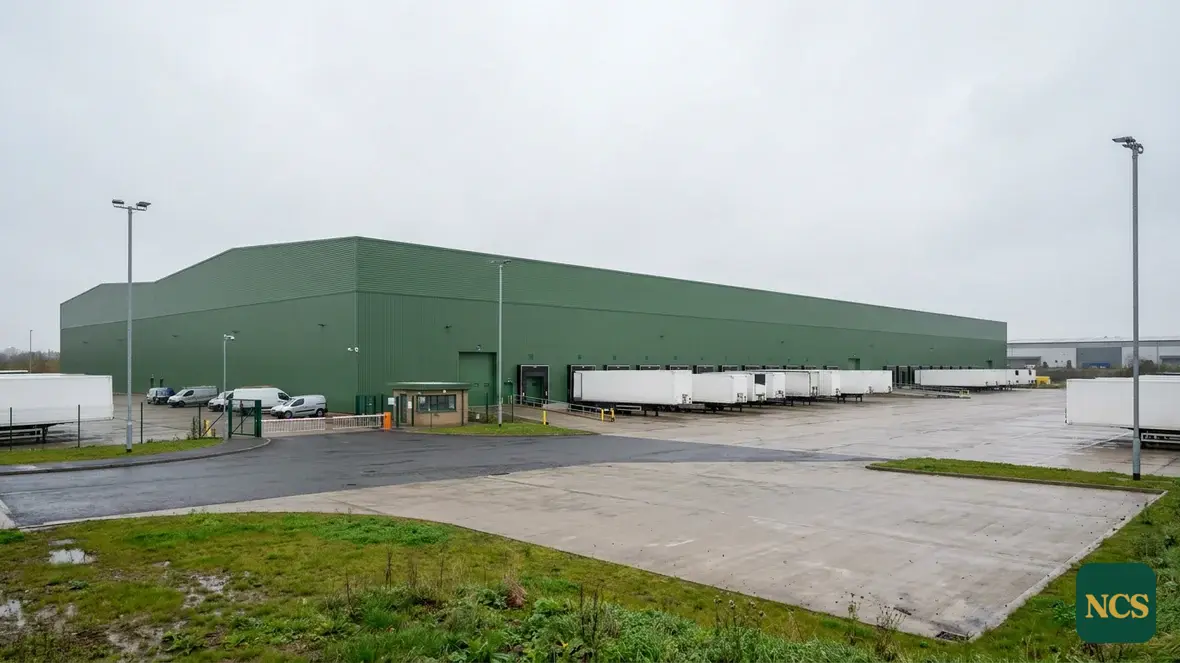
Manchester’s reputation for rain is overstated in the statistics and entirely accurate on a roof. Persistent wet weather finds every tired lap, every rusting cut edge and every failing gutter joint on the profiled metal roofs that cover the industrial estates in and around the city. For facilities teams running warehouses, factories and distribution units, that exposure shortens the comfortable years of a roof’s life. Industrial roof coatings, applied after a proper survey, claw those years back, and National Coating Specialists deliver it without interrupting the operation underneath.
Wet weather and ageing steel: a predictable combination
Around Manchester and along the orbital motorway, the industrial stock is dominated by steel portal frame buildings from the 1980s, 1990s and 2000s, roofed in profiled sheet whose factory finish is now well into its dotage. Standing water at laps, blocked gutters and constant wetting-and-drying cycles all push corrosion along faster than the same roof would suffer in a drier corner of England. The practical consequence for an estates team is that inspection intervals that felt safe ten years ago no longer are, and small defects become leaks between one winter and the next.
What a full coating system involves
A proper system is a sequence, and skipping steps is how cheap jobs fail:
- Cleaning and preparation of the whole roof surface, back to a sound substrate
- Mechanical treatment and anti-corrosive priming of every cut edge
- Sealing of end laps, fixings and penetrations
- Attention to gutters and rooflights, which cause a large share of leaks
- A full-coverage top coat to reinstate the weatherproof envelope
The visible coating is the last and quickest part. The value sits in the preparation underneath it, which is why two quotes for the same roof can honestly be far apart.

Cut-edge corrosion and gutter joints
The two defects we find most often on Manchester’s industrial roofs work as a pair. Cut-edge corrosion attacks the bare steel at sheet ends and eaves, creeping back beneath the factory finish until the metal thins. Gutter joints, meanwhile, dry out and split, soaking the very edges where the corrosion is worst. Treating one and ignoring the other is half a job. Our surveys cover both, and our quotations price both, because a freshly coated roof draining into a failed gutter will be back on your defect list within a year.
Working over a 24/7 operation
Distribution and manufacturing around Manchester does not pause for roofing, and with coating it does not need to. The roof stays closed throughout, all work is external, and there is no strip-off, no temporary covering and no exposure of stock or plant. We agree exclusion zones, access routes and working hours with your facilities team before starting, sequence the roof in sections to suit your shift patterns, and keep loading yards clear. Most occupiers notice the operatives signing in and very little else.
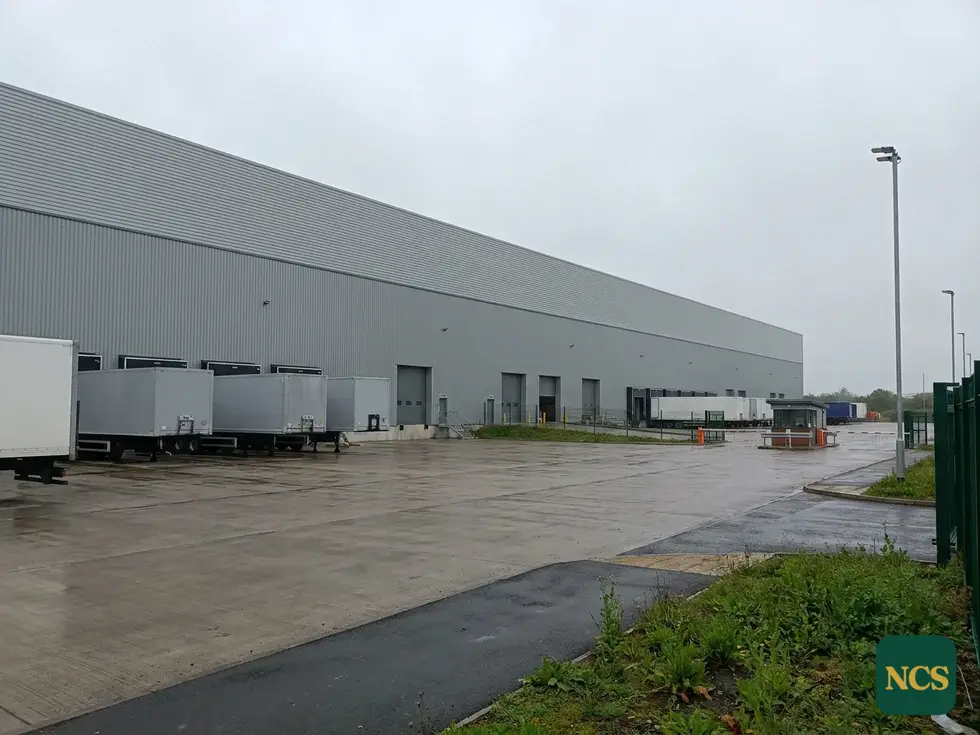
The honest assessment: not every roof should be coated
Some surveys end with us advising against our own service. Widespread perforation, underside corrosion, wet insulation or a structurally tired deck mean the money belongs in replacement or overcladding, not coating, and our report will say so plainly. We work across the UK from a South-East base, and that reach only stays worth having if every recommendation is one we can stand behind.