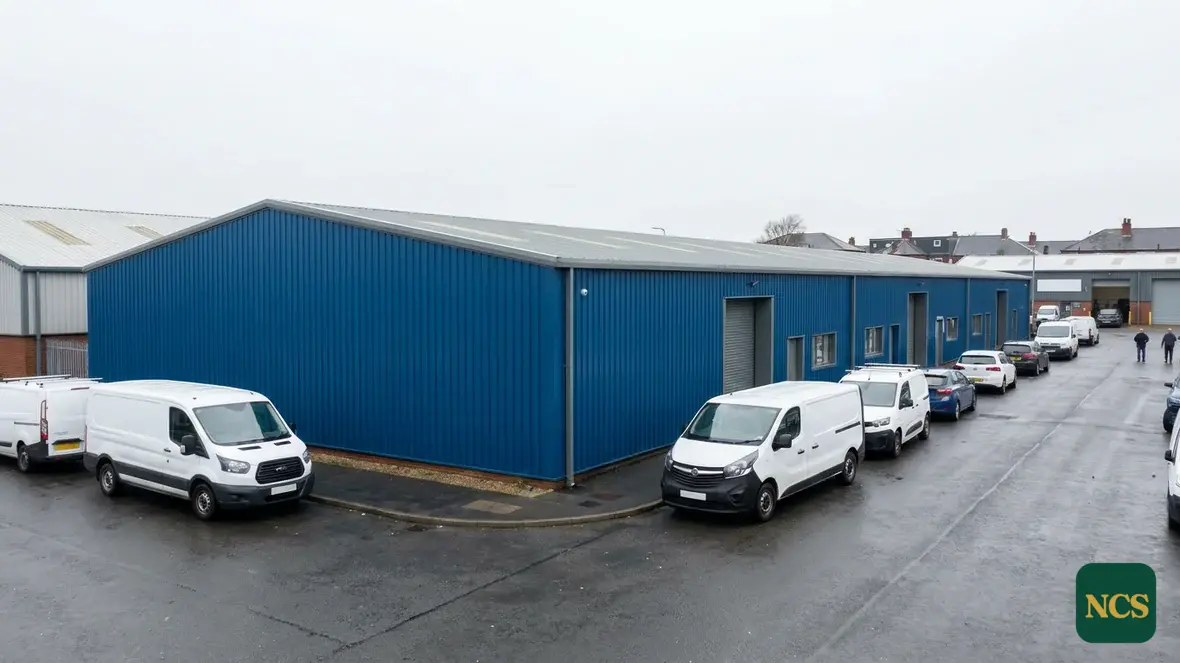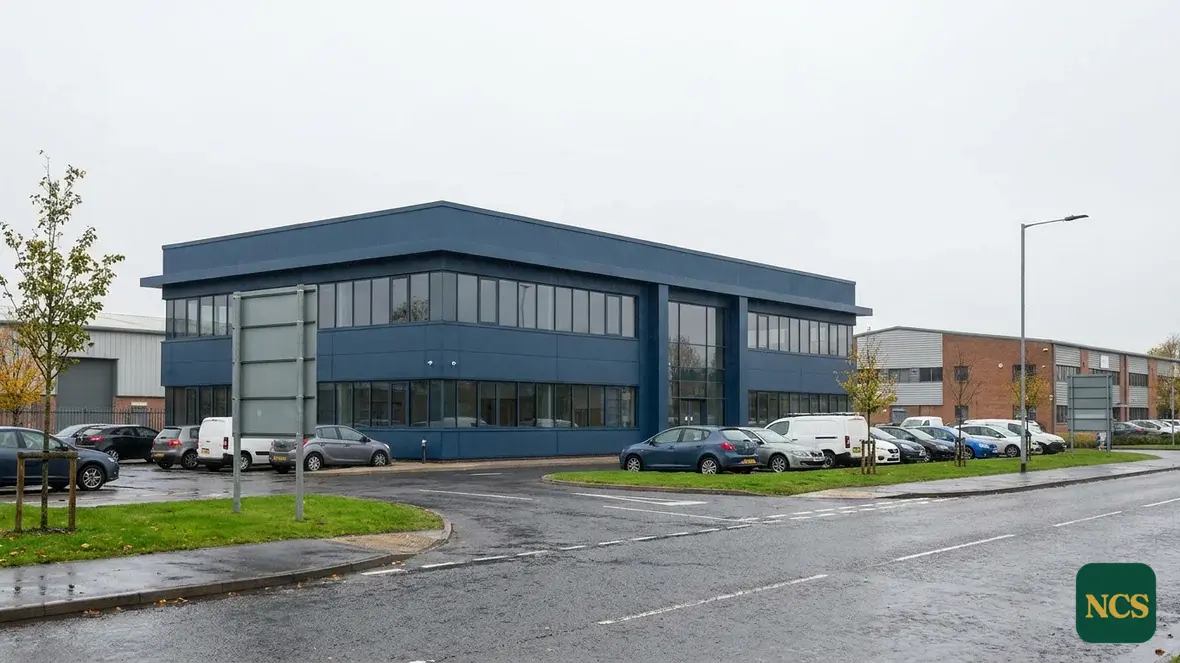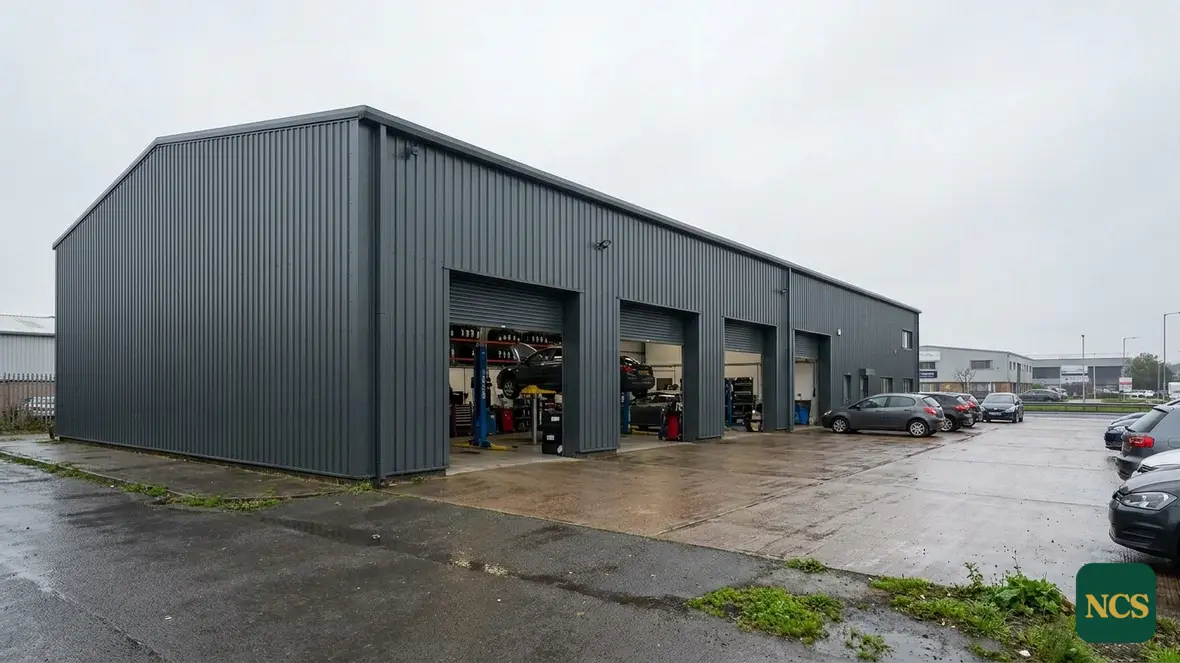
Cladding spraying in Manchester
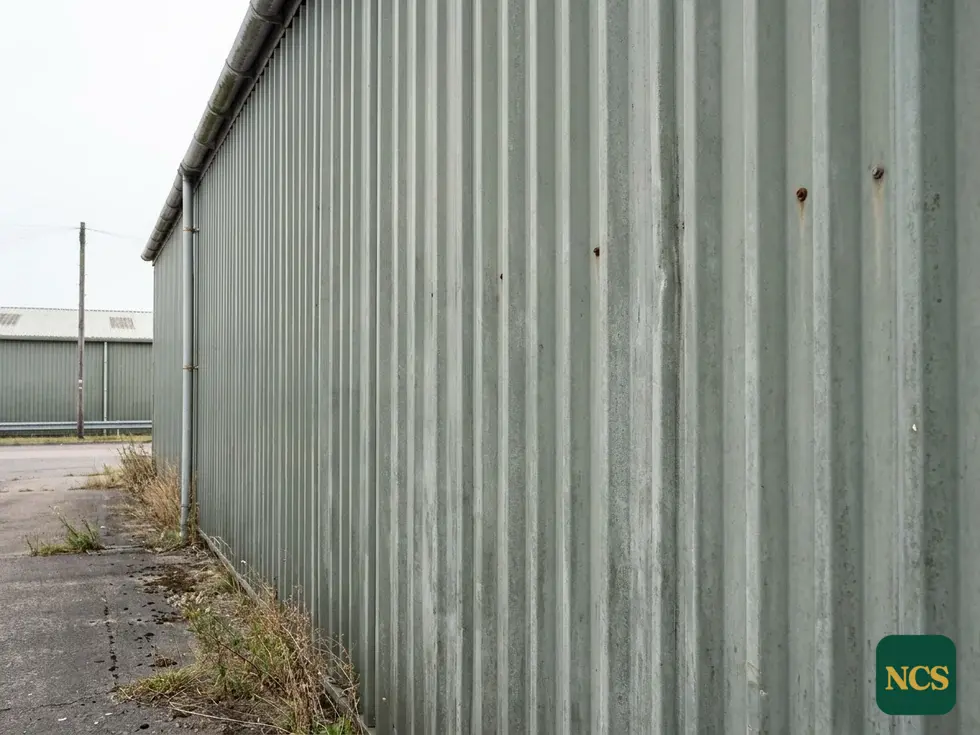
There’s a huge amount of steel-clad commercial property across Manchester, and the weather here works on it all year round. We get called in when the original finish has faded, chalked or started to rust at the edges, but the panels themselves are still sound. Cladding spraying renews the facade on site, for a fraction of what recladding costs and without having to empty the building.
We’re survey-led, and that shapes everything we do: we don’t price by photograph, we don’t specify by template, and we won’t put coating onto a surface until we’ve inspected it up close.
What Greater Manchester’s stock involves
The commercial property across Greater Manchester is varied: trading estates in every borough, distribution units around the M60, retail parks, old mill sites with modern clad extensions, and office buildings with composite panel facades. Most of the metal cladding we see dates from the 1970s to the 2000s, which were prime years for plastisol finishes that are now reaching the end of their working life.
The rainfall here does its bit. Panel laps and sheet ends that stay damp corrode sooner, and north-facing elevations that rarely dry out behave differently to the sunny side of the same unit. Roof sheets suffer the same way as walls, and often faster. These are the details our survey records; a generic quotation will just ignore them.
A lot of our enquiries come from multi-let estates. Here, appearance is as much a letting issue as a maintenance one. Faded, mismatched elevations drag on viewings and rents; a recoat in a single coherent colour scheme is one of the cheapest ways a landlord can improve how an estate presents itself. Phasing matters on these sites, so we can sequence elevations to keep tenants trading throughout.
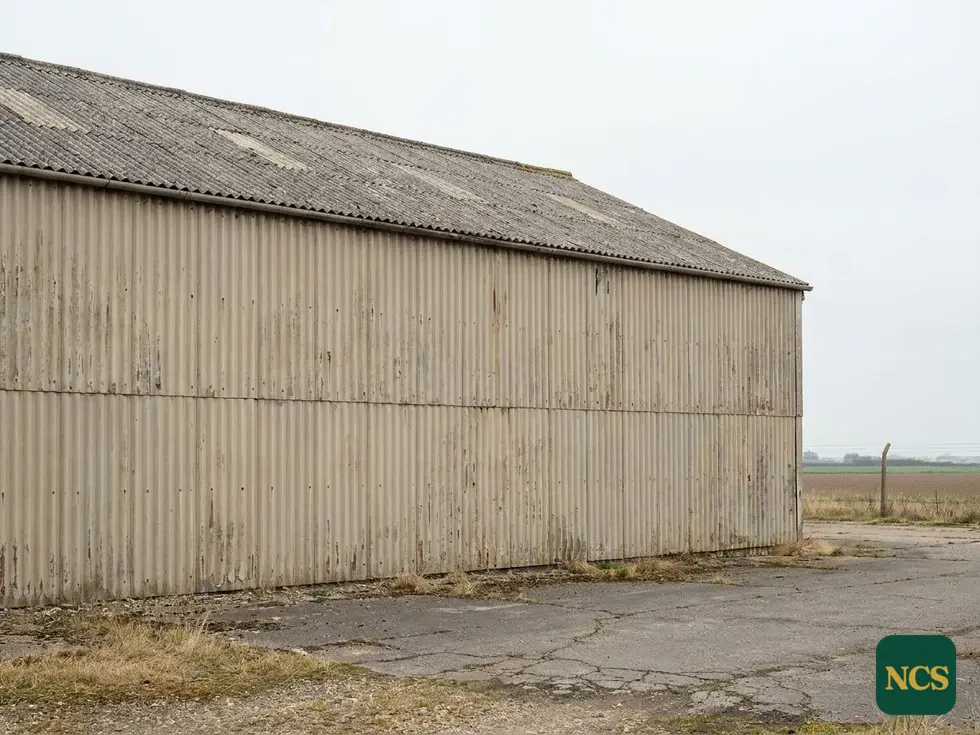
Honest limits: what spraying cannot fix
Some facades are past the point where spraying makes sense. Identifying these is part of our service, not an inconvenience. Sheet that’s perforated by rust, delaminating composite panels, failed fixings and waterlogged insulation all need repair or replacement, not paint. Coating over them would tidy the appearance for a season but just bury the defect underneath.
When our survey finds these conditions, we report them straight, recommend what needs to happen first and adjust or withdraw our coating proposal accordingly. It’s a slower way to win work, but a much better way to keep our reputation.
If your Manchester unit needs the cladding painted, the survey decides if a respray restores it or the panels are past saving, and you get that answer straight.
How the work actually runs
For buildings that do qualify, the project moves through a set sequence:
- A close-range survey with photographs, adhesion tests and corrosion mapping
- A written specification for preparation, repairs and the coating system
- Cleaning and rust treatment, with cut edges addressed individually
- Masking of glazing, signage, vehicles and neighbouring surfaces
- Spray application in controlled passes, then a final walk-round at handover
Distance doesn’t change that order. We cover Salford, Stockport, Bolton and Oldham with the same survey-first method, just like the rest of Greater Manchester.
Why survey-led beats quote-led
Quote-led contractors price the job they hope your building is; we price the building you actually have. The first approach produces low headline numbers followed by mid-contract variations. Our way produces a figure that survives contact with the scaffold, and a finish specified for the conditions it has to face. Colour is the flexible part: recoating is the obvious moment to move from a dated scheme to a current one, or to bring an acquired unit in line with the rest of a portfolio.
For a facade in Manchester that’s gone chalky or faded unevenly, the practical next step is simple: have it inspected by someone who will tell you honestly whether spraying is the right answer, and exactly what the work involves if it is.