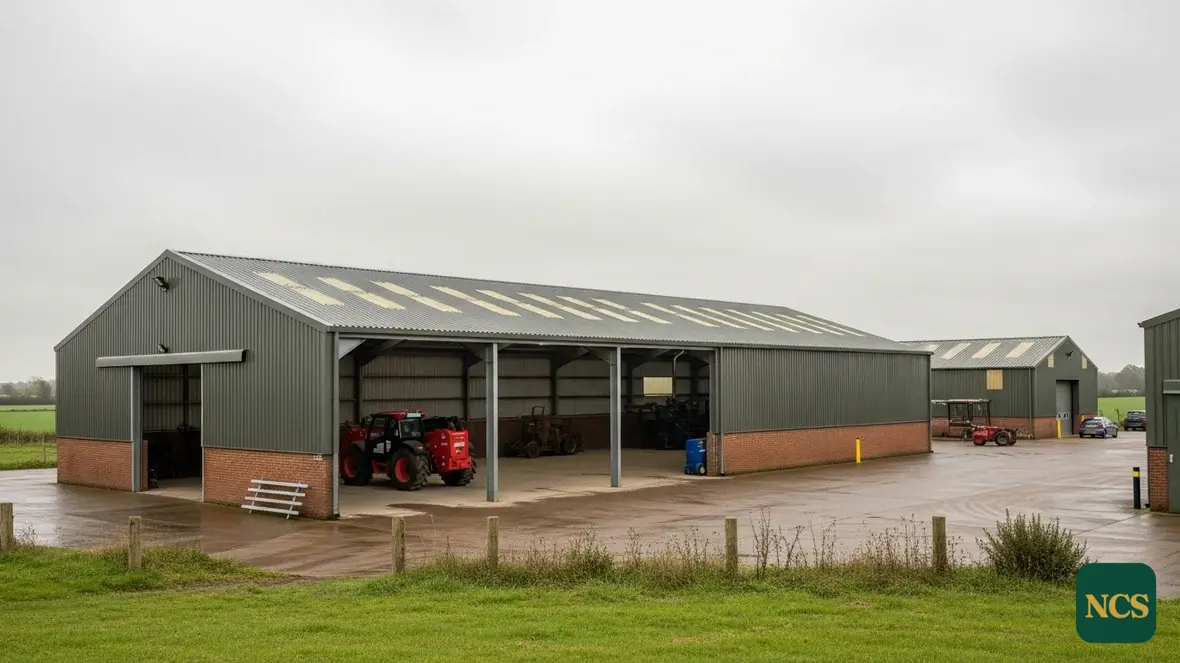
The land around Manchester is a mix: dairy country west towards the Cheshire Plain, then up into the Pennine fringes where you find stock sheds and hay barns built for serious weather. We coat commercial, industrial and agricultural buildings across the UK, and we know that wet, changeable Manchester climate is the reason farm roofs here age so quickly.
Damp from the inside as well as the outside
Farm buildings out here get hit by water from both sides. Rain and wind-driven damp wear at the outside of a roof, but inside a busy livestock shed, the warm, humid air from housed animals condenses on the underside of cold metal sheets. That combination corrodes steel from both faces. It’s why dairy and stock-building roofs often look older than they are. Most yards run a mix of buildings: an old masonry barn, a steel portal-frame shed from decades back, then newer clad units. It’s usually the legacy steel and fibre-cement roofs that need work first. A worn roof can still be sound, and if the structure holds and the sheet is intact, a proper coating can keep it going for many more seasons.
Programmes built around milking and housing
You can’t just clear a shed for a week on a dairy unit. Cows are milked twice a day, housing fills for winter, and the yard never truly stops. We plan our agricultural building coatings work to fit that reality: we tackle buildings when they’re empty between groups, or feed and machinery stores before they’re loaded. We time our access so it never blocks the parlour or the feed run. We agree vehicle movements with you each day and protect troughs, feed passages and parlour areas before we even start. The work bends around your farm, not the other way around.

The survey, slope by slope
We won’t price a farm roof from the gateway. The details that decide a roof’s future are invisible from the ground. A survey near Manchester looks at:
- Sheet condition, including cut-edge corrosion, laps and fixings
- Underside condition where condensation has been at work
- Gutters, valleys and rooflights, which often fail before the roof itself
- Signs of water ingress on purlins, frames and stored kit
- Access and yard ground conditions for the equipment we’ll need
You get the findings with photographs before any figure is named. We judge each slope on its own condition.
A tired barn near Manchester rarely needs new cladding. Honest preparation and a sprayed repaint is normally what the survey ends up recommending.
Asbestos-cement and ageing steel, treated honestly
Plenty of the agricultural roofs we survey are legacy profiled steel or asbestos-cement. Sound but weathered asbestos-cement can often be cleaned and encapsulated with a suitable coating. This seals it against further deterioration. Cracked, fragile or delaminated sheets are a different story; they go to a licensed removal contractor, not under a coating, and we’ll tell you that plainly. We assess roofs from proper access equipment before anyone trusts their weight to a sheet.
Coat, repair or replace: our honest view
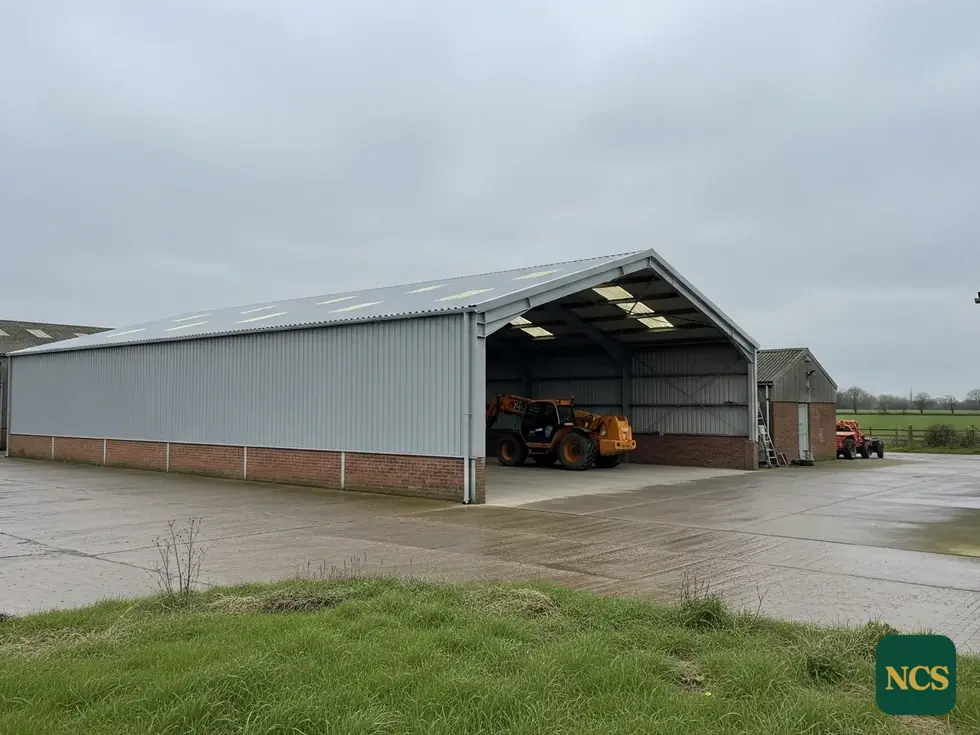
We’d rather walk away than coat a roof that should be replaced. Localised damage on a sound surface is a repair. General surface breakdown on solid sheets is where coating does its best work. Holed, soft or fixing-failed sheets usually mean the roof is finished. The survey decides. If replacement is the right answer, we say so, so you can plan with accurate information instead of just hoping. We’ll also flag when only part of a roof needs the work, rather than pricing the whole span when a couple of slopes are the real problem. On a dairy unit near Manchester, that often means treating the wettest north-facing pitches now and keeping an eye on the rest.
We carry out agricultural building coatings work in and around Manchester. For the full survey-led service and how we assess each building, see our Agricultural Building Coatings service, or request a free site survey.